The first cold morning of your first winter with an EV is a small shock. The car that showed 280 miles in October shows 210, and nothing is broken. Nothing has failed. The battery is fine.
What most people get wrong is the cause. The instinct is to blame the battery — cold chemistry, degraded cells, something going quietly wrong under the floor. The data says otherwise. The largest share of your missing winter range is being spent keeping you warm.
Three separate things are happening
Winter range loss is usually described as one problem. It’s three, and they’re worth separating because only two of them are within your control.
1. Cabin heating — the biggest single cause
A petrol engine is spectacularly inefficient, and it dumps that waste as heat. Cabin heating in a combustion car is essentially free — you’re using a by-product that would otherwise be thrown away.
An electric drivetrain has almost no waste heat to give. Every degree of cabin warmth has to be manufactured from the same battery that moves the car. In a vehicle using a resistive heater, that means running what is effectively a large electric heater continuously, and in the coldest testing conditions cabin heating alone accounts for a reduction of up to 40%.
This is why short trips hurt most. Heating a cold cabin from freezing takes a large upfront burst of energy; a five-mile trip pays that cost in full and gets almost no driving out of it, while a fifty-mile trip amortises it across the whole journey.
2. Battery chemistry slows down
Lithium-ion cells rely on ions moving through an electrolyte. Cold thickens that electrolyte and slows the movement, which raises internal resistance and temporarily reduces both usable capacity and the power the pack can deliver.
The car also spends energy warming the pack itself, both to protect it and to make it work properly — energy that never reaches the wheels. Note that this is temporary. The capacity isn’t lost; it’s unavailable until the pack warms up.
3. Everything else gets less efficient
Tyre pressure drops in the cold, raising rolling resistance. Cold air is denser, so aerodynamic drag increases. Winter roads carry snow, slush and standing water, all of which cost energy. Defrosters, heated seats, wipers and lights all draw power.
Individually these are small. Together they’re the difference between a bad winter figure and a genuinely alarming one.
Cold is not the only range killer — highway speed drains EV range through pure aerodynamic drag.
How much range you actually lose
The most comprehensive picture comes from analysis of more than 30,000 real-world vehicles rather than laboratory testing. Across 34 models, the average car retained about 78% of its normal range at freezing point. The best performers held 88%; the weakest fell to 69%.
| Temperature | Typical range retained | 280-mile car shows roughly |
|---|---|---|
| 70°F / 21°C | 100% | 280 miles |
| 32°F / 0°C | ~78% | 218 miles |
| 20°F / −7°C | ~70% | 196 miles |
| 0°F / −18°C, urban stop-start | as low as ~50% | 140 miles |
That last row deserves a caveat, because it’s the one that generates alarming headlines. It represents severe cold combined with stop-start urban driving and full climate control — the worst realistic combination. The same conditions on a steady highway run produce a noticeably smaller loss, because the heating cost is spread over more miles.
The heat pump difference
If you take one piece of shopping advice from this guide, take this one.
A resistive heater converts electricity to heat at roughly one-to-one. A heat pump moves existing heat instead of creating it, delivering several units of heat per unit of electricity. In cold-weather testing, heat-pump-equipped EVs averaged about 18.5% range loss at −10°C, against roughly 31% for cars relying on resistive heating alone. At freezing, a heat pump is worth in the region of 10% extra range.
That gap explains most of the spread between the best and worst performers in the model rankings. Cars without a heat pump cluster at the bottom; the recent generation, where heat pumps have become common, performs markedly better.
If you’re shopping — particularly used — check whether the specific model year and trim has a heat pump. It is not always standard, and it has changed between model years on the same nameplate. This single component will affect your winter driving more than almost any other specification on the sheet. For the buying side of the question — whether the option is actually worth paying for — see our heat-pump payback analysis for US buyers.
Charging is affected too
Two things happen at the charger in winter, and both cost money.
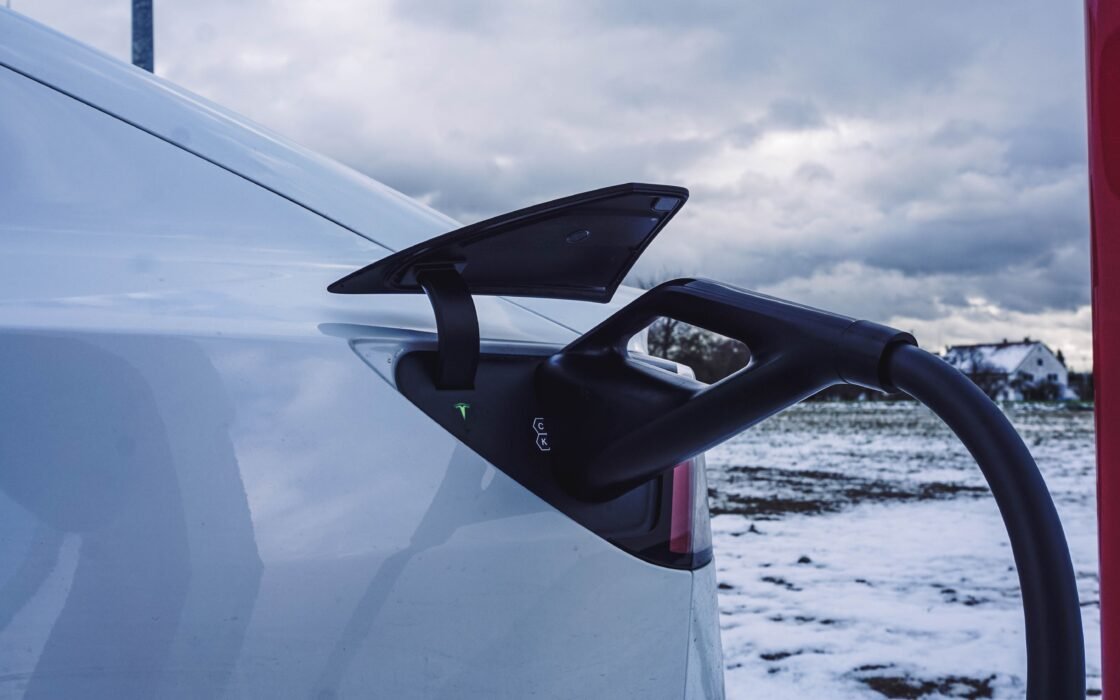
Charging is slower. A cold pack cannot accept high current safely, so DC fast charging in particular slows dramatically until the battery warms. Some cars will precondition the battery automatically when you navigate to a fast charger; if yours does, use that feature.
Charging is less efficient. More of the energy you pay for goes into heating the pack rather than filling it, so charging losses rise above the usual 10 to 15%. Your electricity bill climbs for two compounding reasons — you’re driving fewer miles per kWh and paying for more kWh per charge. We broke down how to calculate that in our guide to what it really costs to charge an EV at home.
Seven things that actually help
In rough order of how much difference they make:
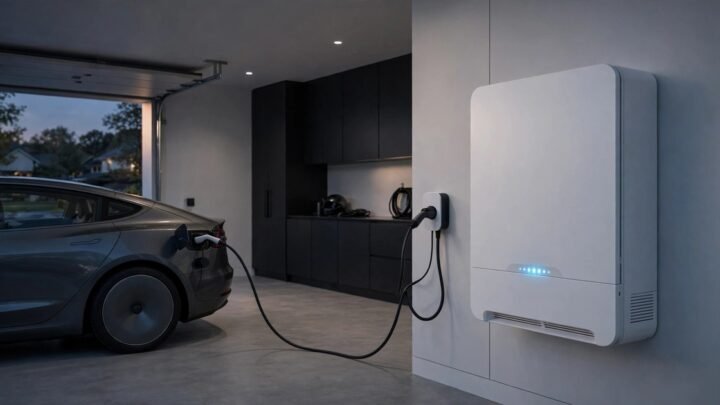
- Precondition while still plugged in. This is the single most effective habit in winter driving. Warming the cabin and battery using grid power, before you unplug, means you start your journey warm without spending a single mile of range on it. Nearly every EV supports scheduled departure — set it once and forget it.
- Use heated seats and the heated steering wheel instead of cabin heat. Heating a person directly costs a fraction of heating the air around them. Many owners run cabin heat low and rely on contact heating almost entirely.
- Check tyre pressures monthly in winter. Pressure falls roughly 1 psi for every 10°F drop. Underinflated tyres cost range in every season; in winter they compound a loss you’re already taking.
- Park inside if you can. A garage that’s merely unheated still keeps the car meaningfully warmer than an open driveway, and a warmer starting pack means less energy spent getting it working.
- Slow down. Aerodynamic drag rises with the square of speed and cold air is denser. Dropping from 75 to 65 mph on a winter motorway run buys back real miles.
- Keep the battery in its middle range on very cold days. A pack sitting near empty in deep cold has less energy available to warm itself, and regenerative braking is often limited on a cold or full battery.
- Plan a bigger buffer. Not a fix, but the one that prevents actual problems. If you normally arrive at a charger with 10%, plan for 20% in winter.
One more decision to make before winter arrives: whether the all-wheel-drive upgrade is worth paying for. Our EV all-wheel-drive cost breakdown puts real numbers on the $3,000–$5,000 premium — and explains why winter tyres matter more for safety than the second motor.
Is any of this permanent?
No. Cold-weather range loss is entirely temporary, and driving an EV in winter does not damage the battery. Range returns as temperatures rise.
Long-term battery degradation is a genuine and separate topic, driven by charging habits, heat and age rather than by winter driving. Do not confuse a seasonal dip with a failing pack — an EV that shows 30% less range in January and returns to normal in April is behaving exactly as designed.
Frequently asked questions
Why does my range estimate drop before I’ve even driven anywhere? Most cars calculate the estimate from recent efficiency and current conditions, including the energy it expects to spend on heating. It is predicting a colder, hungrier journey — not reporting lost battery capacity.
Do EVs lose more range in winter than petrol cars? Yes, proportionally. Petrol cars also lose efficiency in the cold — commonly around 10 to 20% in short-trip winter driving — but they get cabin heat free as engine waste, so the effect is smaller and far less visible because there’s no percentage on the dashboard.
Should I avoid buying an EV if I live somewhere cold? No, but choose carefully. Prioritise a heat pump, consider a model with more rated range than you think you need, and treat published EPA range as a summer figure.
Since cold weather takes its cut from whichever battery you bought, winter drivers feel the battery-size decision most — our math on what the long-range upgrade really costs per mile shows when the bigger pack earns its premium.
Does preconditioning use a lot of electricity? It uses a meaningful amount — but from the wall at home rates rather than from the battery mid-journey. That’s precisely why it works. If you’re on an off-peak rate, it’s cheap on top of that.
Is Level 1 charging enough in winter? It’s the season where the margin gets tight. A car that comfortably recovers its daily use overnight in summer may fall slightly behind in January, because both consumption and charging losses rise. Our guide to Level 1 vs Level 2 charging covers the mileage threshold where that becomes a problem, and what an upgrade costs in our breakdown of home charger installation.
The short version
Expect to lose roughly 20 to 30% of your range at freezing, more in deep cold and on short trips, less on longer runs and in cars with a heat pump. Most of that loss is cabin heating rather than battery chemistry, which is good news — because heating is the part you can manage.
Precondition while plugged in, lean on the heated seats, keep your tyres up, and plan a wider buffer. Those four habits recover most of what winter takes, and none of them cost anything.
Tire choice matters here too: no all-season, EV-branded or not, matches a dedicated winter tire below about 7°C.
Summer heat runs the same physics in reverse — how heat affects EV range walks through what the other season costs and the tricks that fight it.
Sources
Recurrent 2025–26 winter analysis of more than 30,000 US electric vehicles — average range retention at 32°F and model-level results across 34 models. AAA cold-weather testing — cabin heating impact. NAF (Norway) winter testing — heat pump versus resistive heating comparison at −10°C. US Department of Energy — cold-weather efficiency in urban and highway driving. Figures are fleet averages; individual results vary with trip length, driving style and heating hardware.