Every “best EV tires” list works from the same assumption: your EV needs tires with “EV” on the box. In July 2026 Consumer Reports actually tested that assumption, and it did not survive.
CR bought four sets of EV-specific replacement tires, fitted them to a 2024 Tesla Model 3 Long Range AWD, and ran them against the original-equipment tires and two ordinary non-EV tires through wet and dry braking, handling, hydroplaning, ice, snow, noise, rolling resistance and treadwear — plus a highway range test. Their conclusion was that a conventional all-season tire can deliver better bad-weather performance and longer tread life than the tires your EV came on, and cost less.
Below is what that means for your money, including the arithmetic on whether an efficiency-focused tire can ever earn back its price premium. The short answer is that it needs to be about 15% more efficient, and none of them are.
The key numbers
- $199 to $289 — what CR paid per tire, cheapest non-EV to dearest EV-specific
- 15.2% — the efficiency edge an EV tire needs to justify that gap. Real differences run 2–8%.
- $727 — a year’s charging at 13,800 miles, so 5% better efficiency saves $36
- 1.77¢ vs 3.85¢ — cost per mile, cheap-and-long-lasting versus premium-and-short
- 50%+ — share of surveyed EV owners who replaced tires at or before 30,000 miles
- 66% — share who did not buy the same tire their car came with
What Consumer Reports actually tested
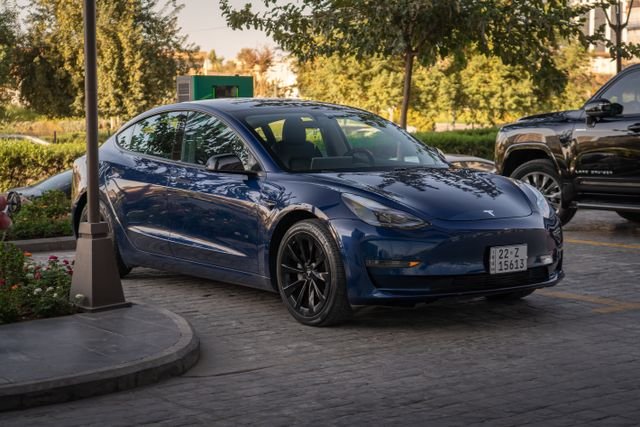
The test car was a 2024 Model 3 Long Range AWD on 18-inch wheels, size 235/45R18-XL. The baseline was the Hankook Ventus S1 AS T0 it came with from the factory.
Against that, four EV-specific tires: the Bridgestone Turanza EV, Hankook Ion Evo AS, Pirelli PZero All Season Plus Elect, and Yokohama Advan Sport EV A/S. And crucially, two tires with no EV branding at all: the General Altimax RT45, an ordinary all-season, and the Michelin Pilot Sport All Season 4, an ultra-high-performance all-season. Both in XL (extra load) versions, which matters because EVs are heavy.
The findings, in CR’s own framing:
- When safety factors were prioritised, a non-EV-specific tire was the better choice — EV-tuned tires are optimised for efficiency and may give up wet and winter performance to get there.
- Even when the ratings were weighted toward efficiency, the plain all-season ranked as high as the top-rated EV tire, carried there by wet braking, snow and ice grip, and hydroplaning resistance.
- Those results came without a significant range penalty.
- The ultra-high-performance all-season was outstanding in the wet but took a noticeably bigger bite out of predicted highway range.
That last pairing is the real lesson. The trade-off is not “EV tire versus normal tire”. It is grip versus efficiency, and it exists inside both categories.
The number that settles it: what is efficiency worth?
Tire marketing sells rolling resistance as if range were priceless. Put a dollar figure on it and the argument collapses.
Driving 13,800 miles a year at 3.5 miles per kWh, on the US average residential rate of 18.44 cents (EIA), costs $727 a year in electricity — see our state-by-state charging costs for your local figure. An efficiency advantage is worth a percentage of that, and only that.
| Efficiency advantage | Saved per year | Saved over a 45,000-mile tire life |
|---|---|---|
| 2% | $14.54 | $47 |
| 3% | $21.81 | $71 |
| 5% | $36.35 | $119 |
| 8% | $58.17 | $190 |
Now the other side. The gap between CR’s cheapest tire ($199 each) and its dearest ($289 each) is $360 across a set of four. For that premium to pay for itself in saved electricity over 45,000 miles, the expensive tire would need to be 15.2% more efficient.
Rolling-resistance differences between good modern all-season tires are nothing like 15%. They are usually in the low single digits, occasionally approaching 8% at the extremes. The efficiency case for paying a premium does not close. It is not close to closing.
Which does not mean spend the minimum. It means buy on the things that actually differ by enough to matter: wet braking distance, tread life, and noise.
Cost per mile, which is the only price that counts
A tire’s sticker price tells you almost nothing without its tread life. Using CR’s actual paid prices and the manufacturers’ treadwear warranties:
| Tire | Per tire | Set of 4 | Warranty life | Cost per mile |
|---|---|---|---|---|
| General Altimax RT45 (non-EV all-season) | $199 | $796 | 45,000 mi | 1.77¢ |
| Bridgestone Turanza EV | $255 | $1,020 | 50,000 mi | 2.04¢ |
| Hankook Ventus S1 AS T0 (Tesla OE) | $209 | $836 | 30,000 mi | 2.79¢ |
| Pirelli PZero AS Plus Elect (EV) | $289 | $1,156 | 30,000 mi | 3.85¢ |
The spread is 2.2 times between top and bottom — far larger than any efficiency difference, and it compounds. Over 100,000 miles the Altimax costs about $1,769 in tires. The Pirelli costs about $3,853.
Two honest caveats. The life figures are manufacturer treadwear warranties, not CR-measured wear, and warranties are optimistic. And a performance tire is not trying to last 45,000 miles — you buy grip and accept the wear. The table is not a verdict on which tire is better; it is a reminder that “cheap” and “expensive” flip once you divide by miles. Our breakdown of why EV tires wear faster and cost more works through the wear side in detail.
What EV owners are actually experiencing
Alongside the test, CR surveyed its EV charging community. The results explain why this question comes up so often:
- More than 30% replaced their tires sooner than they expected.
- More than half replaced them at or before 30,000 miles.
- About 66% chose something other than the tire the car came with.
- The biggest surprises were the speed of wear (25%), the cost of replacements (16%), and how few choices there were (11%).
That last one is worth dwelling on. EV-specific tires are new, niche products, so they come in far fewer sizes than mainstream all-seasons. If you drive something less common than a Model 3, the “best EV tire” may simply not exist in your size — which makes the CR finding practical rather than academic. A well-chosen conventional tire is not a compromise you settle for; on their numbers it can be the better buy.
The four things that actually matter when choosing
1. Load rating. This is the one non-negotiable. EVs are heavy — a Model Y weighs roughly 500 pounds more than a comparable petrol crossover, and a full-size electric truck is in another league entirely. Fit XL (extra load) or HL tires, and never go below the load index printed on your door jamb placard. This, not the EV badge, is what “EV tire” mostly means in engineering terms.
2. Wet braking. The single most consequential safety number, and where CR found EV-tuned tires can give ground. A few feet of stopping distance matters more than a few miles of range, every time.
3. Tread life. Instant torque and extra mass chew through rubber. The treadwear warranty is a rough guide; UTQG treadwear grade is a rougher one. Both beat guessing.
4. Noise. Underrated in an EV specifically, because there is no engine masking road roar. Some EV tires use acoustic foam inside the casing for this, and it works. If cabin quiet is why you bought an electric car, this is worth paying for — more than efficiency is.
Notice what is not on that list: whether the sidewall says EV. It is a marketing category, not a specification.
When an EV-specific tire IS the right call
The contrarian case has limits, and it is only fair to name them.
Very heavy or very powerful EVs. A Rivian R1T, Hummer EV or Silverado EV puts loads through a tire that mainstream all-seasons were not designed for. Here the EV-engineered construction is doing real work.
Cabin quiet as a priority. Foam-lined EV tires genuinely reduce road noise, and that is a difference you notice on every drive rather than once a year on a spreadsheet.
Range anxiety on a marginal commute. If your daily drive sits close to your car’s real winter range, a few percent matters in a way it does not for someone with headroom. Winter already costs you far more than tires do — see why EV range drops in winter — so the marginal case is real even if it is narrow.
Your car’s OE tire is well regarded and cheap. Sometimes the factory choice is simply good. CR’s baseline Hankook cost $209, less than two of the EV-specific alternatives.
Winter tires beat everything, if you have real winter
No all-season tire, EV-branded or not, matches a dedicated winter tire below about 7°C. If you live somewhere with genuine snow, a second set on steel wheels is a better use of money than any all-season upgrade, and it makes the summer set last longer because you are only running each half the year.
The efficiency cost is real — winter compounds have higher rolling resistance — but you are already losing far more range to cabin heating in those months. Nokian, Michelin and Bridgestone all make winter tires in EV-friendly load ratings, and Recurrent’s tire research tracks which lines come in EV sizes.
How to buy without overpaying
- Start from the placard, not the marketing. Size, load index and speed rating are on the driver’s door jamb; NHTSA explains how to read them. Match or exceed all three.
- Compare cost per mile, not sticker price. Divide the set price by the treadwear warranty. The ranking often inverts.
- Weight wet braking above rolling resistance. The arithmetic above shows efficiency is worth tens of dollars a year. Braking distance is not measured in dollars.
- Do not rule out non-EV tires. On CR’s testing they can win outright, and they come in far more sizes.
- Keep them inflated. Under-inflation costs more range than any tire choice on this page, and accelerates wear. Check monthly — EVs are heavy and lose pressure like anything else.
Tires are now the largest recurring running cost of an EV, ahead of maintenance and often ahead of the electricity itself on a per-mile basis. That makes this a bigger financial decision than most owners treat it as. Our EV maintenance schedule covers where the rest of the money goes, and the five-year EV versus petrol comparison puts tires in the context of the whole ledger.
Frequently asked questions
Do I need EV-specific tires on an electric car?
No. You need tires with the correct load rating, size and speed rating. Consumer Reports’ 2026 testing found a conventional all-season could match or beat EV-specific tires overall, including on efficiency-weighted scoring, largely because of better wet and winter grip.
Are EV tires more expensive?
Usually. In CR’s test the EV-specific tires ran from $255 to $289 each against $199 for a conventional all-season and $209 for the Tesla’s factory tire. Per mile the gap widens further, because price and tread life do not move together.
How much range do EV tires actually save?
Less than the marketing implies. Realistic rolling-resistance differences of 2–8% translate to roughly $15 to $58 a year at average US mileage and electricity prices — nowhere near enough to recover a $360 price premium over a tire’s life.
Why do EV tires wear out so fast?
Weight and instant torque. In CR’s survey more than half of EV owners replaced tires at or before 30,000 miles, and over 30% said it happened sooner than expected.
What is the best all-round EV tire?
There is no single answer, because the right tire depends on your climate, your car’s weight and whether you value grip or quiet. What the testing does say is that the label on the box is the wrong place to start — load rating, wet braking and tread life are the right ones.
Can I fit regular tires to a Tesla?
Yes, provided they match the size and meet or exceed the load index and speed rating on the door placard. Look for XL or HL versions. CR’s comparison tires were ordinary all-seasons in XL form.
Do winter tires hurt EV range?
Slightly, through higher rolling resistance. It is a small cost against the much larger range loss cold weather causes anyway, and the safety gain below 7°C is not something an all-season can match.
The short version
Consumer Reports fitted EV-specific tires to a Model 3 and tested them against ordinary ones, and the ordinary all-season held its own even when the scoring favoured efficiency — while costing less and lasting longer. The reason is arithmetic: a year’s charging costs about $727, so a 5% efficiency edge saves $36, while the price gap between the cheapest and dearest tires in that test was $360 a set. An EV tire would need to be 15% more efficient to break even, and none are. Buy on load rating first, wet braking second, tread life third and noise fourth. Compare cost per mile rather than sticker price. And if you get real winter, a second set of winter tires beats every all-season on this page.