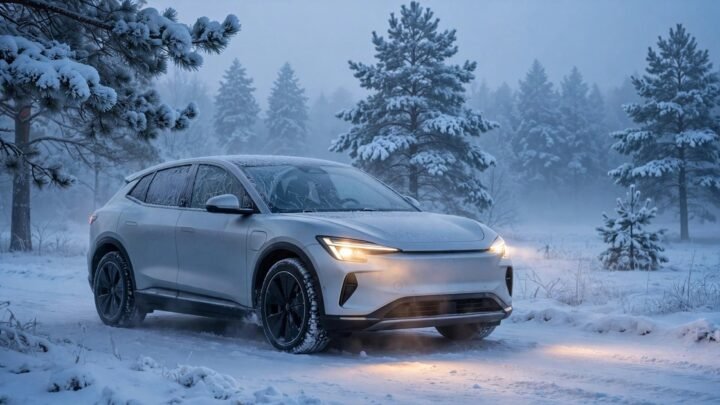
Buying a used petrol car, you check the engine. Buying a used EV, the engine is essentially maintenance-free and the thing that decides whether you got a bargain or a liability is bolted under the floor where you can’t see it.
Steep depreciation is a disaster if you buy new and a gift if you do not, which is why a used EV is the strongest financial case in the market right now.
Before working through the inspection, it is worth knowing which models are actually worth inspecting — and that the used market turned upward in 2026.
The good news is that unlike an engine, a battery will tell you its condition as a number — if you know how to ask. This checklist covers what to verify before you visit, what to check when you’re standing at the car, and the specific findings that should end the conversation.
Part 1: Checks to make before you leave the house
Most of the value in this process comes from paperwork, not from kicking tyres. Do these before you spend an afternoon driving to see a car.
Confirm the in-service date, not the model year
The battery warranty clock starts on the day the car was first sold, not on 1 January of its model year. A 2020 car first registered in mid-2021 has almost a year more coverage than its badge suggests — and sometimes the reverse. Get the VIN from the seller and confirm the in-service date through the manufacturer or an authorised dealer.
Confirm the warranty transfers
Battery coverage usually attaches to the VIN and passes to subsequent owners, but this is not universal — some brands do not transfer full coverage to a second owner. Read the actual terms for that make. If the warranty does not transfer, you are carrying the entire replacement risk yourself and the price should reflect that.
Check open recalls
Run the VIN through the NHTSA recall lookup and the manufacturer’s owner portal. You’re looking for open recalls, past battery replacements, and whether battery-related software updates have been applied. Battery recalls and software updates can materially change how a pack behaves, and an unaddressed one is a job you’ll inherit.
Ask the seller four questions by message
- What is the current State of Health, and can you send a screenshot?
- Was this car charged mostly at home or on DC fast chargers?
- Have there been any high-voltage repairs or battery warranty claims?
- Does this trim have a heat pump?
You are testing two things at once here: the answers, and the willingness to answer. A seller who becomes evasive about battery health — “they’re all fine, it’s an EV” — has told you something useful.
Part 2: Understanding State of Health
State of Health (SoH) is the percentage of original usable capacity the pack still holds. A new car is 100%. Degradation is normal, front-loaded in the first year or two, and then slow. We cover what drives that decline in our guide to EV battery health and degradation.
| Age and mileage | Healthy SoH | Negotiate | Walk away |
|---|---|---|---|
| 2 years, 25k miles | 92%+ | 88–92% | Under 88% |
| 3–4 years, 50–60k miles | 88–94% | 82–88% | Under 82% |
| 6 years, 80k miles | 85%+ | 78–85% | Under 78% |
The principle behind the table matters more than the exact figures: SoH, age and mileage should tell a consistent story. A five-year-old car with 60,000 miles at 90% is unremarkable. The same car at 78% means something happened — heavy fast charging, a hot climate, or a pack that was never healthy.
Below roughly 80% within normal mileage, you either need a substantially lower price or you should leave it. Note also that the 70% figure most warranties use as their failure threshold is a floor, not a target. A pack at 75% is not covered and is not good.
Part 3: How to actually check the battery
Three methods, in ascending order of reliability.
The free method: full charge and read the range
Charge to 100%, note the estimated range, and divide by the car’s original EPA rating. A car rated at 259 miles showing 230 at full charge is displaying roughly 89%.
This is a rough indicator only, and it has a serious trap: the range estimate is calculated from recent driving efficiency. A previous test driver who ran the heater and drove hard will depress the number without any degradation existing. If you’re inspecting in cold weather, the reading will be low for reasons that have nothing to do with battery health — we cover why in our guide to why EV range drops in winter. Treat this method as a screening tool, not evidence.
The cheap method: an OBD-II dongle
A Bluetooth OBD-II adapter costs somewhere between $35 and $100 and, paired with a model-specific app, reads the battery management system directly. This gives you an actual SoH figure and often cell-level detail, rather than an inference from a range display.
If you’re going to look at several cars, this pays for itself on the first one. Bring it, and ask permission to plug it in before you do.
The reliable method: an independent EV inspection
Independent EV inspection services operate in most major metro areas and typically charge a few hundred dollars for a full battery report using EV-specific diagnostic tools, covering pack health, charging system condition and high-voltage components.
On a car costing $20,000 or more, this is cheap insurance, and the report frequently pays for itself in negotiating room. Confirm in advance that the inspector supports that specific make — EV diagnostics are brand-specific.
Part 4: Red flags that end the conversation
- SoH well below the age-and-mileage norm with no explanation
- Significant cell imbalance shown in a diagnostic scan — this points to a pack problem, not normal wear
- A replaced pack with no documentation of whether it was new, refurbished or salvage
- Repeated thermal warnings or a history of overheating messages
- Any battery or high-voltage warning light, however the seller explains it
- Open recalls that haven’t been performed
- A seller who won’t allow a diagnostic scan
The air-cooled trap
One category deserves specific mention. Some early EVs — most notably the first-generation Nissan Leaf — used passively air-cooled packs with no active thermal management. In hot climates these degraded severely, with some losing around 30% of capacity within about three years.
If you’re looking at an older, cheap EV, find out whether the pack is liquid-cooled. An air-cooled car that has spent its life in Arizona, Texas or Florida is a different proposition from the same car in Oregon, and the price rarely reflects the difference.
Check for a heat pump
Ask specifically whether the trim and model year has a heat pump. It is often optional, and it has been added or removed between model years on the same nameplate. Cars with heat pumps lose substantially less range in cold weather — roughly 18.5% at −10°C versus around 31% for resistive-heater cars — which affects your usable range every winter for as long as you own it. If the car you’re considering charges extra for it, run the numbers first with our heat-pump buying guide and payback calculator.
Part 5: The tax credit situation in 2026
The federal used clean vehicle credit under Section 25E — worth up to $4,000, or 30% of the sale price on qualifying vehicles under $25,000 — was terminated by the One Big Beautiful Bill Act for vehicles acquired after 30 September 2025. It has not been replaced.
There is a silver lining for buyers. Used EV prices have been moving in shoppers’ favour as the first large wave of leased EVs returns to dealer lots, which means a three or four-year-old car is now genuinely reachable for a lot of households.
Part 6: Negotiating with the number
A SoH figure turns negotiation from opinion into arithmetic. A workable approach:
- Establish the market price for the same model and mileage in good health
- For each SoH point below about 92%, discount roughly 1.5–2% for a compact EV, and 2–2.5% for a premium one
- If SoH is borderline but acceptable for your use, ask the dealer to include an extended warranty rather than cutting the price
Arriving with a diagnostic reading and a clear method signals that you are not negotiating on feeling. Many sellers still expect used EV buyers to have no way of assessing the pack.
Part 7: Before you sign, sort out charging
The car is only half the purchase. Work out where it will charge before you commit, not after.
Worth getting insurance quotes at the same time — used EVs insure well below new ones.
If you park at home overnight and drive modest daily distances, the cable supplied with the car may be all you need — our guide to Level 1 vs Level 2 charging sets out the mileage threshold. If you’ll need a Level 2 circuit, get a quote first, because the cost varies enormously with your electrical panel; we break it down in home EV charger installation cost. And to know what the car will actually cost to run in your state, see what it really costs to charge an EV at home.
The 14-point checklist
Print this. Take it with you.
- VIN obtained and in-service date confirmed
- Battery warranty end date calculated from that date
- Warranty transferability to a second owner confirmed in writing
- Open recalls checked via NHTSA and the manufacturer
- Prior battery warranty claims or pack replacements disclosed
- State of Health screenshot received before the visit
- SoH verified independently by dongle or professional inspection
- SoH consistent with the car’s age and mileage
- Pack is liquid-cooled, or the climate history is benign
- Heat pump presence confirmed for the specific trim and year
- Charging history established — home charging versus heavy DC fast charging
- No battery, thermal or high-voltage warnings present
- Test drive shows charge percentage and range falling together, without sudden drops
- Home charging arrangement and cost understood before signing
- Tread depth and even wear checked on all four tyres
Frequently asked questions
Is high mileage as bad on an EV as on a petrol car? Generally less so. There’s no engine, gearbox or exhaust to wear out, and drivetrain maintenance is minimal. Battery age and charging history matter more than the odometer — a low-mileage car that lived on DC fast chargers in a hot climate can be in worse shape than a higher-mileage car charged gently at home.
Does DC fast charging really damage the battery? Heavy, near-exclusive use of fast charging accelerates degradation, particularly in cars with weaker thermal management. Occasional road-trip fast charging is not a problem. It’s the pattern that matters, which is why the charging-history question is on the list.
What if the car is just outside its battery warranty? Then the pack risk is entirely yours, and the price must reflect that. Insist on a formal SoH report, and be markedly less tolerant of a borderline number than you would be on a car with coverage remaining.
Is a certified pre-owned EV worth the premium? Sometimes — but read what the certification actually covers regarding the high-voltage battery specifically. Some CPO programmes extend the drivetrain warranty while leaving battery coverage on the original schedule.
If the used EV you are eyeing is nearly out of factory warranty, read our breakdown of whether an EV extended warranty is worth it before you sign anything.
The short version
On a used EV, one number does most of the work: State of Health, verified independently rather than taken on trust. Confirm the in-service date, confirm the warranty transfers, get a diagnostic reading, and check that SoH, age and mileage agree with each other.
Do that and a three or four-year-old EV is one of the better value purchases on the used market right now. Skip it and you are buying the single most expensive component in the car sight unseen. We ran the full numbers on why used is where the savings actually are in our EV vs gas cost comparison.
Sources
Internal Revenue Code Section 25E as terminated by the One Big Beautiful Bill Act (Public Law 119-21) — used clean vehicle credit end date; US Department of Energy Alternative Fuels Data Center. Federal high-voltage battery warranty minimums and ZEV-state extensions. Industry State of Health benchmarks and inspection cost ranges reflect 2026 US used-EV market reporting. Heat pump cold-weather comparison from NAF winter testing. Verify warranty terms by VIN with the manufacturer before purchase.