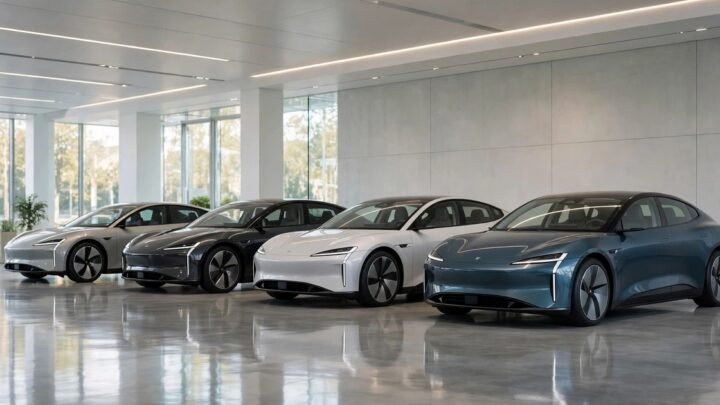
Every guide to buying a used EV published in the last two years says the same thing: prices have collapsed, get in now before they recover.
They already have. Between January and June 2026, Recurrent compared 108 make-model-year combinations against themselves and found used EV prices rose 5.1% on a volume-weighted basis. Used cars do not normally appreciate. These did.
That does not make a used EV a bad buy — it is still comfortably the strongest financial case in the electric car market. It does mean the advice needs updating, and it means knowing which parts of the market went up and which are still falling. They are not the same parts.
The key numbers
- +5.1% — used EV prices, January to June 2026, same models compared over time
- $35,895 — average used EV listing price, April 2026
- $31,329 vs $23,738 — average used Tesla against the rest of the market
- 97% and 95% — range retained at three and five years
- 2% → 8% — EVs as a share of all lease returns, 2025 to 2026
- $727 a year — fuel cost of a used EV charged at home, against $1,877 for a 30 mpg petrol car
What prices actually did, and the split inside them
The headline numbers hide two markets moving in opposite directions.
Cox Automotive’s April 2026 EV Market Monitor put the average used EV listing at $35,895 — up 4.2% on the month and essentially flat year over year. Recurrent’s Q1 figures showed an average minimum listing price of $29,400, with 17.9% of used EV sales under $25,000 in the preceding 90 days.
Then the split. Comparing listings between September 2025 and January 2026, iSeeCars found average used Tesla prices rose 4.3% to $31,329, while the average for the rest of the used EV market fell 3.6% to $23,738. A $7,591 gap, about 32%.
Tesla moved against the trend partly because discontinued Model S and X variants tightened supply, and partly because Tesla buyers were never as dependent on the incentives that expired in September 2025. Everyone else’s used prices absorbed the shock instead.
The practical translation: the bargains are outside Tesla. If you want the largest discount to what the car cost new, you are looking at Hyundai, Kia, Ford, Chevrolet, Nissan and the luxury German and American brands — not at a used Model 3.
The supply wave that is about to arrive
One reason not to panic about the 5.1% rise: a large volume of cars is heading for the used market.
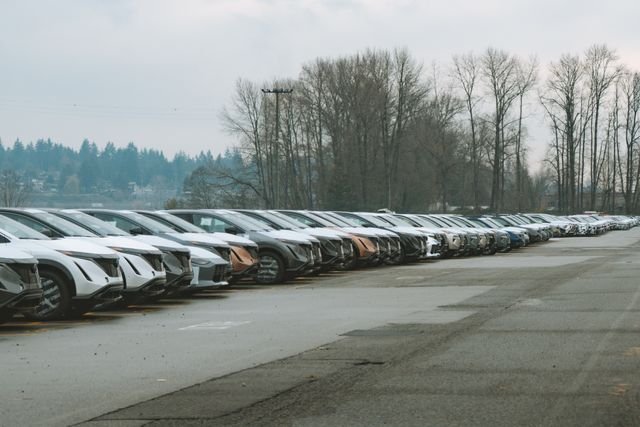
Enormous numbers of EVs were leased in the early 2020s, and those leases are ending now. EVs are projected to jump from 2% of all lease returns in 2025 to 8% in 2026 — a fourfold increase in off-lease supply, arriving into a market where demand for new EVs has fallen since the credits expired.
So the picture for the rest of 2026 is genuinely two-sided: prices have firmed from the floor, but a supply wave is landing. That argues for patience on a specific model rather than urgency on any model.
The thing buyers fear most is the thing least likely to go wrong
Battery degradation dominates every used-EV conversation, and the data does not support the level of anxiety.
Recurrent has analysed over a billion miles of electric driving across tens of thousands of vehicles. Its finding: the average EV retains 97% of its original range after three years and 95% after five. Cadillac, Ford, Hyundai, Mercedes-Benz and Rivian showed no observable range loss at three years at all. High-mileage cars past 100,000 miles commonly report state of health in the high 80s to mid 90s.
Set that against the warranty: most manufacturers cover the pack for at least 8 years or 100,000 miles (the federal minimum is set out by the Department of Energy) and guarantee at least 70% capacity within it. A three or four-year-old car sitting at 88–92% state of health has years of headroom before it approaches that floor, and often several years of warranty left.
Which is not to say ignore it — ask for a state-of-health report and refuse vague reassurance. But if you are ranking risks on a used EV, the traction pack is not at the top. As our guide to the 12-volt battery shows, the part that actually strands people costs about $150. Our battery health guide explains how to read a state-of-health figure properly.
Where the market is mispricing cars right now
This is the most useful thing in Recurrent’s data and almost nobody acts on it.
EPA range ratings are laboratory figures, and real-world results diverge from them by brand. In Recurrent’s community data, Hyundai, Kia and Toyota EVs routinely deliver more range than their EPA rating, while Teslas typically deliver about 90% of theirs at three years.
Used pricing does not reflect this. The market pays a premium for the brand that under-delivers against its sticker and a discount for the brands that over-deliver. If you buy on real-world range per dollar rather than on badge, the Korean cars are the arbitrage.
The sweet spot: three to four years old
Mainstream EVs shed roughly 40–55% of their original price in the first three to four years, then depreciation slows sharply. On a car that cost $45,000 new:
| Age | Typical value lost | You pay | First owner absorbed |
|---|---|---|---|
| 3 years | ~47% | ~$23,850 | $21,150 |
| 4 years | ~55% | ~$20,250 | $24,750 |
| 5 years | ~59% | ~$18,450 | $26,550 |
Three to four years is where the curve flattens while the car still holds 88–92% state of health and often carries remaining battery warranty. You skip the worst of the depreciation and keep most of the useful life. Go older and you save less per year than you give up in warranty coverage and charging-standard relevance.
And the running costs come with it regardless of age. At 13,800 miles a year, a used EV charged at home costs about $727 in electricity against $1,877 for a 30 mpg petrol car and $1,173 for a 48 mpg hybrid. That gap is the same whether the car is new or five years old — which is precisely why buying used is the strongest version of the EV case. Our EV versus hybrid comparison works through why the same maths does not favour a new EV.
The used market’s recent strength is easier to understand once you know what changed on the new side — the tax credit that used to make new leases artificially cheap is gone entirely.
A lower purchase price also means a much smaller repair bill is enough to write the car off entirely after a crash.
What to buy
Under $20,000. The Chevrolet Bolt, Nissan Leaf, Hyundai Kona Electric and Kia Niro EV now trade in the mid-teens. These are genuinely good commuter cars if your daily driving fits their range — and as our Level 1 versus Level 2 guide shows, a modest daily commute may not even need a wallbox, and the Kona and Niro in particular are liquid-cooled with respectable fast-charging. Read the Leaf caveat below before committing to one.
$20,000–$30,000. The core of the market and where the off-lease wave is landing: three-year-old Ioniq 5s, EV6s, Mustang Mach-Es, ID.4s and Model 3s. The Korean cars are the value play here for the real-world range reason above; the Ioniq 5 and EV6 also charge on 800-volt architecture, which is a meaningful advantage on road trips — our charging time guide covers why.
The luxury bargain. Jaguar I-Pace, older Audi e-tron and some Mercedes EQ models have shed 60–70% of value in five years. A Mercedes EQS or Lucid Air that sold for $90,000–$105,000 can be found under $45,000. Extraordinary cars for the money — with a warning attached below.
What to avoid, and why
- CHAdeMO cars. Older Nissan Leafs use a fast-charging standard that is disappearing from new sites. The car works fine; your road-trip options shrink every year. This is why the Leaf depreciates hardest of the mainstream EVs.
- Air-cooled packs in hot climates. Early Leafs used passive cooling, and cars that lived in Arizona or Texas show substantial degradation that liquid-cooled packs do not. Where the car spent its life matters more than its mileage.
- Luxury EVs out of warranty. A $20,000 Jaguar or Audi still carries luxury-brand pricing on tyres, parts and repairs. A $10,000 EV needing a $12,000–$18,000 pack is not a bargain. Buy these with warranty remaining or with money set aside.
- Sub-150-mile range as an only car. A BMW i3 or Mazda MX-30 is a fine second car and a difficult only one. Run your actual weekly driving before deciding.
- Unclear recall history. Several models have had high-profile battery recalls. A completed recall can be a positive — you may have a newer pack than the car’s age suggests — but an unclear or incomplete one is a risk you cannot price.
Before you sign
- Get a state-of-health report, not a verbal assurance. Compare the displayed full-charge range against the original EPA rating, and use a diagnostic scan that reports remaining capacity where you can.
- Check remaining battery warranty by date and mileage. Two identical cars at the same price are not the same purchase if one has three years of pack coverage left and the other has none.
- Ask where it lived and how it charged. Hot climate plus constant DC fast charging is the worst combination for a pack; mild climate plus mostly home Level 2 is the best.
- Confirm the charging standard and whether it needs an adapter for the networks near you — see our adapter guide.
- Take a long mixed-route test drive and watch how fast the state of charge falls against the miles covered. This catches problems no report will show.
- Verify recall completion through the manufacturer using the VIN.
Our full used EV buying checklist goes through the inspection in detail, including what to test on the drive itself.
Frequently asked questions
Are used EV prices still falling in 2026?
Not overall. Comparing the same models between January and June 2026, prices rose 5.1% on a volume-weighted basis. The steepest declines happened in 2023 and 2024. Used Teslas rose while the rest of the market fell slightly, so the direction depends on which brand you are looking at.
How much does a used EV cost?
The average listing was $35,895 in April 2026, but that average is pulled up by newer and premium models. Recurrent recorded an average minimum listing of $29,400, and 17.9% of used EV sales in a recent 90-day window were under $25,000.
Should I worry about battery degradation?
Less than most buyers do. The average EV retains 97% of its range after three years and 95% after five, and several brands showed no observable loss at three years. Ask for a state-of-health report anyway, and check remaining warranty.
What is the best age to buy a used EV?
Three to four years. Depreciation has taken 47–55% of the price but the pack is typically still at 88–92% health with warranty remaining, and the depreciation curve has flattened.
Which used EVs should I avoid?
Cars on the fading CHAdeMO standard, early air-cooled packs that spent their life in hot climates, out-of-warranty luxury EVs where a pack replacement costs more than the car, and sub-150-mile models if this will be your only vehicle.
Is a used EV cheaper to run than a petrol car?
Substantially, if you charge at home — about $727 a year against $1,877 for a 30 mpg petrol car at 13,800 miles. Without home charging the advantage largely disappears.
Should I wait for prices to fall further?
The market is two-sided right now. Prices have firmed off the floor, but EVs are projected to jump from 2% to 8% of all lease returns this year, which is a large supply increase. Waiting makes sense for a specific model, not as a general strategy.
The short version
The used EV floor has passed — prices rose 5.1% in the first half of 2026 — but the market split, with used Teslas rising and everything else drifting down, so the bargains now sit outside Tesla. Buy at three to four years old, where depreciation has taken roughly half the price and the pack is still at 88–92% health with warranty left. Do not over-worry about degradation: EVs retain 97% of range at three years. Do worry about charging standard, climate history and out-of-warranty luxury repair bills. And note that the market pays a premium for the brand that delivers about 90% of its EPA range while discounting the Korean cars that beat theirs — which is where the value is hiding. A used EV is also the one case where low annual mileage stops being a penalty — why a used EV suits low-mileage drivers.