Almost every article on this question arrives at a single number, and almost every one of them is wrong — not because the arithmetic is bad, but because there is no single answer. Two people buying the same EV on the same day can end up $18,000 apart after five years.
What follows is the full ledger, including the three categories where the petrol car wins, and the two variables that decide which side you land on.
A petrol car is not the only alternative, and it is the easiest one to beat — a modern hybrid erases about 61% of the EV’s fuel advantage before you have changed a thing.
The six buckets that actually matter
1. Purchase price — petrol wins, and by more than it used to
The gap has narrowed but not closed. A comparable new EV still typically costs several thousand dollars more than its petrol equivalent, and that difference now lands on the buyer in full: the federal clean vehicle credit under Section 30D was terminated for vehicles acquired after 30 September 2025.
Any comparison written before autumn 2025 quietly assumed $7,500 of help that no longer exists. That single change is enough to flip several published conclusions, which is why the date on this kind of analysis matters more than the depth of it. State and utility incentives still exist and vary enormously — some are worth several thousand dollars, and they’re now the only purchase support available.
2. Fuel — EV wins, decisively
This is the EV’s largest and most reliable advantage. At the national average residential rate, a mid-size EV covering 13,500 miles a year costs roughly $650 in electricity. A 30 mpg petrol car covering the same distance at $3.45 a gallon costs about $1,550.
That works out around $61 a month for a mid-size EV at average mileage.
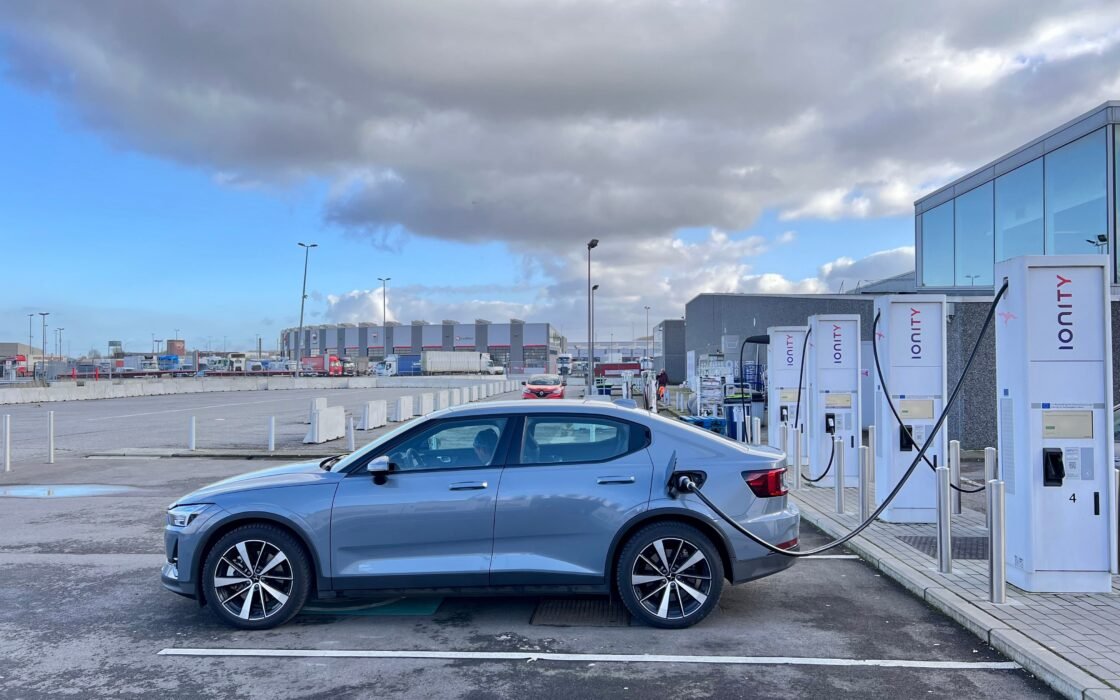
That’s a difference near $900 a year, or roughly $4,500 over five years — and it grows for high-mileage drivers, in states with cheap electricity, and on off-peak rate plans. It shrinks, and can vanish entirely, if you rely on public DC fast charging. The full state-by-state picture is in our guide to what it really costs to charge an EV at home, and current residential rates come from the EIA’s Electric Power Monthly.
3. Maintenance — EV wins
No oil changes, no spark plugs, no timing belts, no exhaust system, no transmission fluid, and far less brake wear because regenerative braking does most of the slowing. Consumer Reports’ analysis, replicated across multiple model years, puts EV maintenance and repair spending around 40% below comparable petrol cars. The exception is tyres, which wear faster on an EV and cost more to replace.
Reported figures commonly run $150–$400 a year for an EV against $900–$1,800 for a petrol car. Over five years, expect the EV to save somewhere in the region of $3,000 — and note that the gap tends to widen after year five, when combustion engines start needing the expensive work.
Our EV maintenance schedule sets out exactly what’s still due and when.
4. Insurance — petrol wins
Comparing 2024-and-newer models on both sides, EVs cost about 18% more to insure — roughly $500 a year, or $2,000 to $2,500 over five years. The reasons are structural rather than temporary: battery modules, motors and onboard electronics cost more to repair, and fewer independent shops are certified to do the work.
5. Depreciation — petrol wins, and this is the big one
Depreciation is the single largest cost of owning any new car, and it is the category most often left out of enthusiastic EV comparisons.
EV resale has been volatile. Values held up unusually well in 2022–23 on tight supply, then fell sharply through 2024–25 as supply increased and older short-range models aged badly. The market has stabilised somewhat in 2026, but a new EV still typically loses around $2,000–$3,000 more than a comparable petrol car over five years.
6. Charger installation — a one-off the EV carries alone
If you need a Level 2 circuit, that’s commonly $800–$2,700 up front, and the federal 30C credit that used to offset it expired on 30 June 2026. Our breakdown of home EV charger installation cost covers what drives the range — and it’s worth confirming you need Level 2 at all before assuming this cost, because many drivers don’t.
The five-year ledger, in full
Assumptions: a $42,000 EV against a $36,000 comparable petrol car, 13,500 miles a year, national average electricity and fuel prices, home charging, no federal credit.
| Category | EV | Petrol | Difference |
|---|---|---|---|
| Purchase premium | +$6,000 | — | Petrol +$6,000 |
| Fuel / electricity | $3,275 | $7,760 | EV +$4,485 |
| Maintenance | $1,500 | $4,500 | EV +$3,000 |
| Insurance | +$2,250 | — | Petrol +$1,000 |
| Extra depreciation | +$2,500 | — | Petrol +$2,500 |
| Charger install | $1,500 | — | Petrol +$1,500 |
| Five-year net | Petrol ahead by roughly $4,750 | ||
That result surprises people, so it’s worth being blunt about it: for an average-mileage driver buying new, without the federal credit, the petrol car is often slightly cheaper over five years. The EV’s running-cost advantage is real, but at 13,500 miles a year it doesn’t quite outrun the purchase premium, the depreciation gap and the charger.
Now change two assumptions and watch the answer invert.
The two profiles that decide everything
Profile A: high mileage, home charging
Drive 20,000 miles a year instead of 13,500, charge at home on an off-peak rate, and keep the car. Fuel savings rise to roughly $1,400 a year — about $7,000 over five years — and maintenance savings scale with mileage too.
The same ledger now puts the EV several thousand dollars ahead, and the gap widens every year you keep it, because the two categories where petrol wins (purchase premium and depreciation) are largely one-time hits while the EV’s advantages recur.
Profile B: low mileage, no home charging
Drive 8,000 miles a year, rely on public DC fast charging at commercial rates, and the fuel advantage largely evaporates — fast charging often costs two to three times home rates. You still pay the purchase premium, the insurance premium and the depreciation gap.
In this profile the EV can cost $7,000 or more extra over five years. This is the buyer nobody writes for, and it is a very common buyer: apartment dwellers without a plug at home. If you drive under 10,000 miles a year, our break-even mileage analysis for low-mileage drivers shows why the five-year math rarely works in the EV’s favor — and what changes the verdict.
How long you keep it matters as much as how far you drive
The purchase premium and the depreciation gap are front-loaded. The fuel and maintenance savings accumulate steadily, year after year. That means time is the EV’s ally.
Selling before roughly the sixth year frequently leaves an EV owner behind a comparable petrol owner. Holding for a decade maximises the advantage, and the maintenance gap grows in the later years as the combustion car starts needing serious work.
If you change cars every three years, the EV maths rarely works on cost alone. If you drive cars into the ground, it works well.
The shortcut almost nobody mentions: buy used
Every category where petrol wins is a new-car problem. Buy a three or four-year-old EV and the first owner has already absorbed the purchase premium and the steepest depreciation — while the fuel and maintenance advantages transfer to you intact.
This is why used EV ownership comparisons land so differently, commonly showing savings of $7,000–$11,000 over five years against a similarly priced used petrol car. The catch is that you’re now buying a battery of unknown condition, which is a solvable problem but not one to solve casually — our used EV buying checklist covers how to verify State of Health before you pay.
Running your own numbers
Five inputs, and you’ll have a better answer than any published average:
- Your annual mileage. Not your estimate — check two years of service records or insurance declarations.
- Your electricity rate. Total bill divided by total kWh, including fees. Then check whether your utility offers an off-peak plan.
- Your realistic charging split. What percentage will genuinely be at home? Be honest, not optimistic.
- The actual price gap between the two specific cars you’re choosing between — not a category average. FuelEconomy.gov lets you compare running costs for specific models directly.
- How long you’ll keep it. Under five years, weight the purchase premium and depreciation heavily. Over eight, weight fuel and maintenance heavily.
One more lens on the same question: our breakeven mileage calculator for EVs turns the five-year ledger into a per-mile payback figure using October 2026 fuel and power prices.
Frequently asked questions
Will I have to replace the battery? Most owners won’t within a normal ownership period. Federal rules require at least 8 years or 100,000 miles of battery warranty coverage, and packs generally outlast that. Budgeting for a replacement inside five years is not a realistic modelling assumption.
Does an EV make sense if I can’t charge at home? Financially, usually not — public charging removes the biggest advantage while leaving every disadvantage in place. There are non-financial reasons people still choose one, but the cost case is weak.
Why is EV insurance higher if there’s less to go wrong? Insurance prices repair cost, not failure frequency. Fewer things break, but the things that do break are expensive and fewer shops can fix them.
Do these numbers include winter range loss? Not explicitly, and it does affect real fuel costs — consumption rises in the cold and so do charging losses. See why EV range drops in winter. If you live somewhere with hard winters, trim the fuel saving somewhat.
What about petrol prices going up? Every dollar on the pump strengthens the EV case, and electricity prices are historically far less volatile than fuel prices. If you expect higher fuel prices over your ownership period, that’s a legitimate reason to weight the EV more favourably than this table does.
The short version
For an average-mileage new-car buyer without home charging, the petrol car is often modestly cheaper over five years now that the federal credit is gone. For a high-mileage driver who charges at home and keeps the car, the EV wins clearly and keeps winning.
The single best value in the whole comparison isn’t a new EV at all — it’s a three or four-year-old one, where somebody else has already paid the depreciation and you inherit the cheap fuel and cheap maintenance.
Sources
US Energy Information Administration — Electric Power Monthly, residential electricity prices. US Department of Energy and EPA FuelEconomy.gov — vehicle efficiency and running-cost comparison. Consumer Reports — EV maintenance and repair spending analysis. Internal Revenue Code Sections 30D and 30C as amended by the One Big Beautiful Bill Act — credit termination dates. Insurance and depreciation ranges reflect 2026 US market reporting. All figures in the ledger are illustrative calculations from the stated assumptions; substitute your own for a meaningful answer.