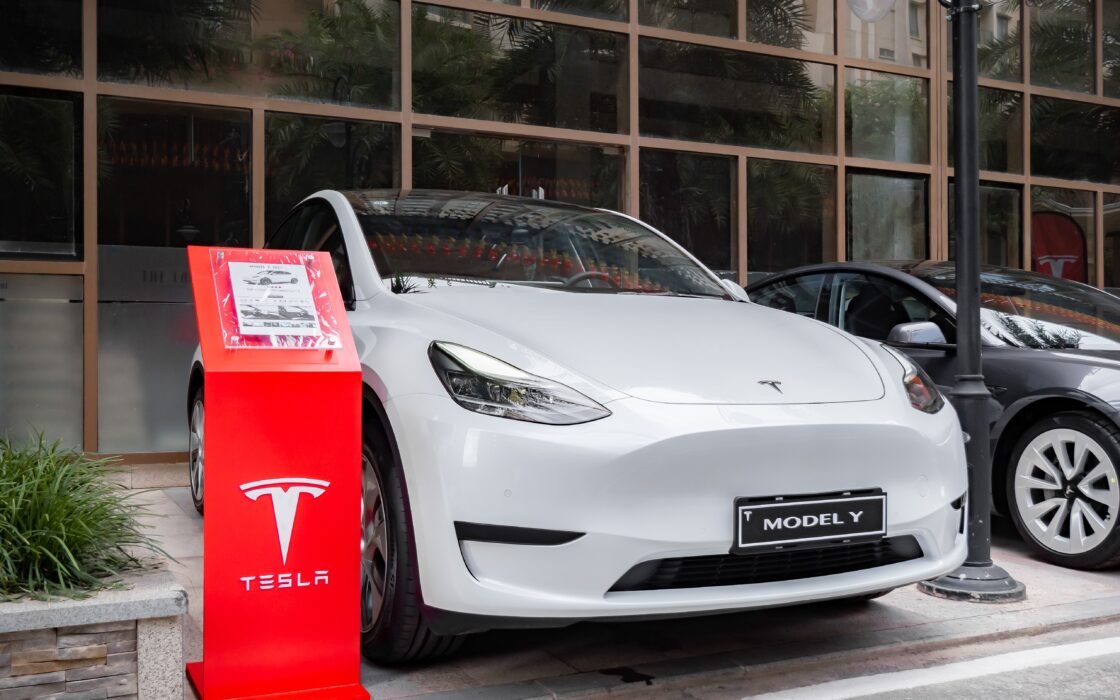
A full charge on a Model Y costs about $16 at home. It also costs $11, and $26, and $45 — depending entirely on which state you’re standing in.
This guide gives you the real numbers by trim and by state, the calculation to work out your own, and the one figure Tesla’s own range display quietly leaves out of every cost estimate you’ll read.
The formula, and the number everyone forgets
Charging cost comes down to three things: how much energy you put in, what your utility charges per kWh, and how much of that energy never reaches the battery.
That third item is where most online estimates go wrong. Converting AC from your wall into DC for the battery isn’t free, and neither is running the car’s thermal management while it charges. Roughly 10 to 12% of what you pay for never lands in the pack.
Here’s the neat part: you can see that loss in Tesla’s own published figures. The Long Range RWD has about 79 kWh usable and an EPA range of 357 miles — which works out to 4.5 miles per kWh measured at the battery. But its EPA rating of 134 MPGe translates to about 4.0 miles per kWh measured at the wall, because MPGe is tested wall-to-wheel.
The gap between those two numbers is your charging loss, and it’s about 12%. Every calculation below uses the wall figure, because that’s what your meter bills you for.
Which chemistry your Model Y has changes more than the charging bill — it changes what the manufacturer wants you to do every day.
What a full charge costs, by state
Based on a Long Range RWD with 79 kWh usable, plus 10% for charging losses — so roughly 87 kWh drawn from the wall.
| State | Rate (¢/kWh) | Full charge | Per 100 miles |
|---|---|---|---|
| Idaho | 12.35 | $10.73 | $3.10 |
| Utah | 12.96 | $11.26 | $3.25 |
| US average | 18.44 | $16.02 | $4.63 |
| New York | 29.99 | $26.06 | $7.53 |
| Hawaii | 52.00 | $45.19 | $13.05 |
Four times the cost for the same car doing the same journey. No driving technique, no charger upgrade and no efficiency trick closes a gap that large — where you live is the dominant variable and the one you can’t optimise.
Cost by trim
The Model Y lineup spans a meaningful efficiency range, and it shows up directly in your bill. At the US average rate of 18.44 cents:
| Trim | Efficiency | Per 100 miles | Per year (13,500 mi) |
|---|---|---|---|
| Long Range RWD | ~4.0 mi/kWh | $4.63 | $625 |
| Premium AWD | ~3.6 mi/kWh | $5.11 | $690 |
| Performance | ~3.1 mi/kWh | $5.94 | $802 |
The Performance costs about $180 a year more to run than the Long Range RWD. Over five years that’s roughly $900 — worth knowing when you’re choosing a trim, though it’s unlikely to be the deciding factor next to the purchase price difference.
Note that trim names and battery sizes have shifted between model years, and Tesla doesn’t officially publish pack capacities. Check your own car’s specification rather than assuming it matches a figure written for a different model year.
Against a petrol SUV
The comparison most people actually want. A comparable petrol SUV managing 28 mpg, at $3.45 a gallon:
| Scenario | Per 100 miles | Per year (13,500 mi) |
|---|---|---|
| Model Y, Idaho rate | $3.10 | $419 |
| Model Y, US average | $4.63 | $625 |
| Model Y, New York rate | $7.53 | $1,017 |
| Petrol SUV, 28 mpg | $12.32 | $1,663 |
| Model Y, Hawaii rate | $13.05 | $1,762 |
At the national average you’re saving roughly $1,040 a year on fuel. In cheap-electricity states it’s closer to $1,250. In Hawaii the Model Y costs more to run than the petrol SUV — a genuine outcome that no manufacturer’s marketing will mention.
Fuel is only one line in the ledger, though. Insurance, depreciation and the purchase premium all pull the other way, and we work through the complete five-year picture in EV vs gas car over five years.
Supercharging costs two to three times as much
Everything above assumes home charging. Supercharger rates typically land somewhere around 36 to 50 cents per kWh depending on location and time of day — roughly double to triple a home rate.
| Charging method | Per 100 miles | Per year (13,500 mi) |
|---|---|---|
| Home, US average | $4.63 | $625 |
| Home, off-peak rate | ~$3.00 | ~$405 |
| Supercharger at $0.42/kWh | $10.54 | $1,423 |
| Petrol SUV, 28 mpg | $12.32 | $1,663 |
Read the bottom two rows together. A Model Y run predominantly on Superchargers costs nearly as much to fuel as a petrol SUV — while you still paid the EV purchase premium and carry the higher insurance.
There’s a second cost too. Fleet data across more than 22,700 vehicles found cars relying on DC fast charging for more than about 12% of sessions degraded at up to 3.0% a year, against roughly 1.5% for AC-charged cars. Supercharging on road trips is exactly what it’s for; Supercharging as your default charging method is expensive twice over — see EV battery health and degradation. If you have no home charging at all, our guide to owning an EV without a driveway covers the workarounds.
Working out your own number in five minutes
- Find your real rate. Take your last electricity bill’s total dollar amount and divide it by total kWh used. Include every delivery charge and fee — this all-in figure is usually higher than the headline supply rate.
- Find your car’s real efficiency. The trip computer shows Wh/mile. Use a lifetime average, not a good week.
- Convert. 1,000 ÷ Wh per mile = miles per kWh. So 270 Wh/mile is 3.7 mi/kWh.
- Calculate. (100 ÷ miles per kWh) × your rate × 1.1 = cost per 100 miles.
- Verify against reality. Compare an electricity bill from before you got the car with a recent one. The difference is what the car actually costs.
Step five settles arguments. Everything above it is an estimate; your own bill is evidence.
Four things that push your real cost above these tables
Winter. Cold weather raises consumption and raises charging losses at the same time, so your cost per mile climbs from both directions. Expect a meaningful increase in the coldest months — the mechanics are in why EV range drops in winter.
Motorway speed. Efficiency isn’t fixed. A Model Y returning 4.0 mi/kWh in suburban driving may return closer to 3.0 on a sustained 75 mph run. That’s a 30% swing in fuel cost from driving alone.
Sentry Mode and cabin conditioning. Both draw power while parked. Sentry Mode left on continuously in a car that sits outside adds a real, if modest, amount to your monthly bill — energy spent going nowhere.
Charging to 100% habitually. The final stretch of a charge is slower and less efficient. For daily use, a lower limit costs less and is easier on the pack — though note that LFP-equipped cars are designed to be charged to 100% regularly, so check which chemistry yours has before applying that rule.
Do you need a home charger to get these numbers?
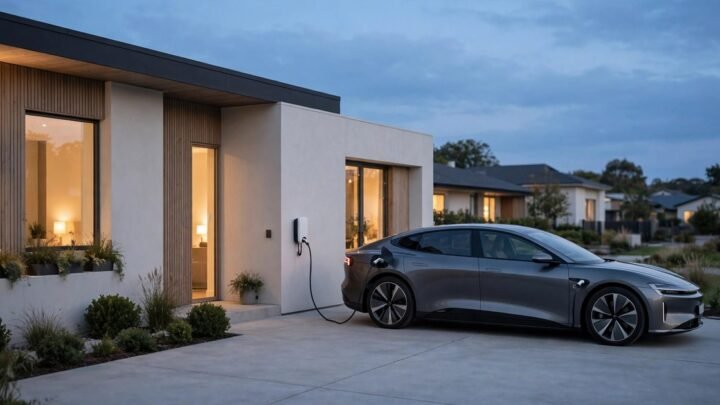
Not necessarily. The cost per kWh is identical on Level 1 and Level 2 — you’re buying speed, not cheaper electricity. What Level 2 buys you is the ability to fit a full charge inside a short off-peak window, which is where the real savings sit.
A Model Y on a standard household outlet gains roughly 3 to 5 miles of range per hour, so about 36 to 60 miles overnight. If you drive under 40 miles a day, that keeps up. Above that, you’ll gradually fall behind. Our guide to Level 1 vs Level 2 charging includes a four-night test that tells you which group you’re in before you spend anything.
Frequently asked questions
How much does it cost to charge a Model Y from empty? About $16 at the US average rate for a Long Range RWD, including charging losses. Between $11 and $45 depending on your state. In practice you’ll rarely charge from truly empty — most owners top up from 20–30%, which costs proportionally less.
Is it cheaper to charge at home or at a Supercharger? Home, substantially — typically half to a third of the cost. Superchargers price convenience and speed, not electricity.
How much does a Model Y add to my electricity bill? Roughly $50 to $55 a month at average rates and average mileage. That’s a noticeable increase on a typical household bill, and it replaces a larger fuel bill rather than being invisible.
Why is my cost higher than this article says? Most commonly: a higher local rate than the state average, winter conditions, motorway-heavy driving, or more Supercharging than you realised. Run the five-step calculation with your own bill and your own trip computer — those two numbers explain nearly every discrepancy.
Does the free Supercharging on some used Teslas change the maths? Yes, considerably, where it transfers with the car — but verify with Tesla by VIN rather than taking a seller’s word, because transferability rules vary and some benefits are tied to the original owner.
How does it compare with a Hyundai Ioniq 5? The Model Y Long Range RWD is the more efficient car — about $4.63 per 100 miles against $5.36 for the Ioniq 5 RWD.
The short version
A Model Y costs roughly $4.60 to $5.90 per 100 miles to charge at home at the national average, or about $625 to $800 a year at typical mileage — comfortably under half the fuel cost of a comparable petrol SUV.
Two things move that number more than anything else: your state’s electricity rate, and whether you charge at home or at a Supercharger. Get both of those right and the Model Y is genuinely cheap to run. Get either wrong and the fuel advantage largely disappears. The general home charging cost guide covers the state-by-state picture in more detail.
Sources
US Energy Information Administration — Electric Power Monthly, residential electricity prices by state. EPA / DOE FuelEconomy.gov — MPGe ratings and EPA range figures. Published 2026 Model Y specifications for usable battery capacity and EPA energy consumption by trim; Tesla does not officially publish pack capacities, so usable figures are derived from EPA and certification data. Geotab 2026 battery health study — degradation by charging method across 22,700+ vehicles. Supercharger pricing varies by site, time of day and membership; check the app for current rates. All cost figures are calculations from the stated assumptions — substitute your own rate and efficiency for a meaningful answer.