Search for what Electrify America costs and nearly every result gives you the same number: 48 cents per kilowatt-hour. It is repeated in buyer’s guides, forum posts and comparison tables all over the internet.
It is also years out of date. Electrify America abolished uniform national pricing in August 2023 and moved to station-specific rates. Since then there has been no single “Electrify America price” to quote — and the company does not publish one.
So what does it actually cost? Across 1,168 tracked stations in July 2026, Electrify America averaged 61.7 cents per kWh — about 28% above the figure most articles still print. Here is the real picture, state by state, along with what it means next to home charging and next to a tank of petrol.
The key numbers
- 61.7¢/kWh — network average, July 2026, across 1,168 sites
- 50.7¢ to 69.3¢ — cheapest state (Alabama) to dearest (California)
- $30.85 — a 50 kWh session at the guest rate; $23.14 on Pass+
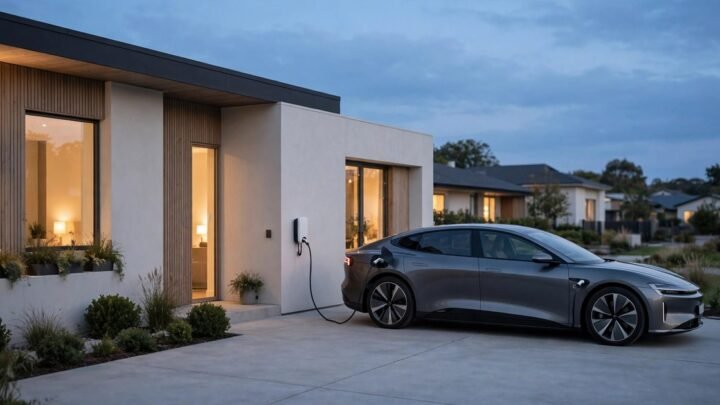
- 3.3x — how much more Electrify America costs than charging at home
- 45 kWh a month — where the Pass+ subscription starts paying for itself
- $0.40/minute — idle fee after a 10-minute grace period, no exceptions
Electrify America does not publish its prices
This is worth stating plainly, because it is the single most useful thing to understand about the network. Go to Electrify America’s own pricing page and you will not find a rate. Not a national one, not a state one, not a range. What you get is an explanation that pricing “is determined by charger location, your plan, and the amount of energy delivered,” and an instruction to check the app or the charger screen.
The membership fee is not published there either. Third-party sources put Pass+ somewhere between $7 and $8 a month; the only authoritative figure is the one shown in the app when you sign up.
That means you cannot know what a session will cost until you are standing at the charger or have the app open on the station you are driving toward. For trip planning this is a real operational problem, and it is why the numbers below come from tracking actual station prices rather than from a published rate card.
What Electrify America actually charges, by state
The figures below come from DCFC Tracker’s July 2026 network report, which syncs Electrify America’s public station pricing continuously. Two caveats worth knowing: these are peak rates, so stations with time-of-use pricing will be cheaper off-peak, and the averages are unweighted across sites rather than by how much energy each one sells. Per-minute-only states are excluded, which is why a few states are missing.
The “home rate” column is the state’s average residential electricity price from the EIA for May 2026, so you can see the gap directly.
| State | EA rate | 50 kWh session | Home rate | Multiple |
|---|---|---|---|---|
| Alabama | 50.7¢ | $25.35 | 16.77¢ | 3.0x |
| Arizona | 56.0¢ | $28.00 | 15.23¢ | 3.7x |
| Arkansas | 60.0¢ | $30.00 | 14.36¢ | 4.2x |
| California | 69.3¢ | $34.65 | 33.25¢ | 2.1x |
| Colorado | 62.3¢ | $31.15 | 16.16¢ | 3.9x |
| Connecticut | 65.0¢ | $32.50 | 27.37¢ | 2.4x |
| Delaware | 60.0¢ | $30.00 | 19.38¢ | 3.1x |
| Florida | 60.5¢ | $30.25 | 15.17¢ | 4.0x |
| Georgia | 57.7¢ | $28.85 | 15.84¢ | 3.6x |
| Hawaii | 68.0¢ | $34.00 | 52.00¢ | 1.3x |
| Idaho | 60.0¢ | $30.00 | 12.35¢ | 4.9x |
| Illinois | 57.4¢ | $28.70 | 23.85¢ | 2.4x |
| Indiana | 58.3¢ | $29.15 | 18.15¢ | 3.2x |
| Iowa | 54.7¢ | $27.35 | 14.14¢ | 3.9x |
| Kansas | 60.8¢ | $30.40 | 15.13¢ | 4.0x |
| Kentucky | 62.7¢ | $31.35 | 14.98¢ | 4.2x |
| Louisiana | 60.0¢ | $30.00 | 14.15¢ | 4.2x |
| Maine | 68.0¢ | $34.00 | 28.63¢ | 2.4x |
| Maryland | 59.6¢ | $29.80 | 21.77¢ | 2.7x |
| Massachusetts | 64.7¢ | $32.35 | 28.82¢ | 2.2x |
| Michigan | 59.8¢ | $29.90 | 22.01¢ | 2.7x |
| Minnesota | 61.4¢ | $30.70 | 16.95¢ | 3.6x |
| Mississippi | 58.0¢ | $29.00 | 16.16¢ | 3.6x |
| Missouri | 58.3¢ | $29.15 | 13.68¢ | 4.3x |
| Montana | 65.0¢ | $32.50 | 14.67¢ | 4.4x |
| Nebraska | 59.3¢ | $29.65 | 13.59¢ | 4.4x |
| Nevada | 60.4¢ | $30.20 | 13.60¢ | 4.4x |
| New Hampshire | 64.0¢ | $32.00 | 27.33¢ | 2.3x |
| New Jersey | 64.2¢ | $32.10 | 23.27¢ | 2.8x |
| New Mexico | 59.6¢ | $29.80 | 14.12¢ | 4.2x |
| New York | 54.3¢ | $27.15 | 29.93¢ | 1.8x |
| North Carolina | 57.2¢ | $28.60 | 15.09¢ | 3.8x |
| North Dakota | 66.0¢ | $33.00 | 13.61¢ | 4.8x |
| Ohio | 59.0¢ | $29.50 | 19.52¢ | 3.0x |
| Oklahoma | 60.4¢ | $30.20 | 13.38¢ | 4.5x |
| Oregon | 61.4¢ | $30.70 | 16.27¢ | 3.8x |
| Pennsylvania | 56.0¢ | $28.00 | 21.55¢ | 2.6x |
| South Carolina | 59.3¢ | $29.65 | 16.18¢ | 3.7x |
| South Dakota | 68.0¢ | $34.00 | 15.73¢ | 4.3x |
| Tennessee | 61.5¢ | $30.75 | 14.47¢ | 4.3x |
| Texas | 60.2¢ | $30.10 | 16.44¢ | 3.7x |
| Utah | 51.5¢ | $25.75 | 12.96¢ | 4.0x |
| Virginia | 59.4¢ | $29.70 | 17.61¢ | 3.4x |
| Washington | 57.2¢ | $28.60 | 14.95¢ | 3.8x |
| Wisconsin | 55.5¢ | $27.75 | 19.74¢ | 2.8x |
| Wyoming | 64.7¢ | $32.35 | 14.80¢ | 4.4x |
| Network average | 61.7¢ | $30.85 | 18.44¢ | 3.3x |
Prices moved very little through the month — the network average fell 0.1%, with seven sites raising and seven cutting. The movement that did happen was regional: Arizona saw the deepest cuts, with a batch of Phoenix-area Walmart and Kroger sites dropping from 60 to 52 cents, while a handful of California and Oregon locations went up.
The markup is worst where home electricity is cheapest
Here is the finding that surprised us most. You would expect Electrify America’s state prices to broadly follow local electricity costs. They barely do.
Run the correlation between Electrify America’s state average and the residential electricity rate in the same state and you get an r² of just 0.17. In plain terms: only about 17% of the variation in what Electrify America charges from state to state is explained by what electricity actually costs there. The other 83% is something else — local demand charges, site rent, competition, and whatever the market will carry.
New York is the clearest example. It has the third-most-expensive household electricity in the country at 29.93 cents, and the third-cheapest Electrify America pricing at 54.3 cents. Idaho is the mirror image: the cheapest home electricity in America at 12.35 cents, but Electrify America charges 60 cents there, dead average.
Expressed as a multiple, the pattern is stark:
| State | Home rate | EA rate | Multiple | |
|---|---|---|---|---|
| Biggest markup | Idaho | 12.35¢ | 60.0¢ | 4.9x |
| North Dakota | 13.61¢ | 66.0¢ | 4.8x | |
| Oklahoma | 13.38¢ | 60.4¢ | 4.5x | |
| Smallest markup | New York | 29.93¢ | 54.3¢ | 1.8x |
| California | 33.25¢ | 69.3¢ | 2.1x | |
| Hawaii | 52.00¢ | 68.0¢ | 1.3x |
The practical consequence: the drivers with the most to lose from fast charging are the ones with the cheapest power at home. An Idaho owner who charges at home is paying a fifth of what the pump costs. The same owner on a road trip is paying nearly five times their home rate. In Hawaii the two are almost the same number, so the decision hardly matters. Our state-by-state charging cost guide has the full home-rate picture behind this.
Does Pass+ actually pay for itself?
Pass is free. Pass+ costs a monthly fee and cuts the energy rate by about 25%, which Electrify America states on its own site.
At the 61.7-cent network average, that discount is worth 15.4 cents per kWh. Against a monthly fee of around $7, the subscription breaks even at 45 kWh a month — less than one full charge of a mid-size EV. A single 50 kWh session drops from $30.85 to $23.14, a saving of $7.71 that covers the fee on its own.
So the answer is straightforward: if you use Electrify America even once a month, take Pass+. If you use it twice a year on holiday trips, do not. There is no middle case worth agonising over. Just remember to check the current fee in the app, since it is not published anywhere public — it last rose in August 2023 (from $4 to $7).
Idle fees: $24 an hour, and stricter than Tesla’s
Once your session ends, you get a 10-minute grace period. After that Electrify America bills $0.40 per minute until you unplug, per the company’s own FAQ. That is $12 for half an hour and $24 for a full hour — on a station that may have just charged you $25 for the energy.
The detail people miss is that Electrify America’s idle fee has no busy-station condition. Tesla only charges idle fees when a Supercharger site is at least half occupied, and waives them entirely if you move within five minutes of the notification. Electrify America’s clock runs whether the site is packed or completely empty. Turn on charging notifications in the app; that one setting is worth more than most of the money-saving advice written about the network.
How Electrify America compares with petrol
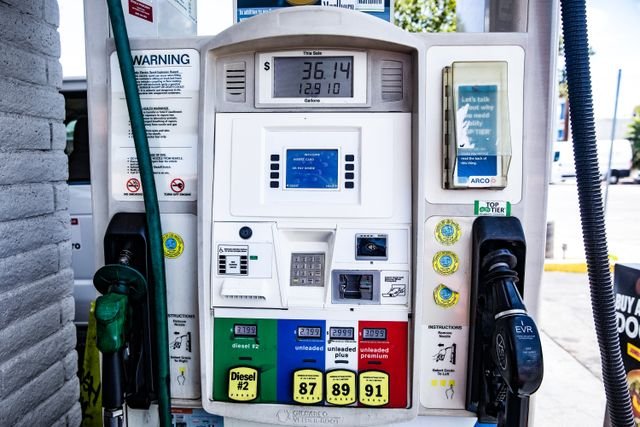
This is where the honest answer gets uncomfortable. At 61.7 cents per kWh and 3.5 miles per kWh, Electrify America costs 17.6 cents a mile. A 30 mpg petrol car matches that when petrol costs $5.29 a gallon.
In August 2026, only two states had petrol above that line: California at $5.64 and Hawaii at $5.46. Everywhere else — all 48 remaining states — a comparable petrol car is cheaper per mile than Electrify America’s guest pricing.
Pass+ changes this materially. At 46.3 cents the break-even petrol price falls to $3.97 a gallon, and a good half of the country sits above that. But the underlying point stands: the EV cost advantage lives at home, not at the fast charger. Charging at home at the national average costs 5.3 cents a mile. Electrify America costs 17.6. That 3.3x gap is the whole ballgame, and it is why our home charging cost breakdown matters more to your annual spend than any network comparison does.
None of which makes Electrify America a bad deal. It is doing a different job — adding 200 miles in 25 minutes on a highway, which no home charger can do. The mistake is treating fast-charge pricing as if it were fuel pricing. It is closer to airport parking: you pay a premium for being somewhere specific at a specific time.
Five ways to pay less on the network
- Check the app before you commit to a stop. Prices are per-station, and neighbouring sites in the same metro can differ by 10 cents or more. On a road trip that is real money.
- Take Pass+ if you use the network monthly. Break-even is under one session.
- Charge to 80%, not 100%. The last 20% is slow, so you pay idle-adjacent time cost and hold a stall for little energy. This is standard advice but it matters more at 62 cents than at 48.
- Check whether your car came with free charging. Electrify America’s Premium Offers give complimentary kWh or free-charging periods with many new vehicles — Hyundai, Kia, VW, Porsche and others have run them. It is enrolled in the app, not automatic.
- Look for time-of-use stations. A minority of sites price by time of day, and off-peak is meaningfully cheaper. The app shows it.
If you rely on public charging as your main source rather than a road-trip backup, the maths is different and harder — we go through it in owning an EV without home charging. And for how Electrify America compares with the other big open network, see our breakdown of ChargePoint’s pricing and fees, which works on a completely different model: ChargePoint is a payment platform where the site host sets the price, so its rates vary even more than these.
Frequently asked questions
How much does Electrify America cost per kWh in 2026?
The network averaged 61.7 cents per kWh in July 2026 across 1,168 tracked stations, ranging from about 50.7 cents in Alabama to 69.3 cents in California. There is no single national rate — every station is priced individually.
Why do so many articles say 48 cents?
Because 48 cents was Electrify America’s uniform national guest rate until August 2023, when the company switched to station-specific pricing. The figure has been copied forward ever since without being rechecked.
Is Pass+ worth it?
If you charge on the network at least once a month, yes. The roughly 25% discount is worth about 15 cents per kWh, so the monthly fee pays for itself at around 45 kWh — less than one full session.
What is Electrify America’s idle fee?
40 cents per minute, starting 10 minutes after your session ends. Unlike Tesla, it applies regardless of how busy the station is.
Is Electrify America cheaper than petrol?
At guest pricing, generally no. It works out to about 17.6 cents a mile, which a 30 mpg petrol car beats in 48 of 50 states at current pump prices. With Pass+ it becomes competitive in roughly half the country. Home charging beats petrol everywhere.
Do prices follow local electricity costs?
Only loosely. Statistically, residential electricity prices explain about 17% of the variation in Electrify America’s state rates. New York has some of the most expensive household power in the country and some of the cheapest Electrify America pricing.
Can I use Electrify America with a Tesla?
Yes. Electrify America has been adding NACS connectors across the network, and Teslas can also use CCS stalls with the appropriate adapter. Pricing is identical either way — it is set by the station, not the car.
The short version
Electrify America costs about 62 cents per kWh in 2026, not the 48 cents the internet keeps repeating, and the company publishes no rate anywhere — you check the app or the charger screen. That works out to roughly 3.3 times what the same energy costs at home, and at guest pricing it is more expensive per mile than petrol in 48 of 50 states. Pass+ cuts about 25% and pays for itself in under one session a month, so take it if you use the network at all regularly. Watch the idle fee, which runs at $0.40 a minute whether or not anybody is waiting. And do not read the state table as a map of local electricity costs, because it very nearly isn’t one.