At a Glance
- The rule: tire pressure falls about 1 psi for every 10°F the temperature drops (Tire Rack).
- The trigger: the light must come on at 25% below placard pressure (FMVSS 138).
- The example: 42 psi at 70°F reads about 38 psi at 30°F.
- The fix: check cold, fill to placard, drive a few miles.
- The trap: a light that goes off by lunchtime is not a false alarm. It means the tire is hovering right at the edge.
The Short Answer
Yes, cold weather alone can turn on your EV tire pressure warning light. Air contracts as it cools, dropping pressure about 1 psi per 10°F, and a tire already a couple of psi low can cross the threshold overnight. Check cold, fill to the door-placard number, and the light should clear after a short drive.
The Morning the Light Comes On
It is the first genuinely cold morning of the season: 31°F outside, and a tire pressure warning you did not have yesterday. Nothing happened overnight except the temperature falling 30 or 40 degrees.
Why Cold Air Drops Your Pressure
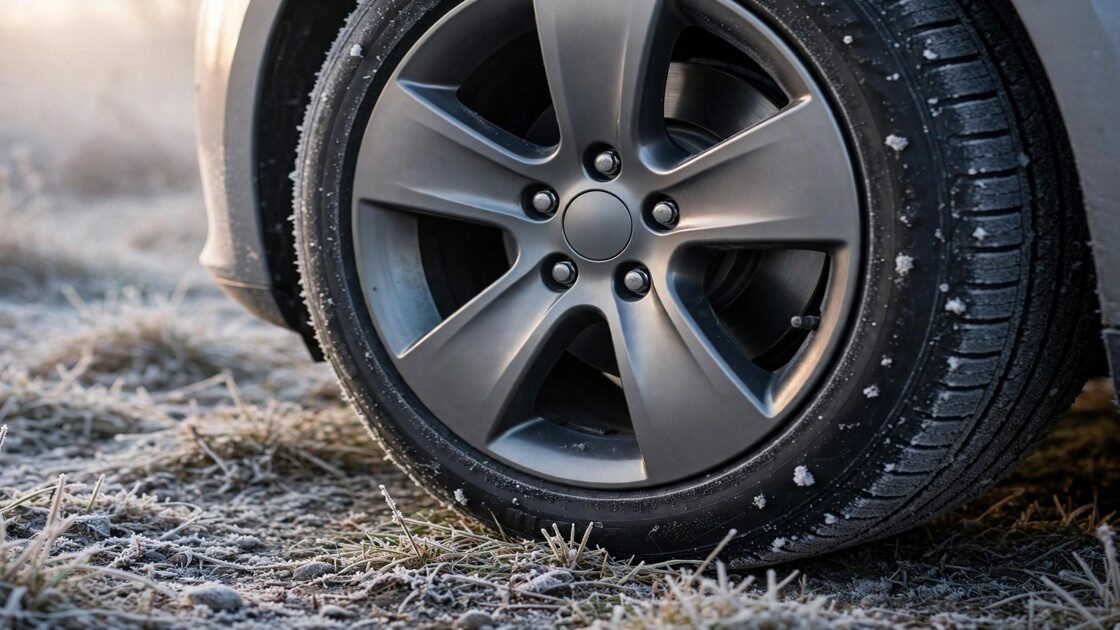
The air inside a tire obeys the same physics as any gas: cool it and it contracts, lowering the pressure it exerts on the tire walls. Tire Rack’s rule of thumb: for every 10°F change in air temperature, tire pressure changes about 2%, roughly 1 psi for passenger-car tires. Fall and early winter are the worst months for this.
Two details matter. First, no air has escaped: the same air simply exerts less pressure when cold. Second, the coldest reading comes first thing in the morning, which is why the warning often appears at the start of a commute and vanishes by lunch as driving warms the tires a few psi. Do not dismiss it for that: if the light came on cold, the tire is low cold, and warm readings later are hiding the problem.
What a Cold Snap Does to a 42 psi Tire
The table uses the 1 psi per 10°F rule on two common EV placard pressures. Several Tesla Model 3 and Model Y trims carry a 42 psi placard; many other EVs sit near 36 psi. Your number is on your own door jamb, and that number, not any table, is the target.
| Overnight low | Drop from 70°F | 42 psi placard reads | 36 psi placard reads |
|---|---|---|---|
| 50°F | 2 psi | 40 psi | 34 psi |
| 30°F | 4 psi | 38 psi | 32 psi |
| 10°F | 6 psi | 36 psi | 30 psi |
| −10°F | 8 psi | 34 psi | 28 psi |
Note the threshold: a 42 psi tire must fall to about 31.5 psi before the light must come on, so a cold snap alone rarely triggers it from a properly inflated tire. The usual pattern is a tire that drifted 2 psi low all summer, then lost another 4 psi overnight.
Why EVs Feel Underinflation More
Underinflation costs every car grip, tire life, and efficiency. It costs an EV more of each. First, weight: most EVs are hundreds of pounds heavier than a comparable gas car, so the same missing psi carries a bigger load. Second, torque: instant torque wears tires faster when pressure is low, because the tire flexes more under every launch. Our earlier look at EV tire wear costs found tires are already the biggest recurring EV maintenance bill, at roughly 2.7 cents per mile against about 1.0 cent for a gas car.
The third reason is range, and here the numbers are unusually clean. The National Academies’ review of tire fuel economy found that for typical passenger tires, each 1 psi drop in inflation pressure increases rolling resistance by about 1.4%. A 4 psi cold-weather shortfall therefore means roughly 5.6% more rolling resistance, our calculation from that figure. The U.S. Department of Energy puts the fuel-economy benefit of correct inflation at 0.6% to 3%. Neither figure converts neatly into a miles-of-range claim, but the direction is clear: soft tires make the battery work harder, and on a cold day the battery is already working harder for heating. Pressure is the one part of that equation you can fix in five minutes.
Your Cold-Morning Pressure Calculator
Use the tool below before you touch a pump. Enter the placard pressure from your door jamb, the temperature when the tires were last set, and the current cold temperature. If you have measured the tires cold, enter that reading too and the tool will judge the real number instead of the prediction.
Formula: predicted pressure = placard + (current temperature − set temperature) / 10, the 1 psi per 10°F rule. The threshold is 75% of placard, from the federal standard below. Rolling resistance is our calculation: shortfall × 1.4%. Defaults are examples; use your door jamb.
What the Warning Light Actually Means
Every new light vehicle sold in the United States since the late 2000s carries a tire pressure monitoring system under Federal Motor Vehicle Safety Standard 138, which followed the TREAD Act. The rule requires a warning when one or more tires fall at least 25% below the manufacturer’s recommended cold inflation pressure. That is a late warning by design: it catches a tire in real trouble, not a tire 2 psi low. The absence of a light is not proof your tires are right; AAA advises a monthly gauge check whether the light is on or not, precisely because so many cars drive around 10% low with a dark dashboard.
| Placard pressure | Warning threshold (75%) | Shortfall needed |
|---|---|---|
| 32 psi | 24.0 psi | 8 psi |
| 36 psi | 27.0 psi | 9 psi |
| 42 psi | 31.5 psi | 10.5 psi |
| 45 psi | 33.8 psi | 11.2 psi |
How the light behaves matters too. A steady light clearing after inflation and a drive is the normal pattern. A light flickering on in the morning and off by lunch means the tire hovers at the threshold: inflate properly and it should stop. A light flashing for roughly a minute at startup usually means a system fault, most often a dead sensor battery. A light staying on after inflation and a drive means a leak, valve, or sensor problem. Most EVs use direct sensors reporting actual pressures; indirect systems infer pressure from wheel speeds and cannot say which tire is low, so a gauge is essential on those cars.
The Five-Minute Fix, Done Properly
Check cold: the car must have sat at least three hours or been driven less than a mile, because a reading after a highway run can be 2 to 4 psi higher than the cold number, enough to hide the problem. Use a gauge you trust, not a gas-station pump display. Fill to the placard number on the door jamb, never to the maximum molded on the sidewall, which is a structural limit, not a target. Do not bleed a warm tire down to placard; if it reads above placard warm, leave it to settle as it cools. After inflating, drive a few miles and most direct systems clear on their own. If you inflated in a heated garage, remember the trap: a tire set to 42 psi in a 65°F garage reads about 39 psi out in 35°F air, so add roughly 1 psi per 10°F of difference, then verify outdoors once cool.
Mistakes That Make It Worse
The most common mistake is filling to the sidewall maximum, covered above. The second is overinflating on purpose for winter. Some winter-tire guidance recommends running dedicated winter tires 3 to 5 psi above summer-tire pressure, as Tire Rack notes, because winter compounds are softer. That applies to winter tires specifically, and only where the maker says so. It is not a license to run all-season tires 5 psi high all winter; overinflation shrinks the contact patch, the opposite of what you want on snow and ice. The third is paying for nitrogen as a cure: nitrogen-filled tires follow the same temperature rule, because the change comes from gas physics, not from which gas is inside. The fourth mistake is resetting the system to silence the light without adding air, which teaches the system that the current low pressure is the new normal. The fifth is ignoring a flickering light, which means the tire sits right at the edge.
If the season calls for dedicated winter rubber, our guide to EV winter tire costs works out the yearly price, and our rundown of the best tires for EVs covers what to buy.
When It Is Not the Cold
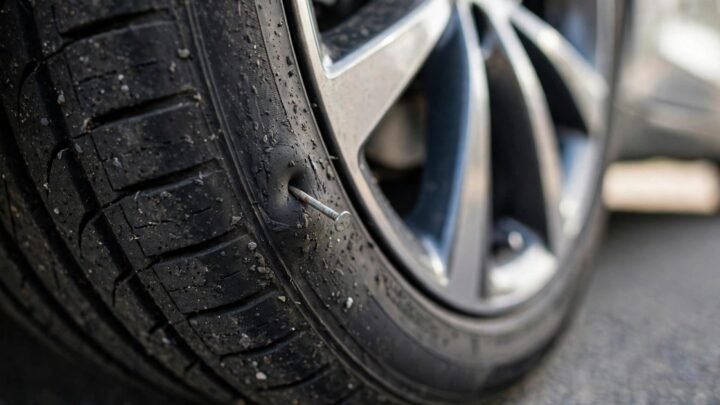
Cold explains the light that appears with the first frost and clears after inflation. It does not explain everything. If one tire is consistently lower than the other three, suspect a slow leak: a nail, a cracked valve stem, a corroded rim seal, or a puncture losing a psi or two a week. Soapy water on valve and tread will bubble at a leak. If all four drop together and recover together when filled, that is physics, not damage.
Sensors fail too: their batteries last roughly five to seven years, so late-2010s cars are entering the dying-sensor window. Secondary price guides disagree honestly on the bill: one puts replacement at $50 to $150 per wheel installed, another at $75 to $200, and a third notes dealer jobs can reach $350. Treat $50 to $200 as the usual range, and replace sensors when you are already buying tires, since the labor is mostly the same job. A second set of winter wheels also needs its own sensors, or the winter set will light the dashboard all season.
Pressure is also one entry on the maintenance list: our EV maintenance schedule sets the same cadence, monthly, before long trips, and after big temperature swings. Heat moves pressure the other way, as our look at EV hot-weather range loss shows.
A Winter Pressure Routine That Actually Holds
Set a monthly reminder, say the first Saturday of the month. Check cold, all four tires, and write the numbers down for a month or two: the record turns a vague feeling that a tire “always seems low” into evidence of a slow leak. Recheck after any swing of 20°F or more, and always before a long winter trip. Keep a gauge in the car and a small inflator at home; the drivers who fix this in five minutes are the ones who own the tools. Recheck after rotations or swaps, and relearn the system if required, or it will warn at the wrong time and train you to ignore it.
Frequently Asked Questions
Why did my tire pressure light come on when it got cold?
Cold air contracts, dropping pressure about 1 psi for every 10°F fall, and a tire that was already slightly low crossed the warning threshold overnight. No air escaped and nothing broke. Inflate cold to placard and the light should clear after a short drive.
Should I add air, or wait for it to warm up?
Add air now, measured cold, to placard. Waiting only hides the shortfall, because driving warms tires and raises readings without fixing the cold pressure. A tire correct only when warm is still underinflated first thing in the morning.
What psi should my EV tires be in winter?
At the cold inflation pressure on the driver door placard, the same number as in summer. Winter does not change the target; it only makes tires lose pressure faster. The exception is dedicated winter tires, where some makers recommend 3 to 5 psi above the summer-tire pressure.
Why does the light go off by lunchtime?
Driving warms the tires and raises pressure a few psi, lifting a borderline tire back above the threshold. This flicker means the tire is hovering at the edge of underinflation. Inflate to placard cold and it should stop.
Can I just reset the TPMS light?
No. Resetting without adding air teaches the system that the current low pressure is normal, silencing the warning that exists to protect you. Inflate every tire to placard cold, drive a few miles, and let the system clear on its own.
The Takeaway
The cold-morning warning light is usually the most honest thing your car tells you all winter: not a fault, a leak, or a reason for a service appointment. It is physics, plus a tire that was already a little low, plus a threshold that fires only when the shortfall gets serious. Check cold, fill to placard, drive a few miles, and move on. Then keep checking monthly: the cheapest range and tire life you will ever buy is the air you put in on a Saturday morning.
Written by Shurah Beel, who researches and writes independently on the real cost of EV ownership — charging, maintenance, and total cost of ownership — backed by primary data and original calculations rather than recycled lists.
Do not drive on a tire that looks flat or is losing air fast; inflate only a tire that is low but holding air, and have any tire that will not hold pressure inspected before driving.