There is a $600 gap between the cheapest credible home charger and the most expensive one, and the two of them charge your car at exactly the same speed. What you’re paying for in that gap is software, an app and a screen — not electricity.
This guide covers what actually matters at this price point, the one specification that is genuinely non-negotiable, and five units worth your money under $500.
The one thing you cannot compromise on
Safety certification. A charger is either listed by a nationally recognised testing laboratory — UL or ETL — or it is not. There is no partial credit, no “meets UL standards” middle ground, and the wording matters: “UL-compliant components” is not the same claim as a UL-listed product.
The US Department of Energy is explicit that buyers should purchase safety-certified charging equipment tested by a recognised laboratory. This is not bureaucratic box-ticking. A Level 2 charger delivers 40 to 48 amps continuously for hours, often in an unheated garage, sometimes outdoors, unattended, overnight, every night for years.
Two practical consequences beyond the obvious one. Home insurance can decline a claim arising from unlisted electrical equipment. And many utility rebate programmes require certification — several specifically require an ENERGY STAR certified charger before they’ll pay out.
The good news: certification is not what makes chargers expensive. Reputable budget units carry the same listings as models costing twice as much. If a charger on a marketplace is dramatically cheaper than everything else and vague about certification, that is the entire explanation, and it is the one corner never worth cutting.
How much amperage do you actually need?
More amps means faster charging, and beyond a point it means nothing at all — because two ceilings apply before the charger’s rating does.
- Your car’s onboard charger. If it accepts a maximum of 32 amps, a 48-amp charger delivers 32. You cannot buy your way past this.
- Your circuit. A charger can draw only 80% of its circuit rating continuously, so a 48-amp charger needs a 60-amp circuit. Larger circuits cost more to install and are likelier to trigger panel work — the item that dominates home charger installation cost.
For most households a 40-amp charger on a 50-amp circuit is the sweet spot: roughly 25 to 30 miles of range per hour, which refills an average day’s driving in about an hour and a typical overnight session several times over. Before you buy any of this, though, check whether you need Level 2 at all — our guide to Level 1 vs Level 2 charging sets out the daily mileage where the upgrade starts to matter.
Do you need a “smart” charger?
Honestly: probably not, and this is where most of the money gets wasted at this price point.
Smart features earn their keep in one situation — time-of-use electricity rates. If your utility charges less overnight, scheduled charging genuinely saves money every month, and that saving compounds for as long as you own the car. On a flat rate, a scheduling app saves you nothing.
There’s a second reason to skip it: nearly every modern EV already schedules charging from the car itself. If your car can start charging at 11pm, you do not need a charger that can also start charging at 11pm. Check what your car does before paying for a duplicate feature.
Where smart features do add real value beyond scheduling: energy monitoring if you want to see exactly what the car costs to run (we cover the arithmetic in what it really costs to charge an EV at home), solar-aware charging if you have panels, and dynamic load management if your panel is tight on capacity.
Five chargers worth buying under $500
Prices move constantly at this end of the market, so treat every figure below as approximate and check before ordering.
1. Grizzl-E Classic — the one that just works
Roughly $300–$380. 40A. No app.
A cast-aluminium box with a 24-foot cable and essentially nothing else. No Wi-Fi, no firmware, no account, nothing to go wrong in software. It is NEMA 4 outdoor rated and has a reputation in cold climates that borders on folklore.
Buy it if: you’re on a flat electricity rate, your car handles its own scheduling, and you want to plug in every night for ten years without thinking about it.
Skip it if: you’re on time-of-use rates and your car can’t schedule charging itself.
2. Emporia Smart Level 2 — best value with smart features
Roughly $400–$430. Up to 48A.
Full 48-amp capability, energy monitoring, and solar-aware charging that throttles to match your production — a feature normally found well above this price. It scored at the top of independent testing while sitting comfortably under $450.
Buy it if: you have solar, want detailed energy data, or are on time-of-use rates.
Skip it if: you find app-driven hardware irritating. Reviewers consistently note the app is busier than it needs to be.
3. Autel MaxiCharger — best if you want a screen
Roughly $400–$511 depending on amperage (the 50A Elite Home lists at $511.20, a shade over $500). Up to 50A.
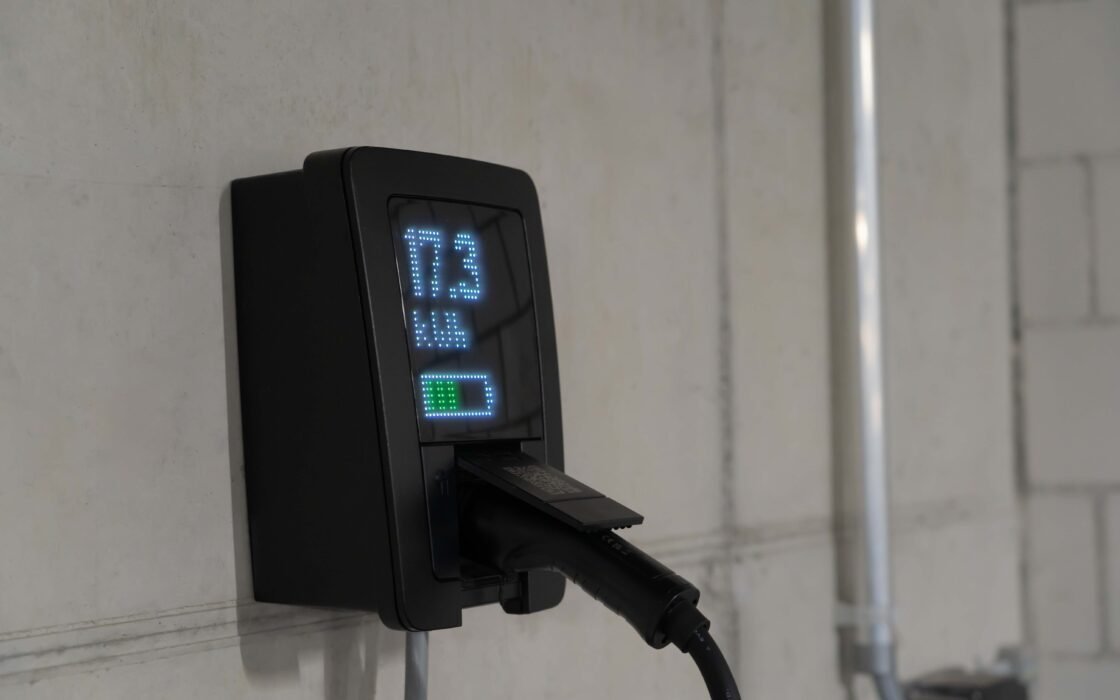
Commercial-grade build with a proper LCD showing charging status, energy delivered and cost without reaching for a phone. Cable management is better than most.
Buy it if: you want smart features but prefer glancing at the wall over opening an app.
Skip it if: the charger will live outdoors in a spot you rarely walk past — you’re paying for a display you won’t look at.
4. ChargePoint Home Flex — the best app
Roughly $549–$599 (hardwired vs plug-in), now above the $500 line — the app premium costs extra. Adjustable 16–50A.
The most polished software in home charging, with cost tracking to the cent and one app that covers both home and public ChargePoint charging. Adjustable amperage across a wide range makes it flexible if your circuit is limited now but might be upgraded later.
Buy it if: you use public charging regularly and want it all in one place, or you want the best reporting available.
Skip it if: you charge at home almost exclusively — you’re paying a premium for network integration you won’t use.
5. Tesla Universal Wall Connector — for Tesla and mixed households
Around $660 (raised from $600 in September 2026), which takes it out of the under-$500 category — consider swapping in a sub-$500 alternative for this slot. Up to 48A. NACS with included J1772 adapter.
Tightly integrated with Tesla vehicles, and power sharing lets multiple units split a single circuit — genuinely useful in a two-EV household where panel capacity is the constraint. The built-in adapter means it works with non-Tesla cars, though you lose some of the smart integration.
Buy it if: you drive a Tesla, or you have two EVs and one circuit.
Skip it if: you drive a single non-Tesla EV — you’re paying for ecosystem benefits you can’t access.
Side by side
| Charger | Max amps | Cable | Smart | Best for |
|---|---|---|---|---|
| Grizzl-E Classic | 40A | 24 ft | No | Set-and-forget reliability |
| Emporia Smart | 48A | 24 ft | Yes | Solar and energy data |
| Autel MaxiCharger | 50A | 25 ft | Yes | Built-in display |
| ChargePoint Home Flex | 50A | 23 ft | Yes | Best app and reporting |
| Tesla Universal | 48A | 24 ft | Yes | Tesla and two-EV homes |
Three specifications people ignore and later regret
Cable length. Twenty-three to twenty-five feet is the useful range. Eighteen feet sounds like plenty until you park nose-in one week and reverse-in the next, or the car’s port is on the opposite side from the wall. Extension cords are not an acceptable solution for a 40-amp continuous load.
Plug-in versus hardwired. A plug-in unit on a NEMA 14-50 outlet is usually cheaper to install and comes with you if you move. Hardwiring is required above 40 amps in most installations and is tidier outdoors. Decide before you buy, because it changes which model you want.
Weather rating. If the charger lives outside, look for NEMA 4 or better. Manufacturers sometimes describe units as weather-resistant without a rating behind the phrase.
What to avoid
- Anything vague about UL or ETL listing. Certification is stated plainly or it doesn’t exist.
- Marketplace listings from brands with no service presence. A three-year warranty is only worth what the company behind it is worth.
- Buying 48A for a car that accepts 32A. You pay more for the unit and more for the circuit, and charge at exactly the same speed.
- Any advice — or price calculation — that still assumes the federal tax credit. It ended for equipment placed in service after 30 June 2026. Check state and utility incentives instead; that’s where the remaining money is.
Frequently asked questions
Will a cheaper charger charge my car more slowly? No. At the same amperage, every certified charger delivers identical power. A $300 40-amp unit and a $700 40-amp unit fill the battery at the same rate. Price differences buy software, build quality and support.
Do I need the charger my car’s manufacturer sells? No. Level 2 charging uses a standard connector, and adapters cover the NACS/J1772 split. Manufacturer-branded units are sometimes good value, but there’s no compatibility reason to prefer them.
Can I install a plug-in charger myself? If a correctly rated 240-volt outlet already exists, plugging it in is plugging it in. Installing that outlet is licensed electrical work requiring a permit in most jurisdictions.
Is an ENERGY STAR charger worth seeking out? It’s a useful shortcut to verified certification, and certified units draw meaningfully less power in standby — which matters, because a charger sits idle roughly 85% of its life. Some utility rebates require it. The EPA maintains a searchable list of certified chargers.
How long should a home charger last? Well-built units are expected to last the life of a vehicle and beyond. Warranties are commonly three years. The failure points are usually the cable and connector from daily handling, not the electronics — which is an argument for buying a robust cable over a clever app.
The short version
Confirm UL or ETL listing, match the amperage to what your car can actually accept, get at least 23 feet of cable, and only pay for smart features if you’re on a time-of-use rate and your car can’t schedule charging itself.
On that basis: the Grizzl-E Classic if you want no software in your life, and the Emporia Smart Level 2 if you want data, solar awareness or scheduling. Both sit well under $500, both are properly certified, and either will still be working long after the app screenshots in this guide look dated.
One accessory worth budgeting for alongside the charger: if your car and your local network use different plugs, you will need an adapter, and picking the wrong one is easier than it sounds.
Sources
US Department of Energy Alternative Fuels Data Center — home charging equipment guidance and safety certification recommendations. US EPA ENERGY STAR — certified EV charger programme, standby energy data and product finder. Internal Revenue Code Section 30C as amended by the One Big Beautiful Bill Act — residential credit termination. Product specifications and price ranges reflect 2026 US retail listings and independent testing; prices change frequently, so verify before purchase.