The Numbers at a Glance
- Professional ceramic coating, mid-size EV: $500–$2,500 for 2–5 year packages (US, 2026 detailer pricing).
- Premium long-life systems: $1,500–$3,000+ for 7–10 year warranties.
- Tesla specialists: $1,199 (2-yr) to $2,550 (5-yr/lifetime), e.g. Immaculate Paint Protection for Model 3/Y/S.
- Paint correction first: adds $200–$2,000+ — this is where half the bill can hide.
- DIY route: $15–$30 for ceramic sprays (3–12 months), $75–$150 for DIY kits (1–3 years).
- Ongoing care: ~$120/year in DIY products is typical; professional quarterly maintenance runs $150–$250 per visit.
Short Answer
A professional ceramic coating for a mid-size EV costs roughly $500–$2,500 in the US, with premium long-life packages running higher and DIY options from $15–$150. It makes washing easier and adds UV and chemical protection, but it will not stop rock chips — that is paint protection film’s job — and it changes range by exactly nothing. It is worth it for long-term owners who park outside; it is overkill for a lease you will return in three years.
The quote hits your inbox and you read it twice. $1,600 — to put a liquid on your car. Your EV is three months old, the paint still looks wet from the dealership detail, and the detailer insists the clear coat is basically unprotected without a ceramic coating. Upsell dressed as science, or real money math?
There is real math here, but it is not the math on the brochure. The sticker price is only the first payment: most cars need paint correction first, the warranty quietly requires annual maintenance, and you have to keep up a proper wash routine. A $1,200 coating can cost $1,800 over five years — while still losing on paper to a $100 quarterly sealant if all you care about is dollars.
What a Ceramic Coating Actually Is (and the Three Things It Can’t Do)
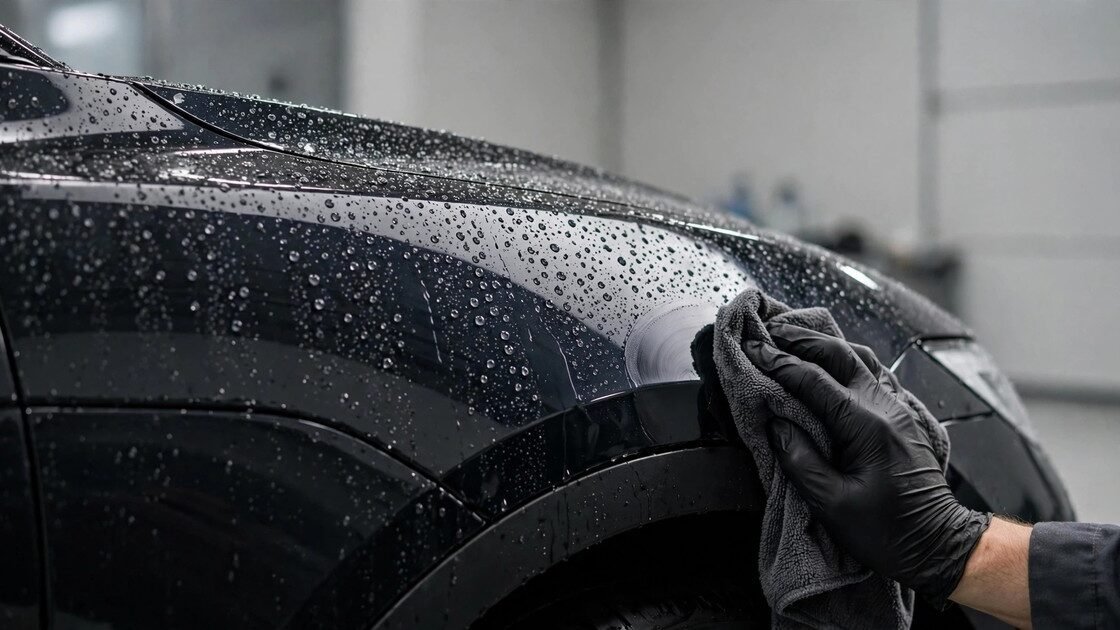
A ceramic coating is a liquid polymer — usually silicon dioxide (SiO2) based — that bonds with your car’s clear coat and cures into a thin, hard, hydrophobic layer: a semi-permanent wax that lasts years instead of months, resists UV and chemical staining, and makes water sheet off so dirt has less to grip.
What the marketing leaves out matters more:
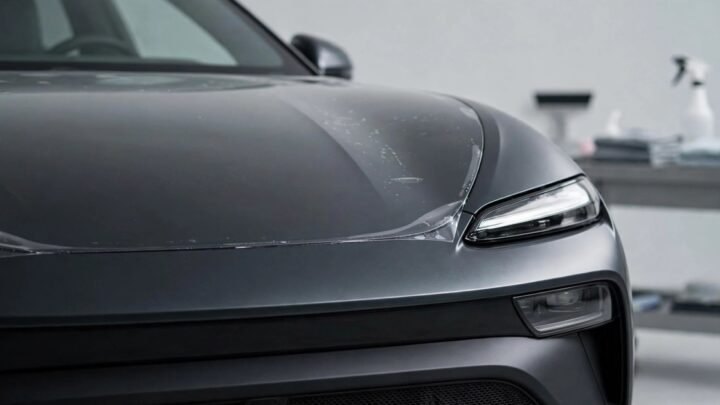
- It does not stop rock chips. The layer is nanometers thin. A stone at highway speed punches straight through it. Chip protection is paint protection film’s job, and PPF costs roughly 3–5× what a ceramic coating costs.
- It does not stop scratches. “Scratch resistance” in coating brochures means resistance to light marring and swirl marks from washing — not keys, not shopping carts, not automatic car-wash brushes.
- It does not change your range. This is worth stating plainly because EV forums ask it: a cured coating weighs a few grams and is thinner than a human hair. It has no measurable effect on weight or aerodynamics. Any “range benefit” claim is fiction.
What it genuinely does: slows UV oxidation, resists bird droppings, bug splatter, and tree sap etching better than bare clear coat, and — the benefit owners mention most — makes the car dramatically easier to wash, which means fewer swirl marks over the years you own it.
What It Costs: 2026 US Price Bands
The bands below come from 2026 published detailer price lists (Dennis Auto Details’ San Diego price guide, plus shops in North Carolina, Portland, and Ohio) and Feynlab’s 2026 cost comparison:
| Package tier | Typical US price | Claimed lifespan | Best for |
|---|---|---|---|
| Entry / 1–2 year | $500–$900 | 1–2 years | Leased EVs, cars you will sell soon |
| Mid / 5-year | $900–$1,750 | 3–5 years | Owned daily drivers — the sweet spot |
| Premium / 7–10 year | $1,500–$3,000+ | 5–10 years | Keep-forever cars, luxury EVs |
| DIY spray ceramic | $15–$30 | 3–12 months | Top-ups, budget protection |
| DIY liquid kit | $75–$150 | 1–3 years | Hands-on owners with a garage weekend |
The single biggest driver of where you land inside a band is not the coating brand — it is how much paint correction your car needs first, and how large the vehicle is. Large SUVs and trucks run $1,000–$3,000+ even at mid tiers: more panel to polish and coat.
Why EVs Price in the Higher Bands
Detailers consistently place Teslas and other EVs in their SUV or luxury bands rather than the sedan band. Two reasons, one honest and one structural:
- Soft clear coats. Several EV-specialist detailers note that many EVs — Teslas in particular — ship with relatively soft factory clear coats, which correct faster but burn through faster, so correction needs a careful hand. That labor prices like luxury work. (Detailer observation, not a manufacturer spec.)
- More glass, more trim, bigger panels. A Model Y’s panoramic glass roof and large flat panels take longer to correct evenly, and glass/trim coating are usually line items.
Published Tesla-specific pricing shows the pattern (Immaculate Paint Protection’s Tesla price list and two Midwest Tesla specialists):
| Detailer | Entry package | Mid package | Premium package |
|---|---|---|---|
| Immaculate Paint Protection (Gyeon, Model 3/Y/S) | $1,199 (2-yr) | $2,050 (5-yr) | $2,550 (5-yr/lifetime) |
| Dayton Detailing (Ohio, Teslas) | $500 (annual) | $1,000 (2-yr) / $1,600 (5-yr) | $2,100 (6-yr) |
| Exquisite Auto Spa (Milwaukee, XPEL Fusion Plus) | From $1,400 including hand wash, decontamination, and single-stage polish | ||
Notice the Dayton entry: a $500 annual package exists. If your horizon is one to three years, the cheap short-life package beats the expensive long-life one.
Paint Correction: The Hidden Half of the Bill
This is the line item that turns a $900 quote into $1,700. Coating locks in whatever is underneath — swirls, scratches, oxidation get sealed under the gloss and magnified. So any reputable detailer polishes (corrects) the paint first, billed separately.
Published 2026 correction pricing:
- Minor / 1-stage polish: $200–$400 — new cars and garage-kept cars with light swirls.
- Moderate / multi-stage: $500–$800 — noticeable swirls, light scratches, some oxidation.
- Major / multi-stage: $1,000–$2,000+ — older daily drivers with heavy defects.
The logic to internalize: the best time to coat a car is when it is new. A new EV needs minimal correction, so you pay for the coating, not the polishing. Coating a five-year-old daily driver means paying for a restoration plus the coating — and the paint has already taken the damage the coating was supposed to prevent. If your EV is well-worn, price the correction honestly before falling in love with the coating quote.
The Maintenance Bill Nobody Mentions
A ceramic coating is not fit-and-forget. Two ongoing costs attach to it:
1. The warranty requires maintenance. Most multi-year warranties require an annual inspection — often with a “refresh” or booster application — to stay valid. Skip it and a claim five years later gets much harder to process. Owner reports suggest real-world beading and easy-washing performance lasts more like 3–5 years on daily drivers regardless of the headline warranty number, with dark colors swirling sooner (owner-reported, secondary source).
2. You still have to wash it — properly. A coated car washes easier, but automatic tunnel washes with stiff brushes dull the coating and void the point of the exercise. Realistic ongoing costs:
- DIY care with pH-neutral shampoo and a ceramic booster: roughly $30–$50/month in products, or about $120/year for a light routine (Feynlab’s worked example uses $1,500 + $120/year maintenance over 4 years = $1,980 total, $495/year).
- Professional quarterly maintenance washes with booster: $150–$250 per visit; an annual professional renewal runs $300–$500 (see Dennis Auto Details’ 2026 maintenance cost breakdown).
None of this is a dealbreaker — but it belongs in the math. The calculator below puts it all together over five years.
5-Year Ceramic Coating Cost Calculator
Compare a professional coating against a quarterly wax/sealant routine and the DIY route, using your own numbers. Defaults are realistic 2026 US examples.
How the calculator works (our calculation): the 5-year pro total is your quote plus five years of annual maintenance; the wax/sealant total is per-visit price × visits per year × 5; the DIY total is one kit plus each reapplication over the window. The coating’s claimed lifespan affects how long protection lasts, not the 5-year spend. Paint correction varies too much by car to include — add your correction quote to the pro total mentally.
The EV-Specific Case: Where Coating Earns Its Keep
Strip away the brochure and coating an EV comes down to three honest advantages:
- You wash more than you think. EVs show dirt — many are dark colors with big flat panels — and a hydrophobic surface genuinely cuts wash time and swirl risk.
- UV is the real enemy. Parked outside in sun-belt states, UV bakes unprotected clear coat flat and chalky over years. A coating’s UV resistance is its most defensible technical claim, and it matters most exactly where US EV ownership clusters — California, Texas, Florida, Arizona.
- Resale presentation. Paint condition shows up in every used-car photo and trade-in appraisal. See our EV depreciation and resale value guide for how condition interacts with the already-steep EV depreciation curve — and when shopping for a used EV, tired paint tells you how the previous owner treated the car.
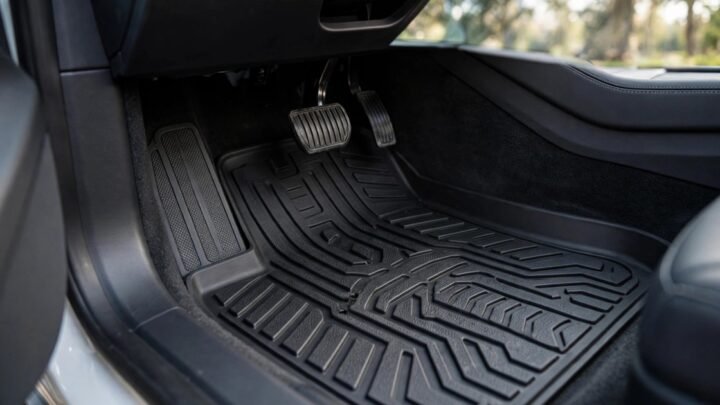
And the honest limits, EV-specific edition: coating will not protect against rock chips on highway commutes (consider PPF on the front clip instead), and pairing it with window tint for heat and UV covers the cabin side that paint coating never touches. Interior protection is a separate purchase — all-weather floor mats do more for your interior’s resale value than any coating does for the paint.
Who Should Get It — and Who Should Walk Away
Get it if: you own (not lease) your EV, plan to keep it 5+ years, park outside regularly, and will keep up the maintenance. Coat it while the car is new, when correction costs are minimal.
Walk away if: you lease or sell within three years (a $500–$900 short-life package at most, or nothing), your car already needs $1,000+ of correction, you run it through tunnel washes, or you mainly want chip protection — that is PPF, not ceramic.
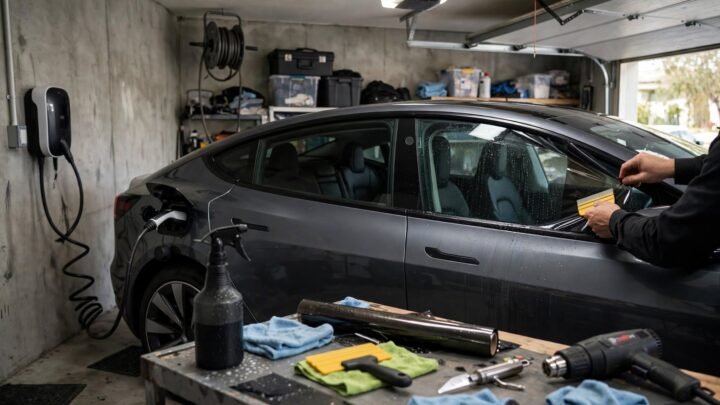
The middle path most owners should price first: a $75–$150 DIY ceramic kit or even $15–$30 SiO2 spray sealants, reapplied yearly. You get most of the hydrophobic benefit and real UV protection for a tenth of the pro price. The pro job buys longevity, gloss depth, and a warranty — not a different category of protection.
Frequently Asked Questions
How long does a ceramic coating really last?
Claimed lifespans run 2–10 years by package, but on a daily-driven car expect 3–5 years of strong beading and easy washing before a refresh is needed. Garage-kept cars in mild climates last longest; intense sun and high mileage shorten it. Treat the warranty number as a ceiling, not a promise.
Does ceramic coating prevent rock chips?
No. The cured layer is far too thin to absorb stone impacts. If highway chips are your main worry, paint protection film on the front bumper, hood edge, and mirrors is the correct product, at roughly 3–5× the cost. Many owners do both: PPF on impact zones, ceramic over everything for gloss and easier washing. We ran the film numbers separately — see paint protection film costs for EVs and whether it pays for itself.
Can I take a coated car through an automatic car wash?
Not a brush-style one — the brushes and harsh chemicals wear the coating and reintroduce the swirls you paid to avoid. Touchless is acceptable in a pinch, but a two-bucket hand wash with pH-neutral shampoo is what the warranty expects. If you will keep using tunnel washes, skip the coating.
Is a $100 DIY ceramic kit as good as a $1,500 pro job?
Not as good, but closer than the price gap suggests. Consumer coatings have lower SiO2 content and last 1–3 years versus 3–5+ for pro systems, with no warranty — but the hydrophobic behavior and UV protection are in the same family (Feynlab’s side-by-side comparison of wax, sealant, spray, DIY, and pro coatings lays this out well). The pro advantage is durability, gloss depth, and included paint correction. DIY lives or dies on prep: decontamination and careful application matter more than the brand on the bottle.
Does a ceramic coating void my EV’s warranty?
No — it is a cosmetic aftermarket accessory, like tint or floor mats. Paint and corrosion coverage terms differ by manufacturer, so check your warranty booklet if you have a paint defect claim in mind; a coating applied over a defect can complicate that conversation.
The Short Version
A ceramic coating is a luxury convenience with a real technical core: easier washing, better UV resistance, deeper gloss — $500 to $2,500 professionally, or under $150 DIY. It is not armor, it is not a range mod, and the warranty quietly bills you every year to stay valid. Run your quotes through the calculator, add the correction line honestly, and buy it for the right reason: you plan to keep this EV a long time and want it to look good doing it.
Written by Shurah, who researches and writes independently on the real cost of EV ownership — charging, maintenance, and total cost of ownership — backed by primary data and original calculations rather than recycled lists.