Short Answer: Window tint for an EV costs $150 to $900+ installed depending on film type and vehicle size, with nano-ceramic at the top end. It genuinely cuts cabin heat and UV exposure, but our math shows the charging-cost savings are tiny — around $8–$26 a year — so tint never pays for itself on energy alone. Buy it for comfort and protection, not as an investment.
Tesla just gave EV owners a new reason to think about window film: the cheaper 2026 Model Y Standard ships with a glass roof that, in the words of Tesla’s own VP of vehicle engineering, lacks the infrared-reflective coating found on the Premium models.
That raises a sharper question than “how much does tint cost?” For an EV driver, the pitch is that less heat means less air-conditioning, and less air-conditioning means more range and lower charging bills. So we priced real 2026 installations, pulled the heat-rejection specs, found both of AAA’s hot-weather EV studies, and ran the payback math.
What a Full Tint Job Costs in 2026
Prices below come from published 2026 price lists at US tint shops in Minneapolis, Columbus, Omaha, and Houston, cross-checked against each other. They cover all side windows plus the rear window. A $350 quote and an $800 quote are usually not competing prices for the same product; they are different film technologies.
| Film type | Sedan / coupe | SUV / truck | What you get |
|---|---|---|---|
| Dyed | $150–$350 | $200–$350 | Privacy and glare reduction; minimal heat rejection; fades in 3–5 years |
| Carbon | $250–$450 | $300–$550 | Good heat control, matte-black look, color-stable; the value pick |
| Nano-ceramic | $400–$700+ | $500–$900+ | Best heat rejection; no signal interference; lifetime warranty |
Common add-ons: a full windshield in clear ceramic film ($150–$400), a panoramic glass roof ($130–$250 where listed), and removal of old failing film ($100–$200). The most common real-world ticket, per one shop’s 1,500-job 2026 sample, lands around $350.
What moves the price is mostly the film, then the vehicle: more glass means more material and labor, and a Tesla Model 3’s single-piece rear glass is famously fiddly.
VLT, TSER, IR: The Three Numbers That Actually Matter
Tint shops love to talk about “percentages,” and they usually mean how dark the film looks — the least important number for an EV owner. What matters:
- VLT (visible light transmission) — the darkness number. 35% VLT means 35% of visible light passes through. This is what the law regulates; it tells you almost nothing about heat.
- TSER (total solar energy rejected) — the share of all solar energy the film keeps out of the cabin. This is the number that determines how much cooler your car stays.
- IR rejection — the share of infrared radiation blocked. Infrared is invisible and carries roughly half the sun’s heat, which is why a nearly clear ceramic film can still reject serious heat.
How the film families compare, from installer-published spec ranges (typical products, not any single brand):
| Film type | TSER | IR rejection | UV rejection | Signal interference |
|---|---|---|---|---|
| Dyed | 20–35% | 10–25% | Up to 99% | None |
| Metallic | 40–55% | 40–60% | Up to 99% | Possible (GPS, cell, key fob) |
| Carbon | 45–60% | 50–70% | Up to 99% | None |
| Nano-ceramic | 55–70%+ | 80–98% | 99%+ | None |
Two notes for EV drivers. First, almost every film blocks UV well — even cheap dyed film — so “99% UV protection” on a quote is not a differentiator. Second, metallic films are the only common type that can interfere with electronics: the metal layer can weaken key fob, GPS, and cellular signals (3M’s pro-shop guidance).
For calibration, ask the shop for the spec sheet of the exact film and VLT you are buying — TSER falls as VLT rises.
Why Cabin Heat Costs an EV Driver More Than a Gas Driver
In a gas car, the air conditioner is a rounding error on fuel economy. In an EV, the compressor draws from the same battery that moves the car, so every hot afternoon shows up in range and charging cost. AAA has measured this twice:
- AAA, 2019: five EVs (2017–2018 models) on a dynamometer in a climate cell. At 95°F with the air conditioning running, average driving range fell 17% versus 75°F. Full results on AAA’s site.
- AAA, updated 2026: three newer EVs and three hybrids, cabin HVAC held at 72°F. At 95°F ambient, EV range fell 8.5% and efficiency dropped 10.4%; hot-weather driving added $6.78 per 1,000 miles at home-charging rates and $16.25 on public charging. (Via trade-press coverage of the AAA release; AAA’s own newsroom page was not yet indexed at the time of writing.)
Which number should you trust? Both are real; they measure different things. The 2019 cars were older designs, and the test captured the full penalty of cooling a heat-soaked cabin; the 2026 test held the cabin at 72°F, closer to steady cruising in a modern EV with a heat pump. For payback math, the newer 8.5% figure is the fairer baseline, and it is the one we use below. (For the full picture on temperature and range, see our guide to how cold weather affects EV range.)
The Payback Math Nobody Shows You
Here is the calculation the tint industry never publishes — a typical driver doing 13,500 miles a year in an EV that uses 0.30 kWh per mile, home electricity at 17¢/kWh, 30% of miles in genuinely hot conditions:
- Hot-weather miles: 13,500 × 30% = 4,050 miles
- Extra energy from AC (AAA 2026: 10.4% efficiency loss ≈ 11.6% more energy per mile): 4,050 × 0.30 × 0.116 = ~141 kWh per year
- Extra cost at home rates: 141 × $0.17 = ~$24 a year
Now add ceramic tint with 65% TSER. We assume half the AC penalty comes from solar heat pouring through the glass — the rest is ambient heat the AC must fight regardless of tint — and the film removes its TSER share of the glass portion. That is our assumption, stated plainly: savings ≈ 141 kWh × 0.5 × 0.65 ≈ 46 kWh a year, or about $8.
A $600 ceramic job therefore pays for itself in electricity in about 77 years — about 24 years even on 55¢/kWh public charging. The honest conclusion: tint is not an energy investment but a comfort purchase that trims a few dollars off the charging bill. (Rates vary enormously by state — see our state-by-state charging cost guide — so rerun the estimator below with your own numbers.)
Tint Payback Estimator — your miles, your electricity price, your film.
Defaults are examples only, not quotes. TSER values are typical for each film family.
How the estimator works (our calculation): AAA’s 2026 test found about 10.4% lower efficiency at 95°F than at 75°F — roughly 11.6% more energy per mile, applied here to your hot-weather miles. We assume half of that extra load is solar heat through the glass (the rest is ambient heat the AC fights either way), and the film removes a share equal to its typical TSER. The “half” is our assumption — but even generous assumptions keep the payback in decades, which is the point.
The Real Reasons to Tint an EV Anyway
If the energy math is this bad, why do so many EV owners tint? Because the real benefits are not measured in kilowatt-hours: cabin comfort in summer traffic (EVs with panoramic roofs are greenhouses by design), UV protection for the interior, privacy, and glare reduction. A cooler parked cabin is also marginally kinder to the battery over the years — not a reason to buy tint, but directionally favorable. If you own a car with a big uncoated glass area, ask the shop to quote the roof separately — it often delivers most of the comfort benefit.
Staying Legal: Tint Laws Are a State-by-State Patchwork
There is no federal tint standard for passenger cars; every state sets its own visible-light-transmission minimums. A few examples from a 2026 state-law tracker — verify against your state’s current statute before you buy (Louisiana tightened its front-side limit from 40% to 25% in August 2025):
| State | Front side windows | Rear side / rear window | Windshield |
|---|---|---|---|
| California | 70% VLT | Any darkness | Top 4 inches only |
| Texas | 25% VLT | Any darkness | Above AS-1 line, 25% VLT |
| Florida | 28% VLT | 15% sedans | Above AS-1 line |
One more practical note: VLT is measured on the installed glass, and factory glass already blocks a few percent of light — so a “35% film” can meter under 35% and fail inspection. Good shops meter the finished windows before you leave.
Tint laws change, and this article is not legal advice — check your state’s current statute or DMV guidance before choosing a film darkness.
Who Should Skip the Tint Shop
Tint is not for every EV owner:
- Garage-parked drivers in mild climates — you are paying $400+ mostly for looks.
- Short-ownership horizons — cheap dyed film that purples in three years is a false economy on a car you keep for ten; premium ceramic is a sunk cost on a two-year lease.
- Anyone considering a dark windshield — illegal in nearly every state and risky at night.
- Metallic-film bargain hunters — the reflective look is cheap for a reason: the metal layer risks weak key fob and flaky GPS signals, most annoying on a connected EV.
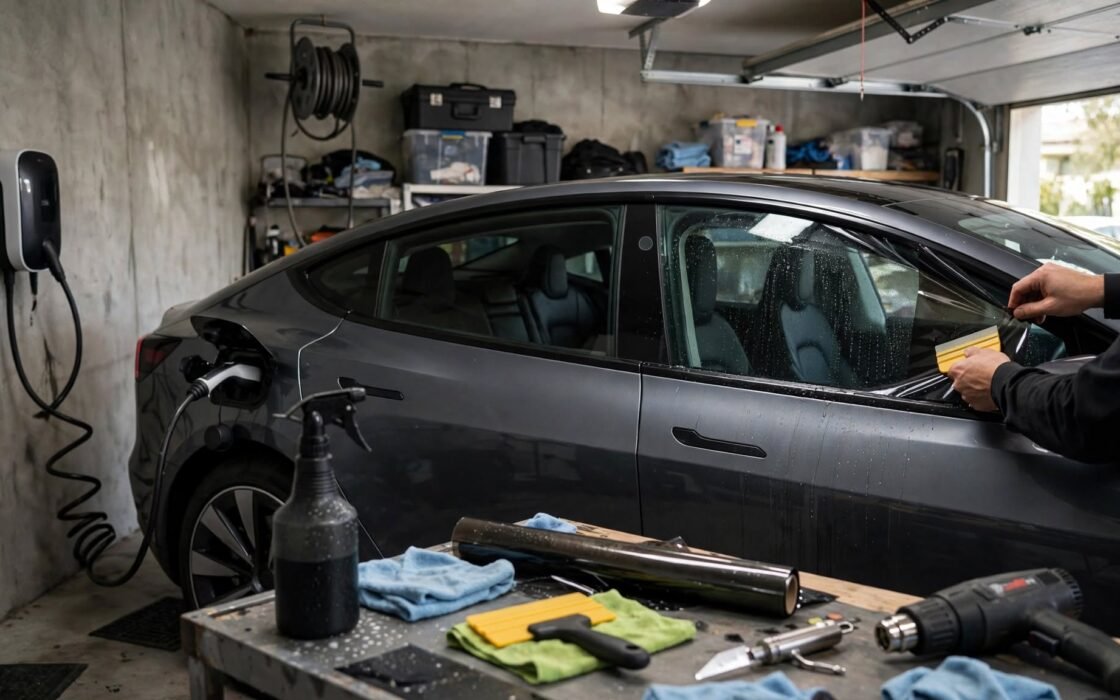
If you do go ahead, ask the shop three questions: which exact film (brand and series) is quoted, what its TSER is at the VLT you are choosing, and what the warranty covers in writing. Then leave the windows up for three to five days while the film cures.
Frequently Asked Questions
Does window tint improve EV range?
Marginally, in hot weather. AAA measured 8.5–17% range loss from hot-weather AC use depending on the car and test, and tint trims a slice of that load. Our math puts the charging saving at roughly $8–$26 a year — real, but far too small to pay for the tint. For the bigger range factors, see how highway speed affects EV range.
Can you tint a Tesla’s glass roof?
Yes — shops do it routinely with a large single sheet of ceramic film, and it is one of the highest-impact applications because of the roof’s size. Tesla’s premium glass already has an IR-reflective coating (the budget 2026 Model Y Standard notably does not), so the gain is biggest on uncoated glass. A clip-in sunshade is the cheaper alternative.
Will ceramic tint block my phone, GPS, or key fob signal?
No. Ceramic and carbon films are non-metallic, so radio signals pass through unaffected. Only metallic films can weaken GPS, cellular, satellite radio, or keyless-entry signals.
How long does window tint last?
Dyed film typically fades or purples within 3–5 years; carbon lasts 7–10; quality nano-ceramic is color-stable for the life of the car and usually carries a lifetime warranty against bubbling, peeling, and fading.
Is it legal to tint the front windshield?
Almost never beyond a top strip. Most states limit windshield film to the area above the AS-1 line; a few (Ohio, Utah) allow a full windshield only in very light 70% VLT film. Check your state’s current law before choosing.
Will tint void my EV warranty?
Aftermarket film does not void the vehicle warranty as a whole, but a dealer can deny a claim if the film caused the damage — the classic case is defroster-line damage from aggressive removal of old film. Keep the receipt.
The Takeaway
Window tint for an EV costs $150 to $900+ installed, and the spread is almost entirely about film technology: dyed film buys privacy, carbon buys the value sweet spot, and nano-ceramic buys genuine heat rejection with zero signal interference. The energy savings are real but trivial — under $30 a year even for heavy hot-weather drivers — so judge tint on comfort, UV protection, and interior preservation instead. Pick a legal VLT for your state, skip metallic film on a connected car, give extra thought to the glass roof, and get the film name and warranty in writing.
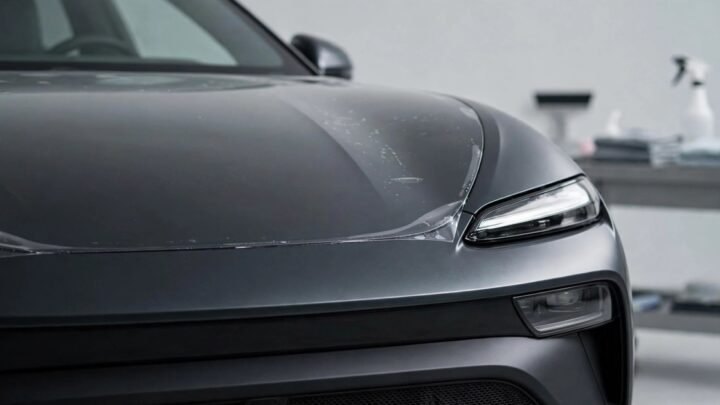
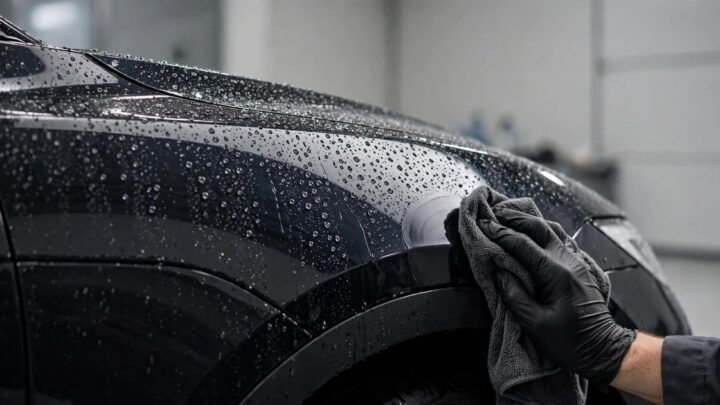
If you are also weighing paint protection, our ceramic coating cost breakdown for EV owners runs the full five-year math, and our EV paint protection film cost guide covers the rock-chip side.
About the author
Written by Shurah, who researches and writes independently on the real cost of EV ownership — charging, maintenance, and total cost of ownership — backed by primary data and original calculations rather than recycled lists.
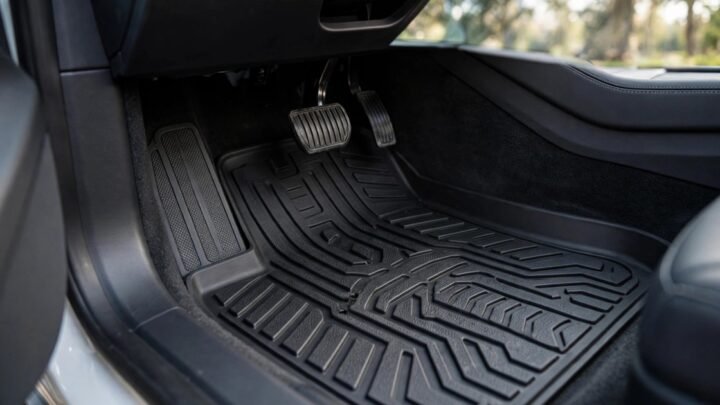
Tint handles the glass and dashboard; for the floors, see what EV all-weather floor mats cost and whether the payback math works for your climate.