Roughly one in eight visits to a public EV charger ends without a charge. Not a slow charge — no charge at all. The driver arrives, plugs in, something fails, and they leave.
That figure comes from JD Power’s EV Experience Public Charging Study, whose 2026 edition was released on 12 August and surveyed 6,594 electric and plug-in hybrid owners between January and June. At 12%, the non-charge visit rate is the lowest the study has recorded in six years — down from a peak of 21% in 2023, a 43% improvement.
It is also, as Kelley Blue Book put it, still an alarming number for a fuel you cannot buy anywhere else. Here is what is actually going wrong, which chargers fail most, and what to do when it happens to you.
The key numbers
- 12% — public charging visits that end without a charge, 2026, a record low
- 21% → 12% — the fall since 2023, a 43% reduction in three years
- +12 / −12 — DC fast satisfaction rose while Level 2 fell, a 24-point divergence in one year
- 122 points — satisfaction gap between chargers at hotels and chargers at dealerships
- 3 a year — failed visits for someone fast-charging twice a month
- 25% — failure rate reported in Seattle, the worst major city
What got better, and what quietly got worse
The headline is that public charging is improving. That is true of exactly half of it.
DC fast charging satisfaction rose 12 points to 666 on a 1,000-point scale, with gains across all ten factors JD Power measures. Charger availability improved most, up 27 points; safety and cost of charging each rose 18. Newer, higher-power chargers at larger sites with better payment systems are doing the work.
Public Level 2 charging went the other way, falling 12 points to 595 — and JD Power attributes the decline specifically to ease of payment and ease of charging. Those are not hardware problems. They are the apps, the RFID cards, the accounts and the screens.
So the two segments diverged by 24 points in a single year, and now sit 71 points apart. If your mental model is “public charging is getting better”, it needs an amendment: fast charging is getting better, and the slow chargers at your office, gym and shopping centre are getting more annoying. That matters most to the drivers who depend on Level 2 because they cannot charge at home — the people least able to absorb the friction. We cover their situation in owning an EV without home charging.
Where you charge predicts failure better than which network
This is the finding almost nobody writes about, and it is immediately actionable.
JD Power scores satisfaction by the type of location a charger sits in, and the spread is enormous:
| Location type | DC fast satisfaction |
|---|---|
| Hotels | 692 |
| Gas stations and convenience stores | 689 |
| Restaurants | 688 |
| Stand-alone parking lots and garages | 606 |
| Car dealerships | 570 |
A charger at a hotel scores 122 points higher than one at a dealership. That gap is nearly ten times the year-over-year improvement the whole industry celebrated.
The reason is not mysterious. Sites attached to a business that wants you there — a hotel, a restaurant, a petrol forecourt — get maintained, lit, staffed and monitored. A dealership charger exists to serve the dealership, and a stand-alone car park has nobody whose job it is to notice a broken screen. When you plan a stop, plan it around a business that benefits from you being there.
The network ranking changed hands
In the 2026 study, the top three DC fast networks were IONNA at 807, the Mercedes-Benz Charging Network at 797, and the Rivian Adventure Network at 755 — all well above the 666 category average, and all newer, automaker-backed operations. Tesla, which topped both segments the year before, was displaced.
JD Power also found these newer OEM-backed networks posted some of the lowest failed-charge rates. Which is worth holding alongside the pricing picture: the cheapest network and the most reliable one are not the same network. Tesla’s member rate is still the cheapest widely available fast charging in the country, and EVgo is the priciest of the big three — but reliability now ranks separately from both.
What actually goes wrong
Failures cluster into a handful of causes, and knowing which one you are looking at determines whether the next stall will work or whether you need a different site entirely.
Payment and authentication. The largest category, and the one JD Power singles out for Level 2’s decline. A card reader that will not read, an app that cannot find the station, an account that needs re-authenticating, an RFID tag that has gone unrecognised. Nothing is wrong with the charger — you simply cannot start it. This is also why plug-and-charge, where the car identifies itself over the cable, is such a meaningful upgrade.
The handshake. Before any power flows, the car and the charger negotiate over a data connection. If that negotiation fails, you get a generic error and no charge. It is more common with adapters in the chain, and more common with older station firmware meeting newer cars. Often a different stall on the same site works immediately.
Shared power cabinets. Not a failure exactly, but it feels like one. Many DC chargers pair two stalls on one power unit and split the output between them. Pull in beside an occupied stall and you may get half the rated power for the whole session. Look for an unoccupied pair before you plug in.
Cold. A cold battery physically cannot accept high current, so a winter session can look like a broken charger when the car is the limiting factor. Preconditioning fixes most of it — see why EV range drops in winter.
Physical damage. Cut cables, vandalised screens, connectors dropped in puddles and left there. Stand-alone car parks are where this concentrates, which is exactly what the location scores above reflect. Cut cables are the headline version of this, though most cable damage turns out to be misuse rather than theft.
The wrong adapter, or a non-approved one. A DC adapter that is not on your automaker’s approved list can fit perfectly and still refuse to negotiate a session. If you are running an adapter, this is the first thing to rule out — our guide to which adapter you actually need covers the approved-list issue.
One cause that gets blamed on the station: a weak 12-volt battery can stop a session starting even when the charger is fine.
What to do when a charger fails
In order, because the order saves time:
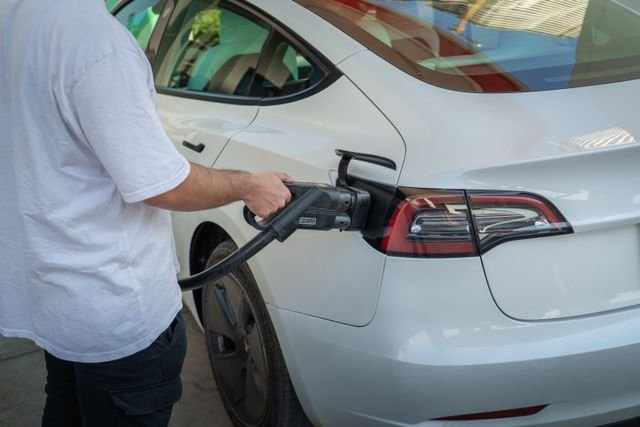
- Reseat the connector. Unplug fully, wait ten seconds, plug back in firmly until it latches. A surprising share of failures are a connector that did not seat.
- Try a different stall on the same site. Faster than diagnosing, and often works. If two stalls fail identically, the problem is more likely your car or your account.
- Switch payment method. If the app will not start the session, try the card reader, and vice versa. Two independent paths exist on most stations for exactly this reason.
- Restart the car. Not a joke — power-cycling the vehicle clears a failed handshake more often than anything else on this list.
- Check your charge limit and schedule. Scheduled charging and a low charge limit set at home will silently prevent a public session from starting. This one embarrasses people.
- Call the number on the unit. Network support can remotely reset a stall, and often does it in under two minutes. Most drivers never try this.
- Report it. Marking a station as broken in the network app or PlugShare is how the next driver avoids it. The reliability numbers above improved partly because people did this.
How to stop it happening
You cannot eliminate a 12% failure rate, but you can meaningfully reduce your exposure to it.
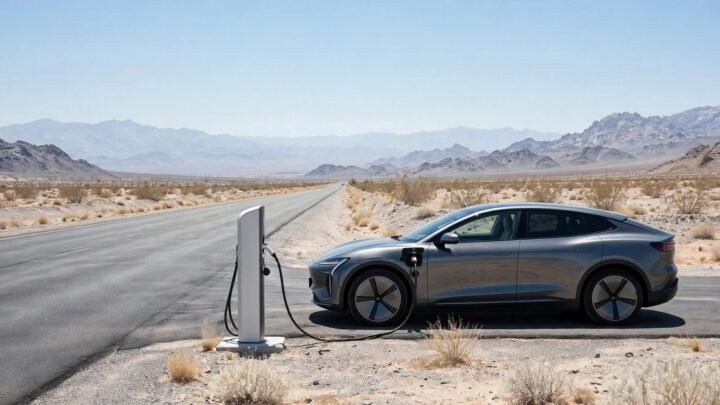
- Never plan a stop with no alternative. The single most useful habit: choose sites where another charger is within a few miles — the Department of Energy’s station finder is good for spotting clusters. Arriving at your only option with 4% battery is what turns an inconvenience into a tow.
- Check recent check-ins before you commit. PlugShare comments from the last week tell you more about whether a site works than any network’s own status map.
- Prefer sites with more stalls. An eight-stall site with one broken unit is a non-event. A two-stall site with one broken unit is a 50% outage.
- Favour hotels, forecourts and restaurants over dealerships and stand-alone car parks, per the scores above.
- Set up accounts before you need them. Creating an account in a car park with one bar of signal is how a working charger becomes a failed visit.
- Precondition the battery by setting the charger as your navigation destination.
How often will this actually affect you?
The 12% figure sounds worse than most people’s experience, because most people rarely use public chargers. Applied to real usage patterns:
| How you charge | Public visits a year | Failed visits a year |
|---|---|---|
| Home charging, road trips only | ~6 | 0.7 |
| Home charging plus occasional top-ups | ~24 | 2.9 |
| Weekly public charging | ~52 | 6.2 |
| No home charging, twice weekly | ~104 | 12.5 |
For a home charger, this is an annual irritation. For someone without a driveway, it is a fortnightly one — twelve wasted trips a year. That asymmetry is the real story in the numbers, and it is why the honest answer to “should I buy an EV without home charging” depends so heavily on where you live. The cost side of public charging compounds it. Regionally the spread is wide: the Pacific region has reported non-charge rates around 21% against 7% in the East South Central states, with Seattle at 25% and Los Angeles at 24% among major cities.
Frequently asked questions
How often do public EV chargers fail?
About 12% of visits end without a charge, according to JD Power’s 2026 study of 6,594 owners. That is the lowest rate recorded in six years, down from 21% in 2023.
Why won’t my EV start charging?
Most often payment or authentication rather than the charger itself. After that: a failed data handshake between car and station, a connector that has not seated, or a charge limit or schedule set on the car. Try a different stall and restart the car before assuming the site is broken.
Which charging network is most reliable?
In the 2026 rankings the newer automaker-backed networks led — IONNA at 807, Mercedes-Benz Charging Network at 797 and Rivian Adventure Network at 755, against a 666 average. JD Power found these also had some of the lowest failed-charge rates.
Why is my EV charging so slowly at a fast charger?
Usually a shared power cabinet with the neighbouring stall, a cold battery, or a state of charge above 80% where the car deliberately tapers. It is often the car limiting itself, not the station failing — our guide to how long charging actually takes explains which is which.
Are Level 2 public chargers getting worse?
Satisfaction with them fell 12 points in 2026 to 595, while DC fast rose 12 to 666. The decline is attributed to ease of payment and ease of charging rather than the hardware.
Does the type of location matter?
Considerably. Chargers at hotels score 692 and those at dealerships 570 — a 122-point gap. Sites attached to a business that wants your custom are maintained better.
What should I do if a charger takes my money but does not charge?
Most networks place a pre-authorisation hold rather than a charge, and it drops off within a few days. If an actual charge appears, contact the network with the station ID and timestamp from the unit — both are printed on it.
The short version
One in eight public charging visits still ends without a charge, though that is down from one in five three years ago. The improvement is concentrated entirely in DC fast charging, where satisfaction rose 12 points; public Level 2 fell 12, driven by payment and app friction rather than broken hardware. Where you charge predicts failure better than which brand runs it — hotel and forecourt chargers score 122 points above dealership ones. When a session will not start, reseat the plug, try another stall, switch payment method, restart the car, then call the number on the unit. And never plan a stop that has no alternative within a few miles, because that is the difference between a delay and a recovery truck.