Here’s a genuine contrast worth noting: our own solid-state battery research found zero true solid-state cells in any customer EV as of 2026. Sodium-ion is the opposite story — it’s already in production, already on roads, already in a mass-market car. It’s just not a car you can currently buy in the US, and it’s not aimed at the kind of EV you’d want it to replace.
What’s Real Here
- CATL’s Naxtra sodium-ion battery entered mass production in 2026 and powers the Changan Nevo A06 — the world’s first mass-produced passenger EV using sodium-ion cells, sold in China.
- Energy density sits around 175 Wh/kg — competitive with mid-range LFP, but behind both top-tier LFP (now past 220 Wh/kg) and lithium NMC/NCA chemistry (200-300 Wh/kg).
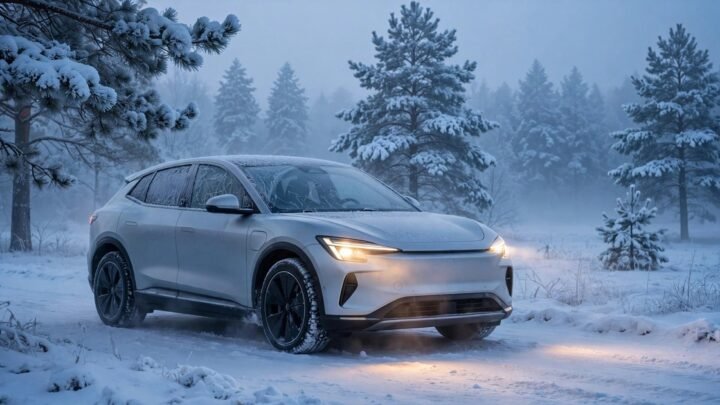
- Sodium-ion genuinely excels in cold weather: CATL and BAIC both report roughly 90-92% capacity retention at -20°C to -40°C, far better than lithium’s well-documented cold-weather struggles.
- BYD’s third-generation sodium-ion platform claims up to 10,000 charge cycles, and CATL’s Naxtra was the first sodium-ion battery to pass China’s strict new GB 38031-2025 safety standard.
- Cost figures vary by source right now — some 2026 analyses put sodium-ion cells at $55-70/kWh (already undercutting LFP), others put current costs above $100/kWh due to limited production scale, with both agreeing the raw material (sodium itself) is far cheaper than lithium long-term.
Quick answer: Sodium-ion EV batteries are real and already shipping — unlike solid-state, which remains years from any production car. But they’re currently a China-only, budget-EV and cold-climate story: lower energy density than lithium means shorter range for the same pack size, so automakers are using sodium-ion in entry-level city cars, not long-range vehicles. No sodium-ion EV is currently sold in the US.
Why It’s Not Replacing Your Next Long-Range EV
The core trade-off is energy density. At roughly 175 Wh/kg, a sodium-ion pack needs to be noticeably larger and heavier than a lithium pack to store the same energy. Per one 2026 market analysis, this gap is “real and probably permanent” for flagship applications — you won’t see sodium-ion in a long-range Tesla or a 100 kWh Rivian pack, because the weight and space penalty would be too large to justify.
See the Trade-off Yourself
Sodium-Ion vs Lithium Pack Weight
This uses an average lithium energy density (~250 Wh/kg) for a rough comparison — actual figures vary by specific chemistry and pack design.
Where Sodium-Ion Actually Wins
| Use case | Why it fits |
|---|---|
| Entry-level city EVs | Lower material cost supports genuinely cheap vehicles — BYD’s sodium-ion Seagull variant targets this bracket |
| Cold-climate regions | 90%+ capacity retention at -20°C to -40°C beats lithium’s typical cold-weather losses, covered in our winter range research |
| Two-wheelers and fleet vehicles | Shorter range requirements make the energy-density gap irrelevant |
| Stationary/grid storage | Currently the majority use case for sodium-ion overall — weight and space matter far less than for a vehicle |
Who’s Actually Building This
The field is concentrated in China. CATL leads with its Naxtra brand, already in the Changan Nevo A06, with up to 20,000 vehicles expected to carry it in 2026. BYD’s FinDreams unit is building a dedicated 30 GWh sodium-ion plant and has its own Seagull-based entry. HiNa Battery supplies the JAC Yiwei. Outside China, Northvolt (Sweden) and Faradion (UK, now owned by Reliance Industries) are developing Prussian Blue cathode variants, but mostly for grid storage rather than passenger EVs. As of 2026, there is no sodium-ion passenger EV sold in the US market.
Degradation and Longevity
BYD’s claimed 10,000-cycle lifespan on its third-generation platform is a genuinely strong number — for comparison, our own lithium degradation research found real-world packs losing about 2.3% capacity per year under normal use. If sodium-ion’s cycle-life claims hold up in independent long-term testing (still limited, given how new mass production is), it could end up competitive on longevity even with a lower energy-density ceiling.
FAQ
Is sodium-ion safer than lithium-ion?
Early signs point that way — CATL’s Naxtra was the first sodium-ion battery to pass China’s toughest current EV battery safety standard — but it’s too early in deployment for the kind of large-scale real-world safety data we have for lithium-ion.
Why is sodium-ion cheaper if the cost figures vary so much between sources?
The raw material (sodium) is genuinely far more abundant and cheaper than lithium long-term, but at 2026’s still-small production scale, actual cell costs haven’t fully reflected that yet — expect the price gap to widen as manufacturing scales up.
Will sodium-ion ever power a long-range EV?
Not with current chemistry — the energy density gap versus lithium NMC/NCA is described as likely permanent by industry analysts, which keeps sodium-ion in the budget and niche-use categories rather than flagship long-range vehicles.
Can I buy a sodium-ion EV in the US right now?
No. Every current sodium-ion passenger EV (Changan Nevo A06, BYD Seagull Na-ion variant, JAC Yiwei) is a China-market vehicle not sold in the US.
When might sodium-ion EVs reach the US market?
No automaker has announced a concrete US launch timeline as of 2026 — it depends on both import/trade dynamics for Chinese EVs and whether any non-Chinese manufacturer adopts the chemistry for a US-market vehicle.
Not Yet, But Watch This Space
Sodium-ion is the rare EV battery story that’s real right now rather than a multi-year promise — but it’s solving a different problem than most US buyers are shopping for. If you want cheap, cold-climate-friendly, city-range transportation, it’s a genuinely interesting technology to watch. If you’re shopping for a long-range EV today, it has no bearing on your decision yet.
About the author: Written by Shurah, who researches and writes independently on the real cost of EV ownership — charging, maintenance, and total cost of ownership — backed by primary data and original calculations rather than recycled lists.