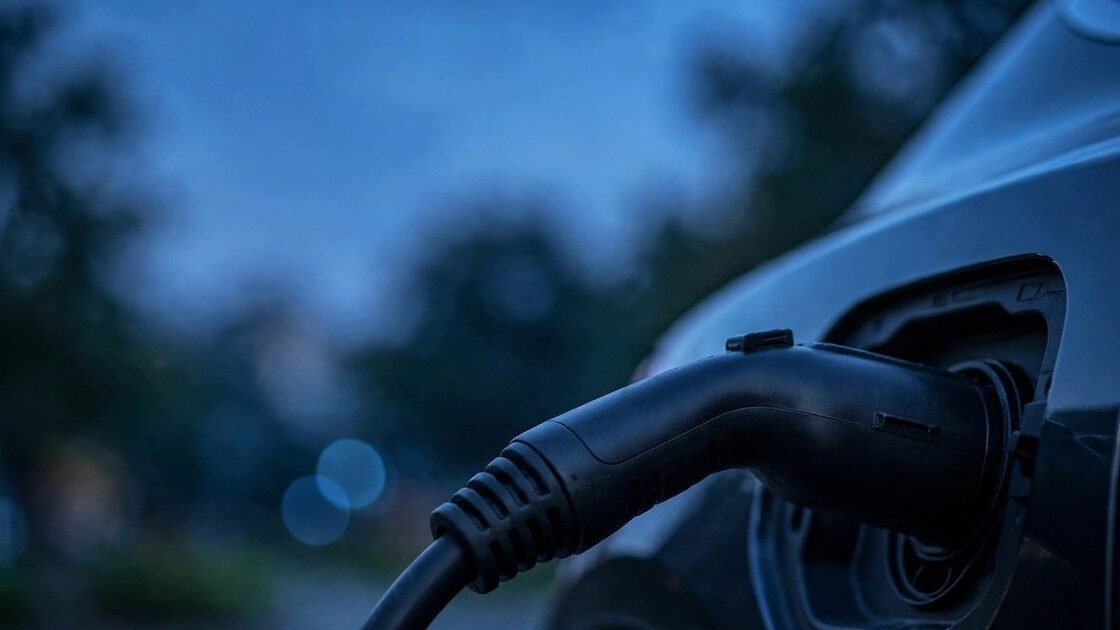
Through May 2024, thieves had cut 129 charging cables from Electrify America stations across the US — four more than in all of 2023. Each cable fetched roughly $15 to $20 at a scrap yard; each cost up to $4,000 to replace. That gap, between what the copper is worth and what its absence costs, is the whole story of EV charging cable theft — and your own portable cable is worth stealing too.
In short
EV charging cable theft is rising because copper sits near record prices — about $6.48 a pound in late October 2026. A thief nets roughly $15–$20 per cable while operators pay $700–$4,000 to replace one. Your own portable cable costs around $300 to replace, plus public-charger premiums while you wait. A $10–$60 lock and a few placement habits cut your risk sharply. If a cable is cut, treat it as live: kill the breaker and call an electrician.
The theft math, up front
| Number | Figure | Source |
|---|---|---|
| Copper price, late Oct 2026 | $6.48/lb (record $6.80 on 9 Sept 2026) | COMEX market data |
| Thief’s payout per cable | ~$15–$20 | AP reporting, Houston police |
| Operator replacement cost | $700 (Level 2) to $4,000 (DC fast charging) | Trade press / network figures |
| Copper inside a Level 2 cable | ~5 lb (a DCFC cable holds about twice that) | Secondary reporting |
How we got from one cut cable a year to a crime wave
Two years before that 129-cable stretch, Electrify America told the Associated Press a cable might be cut perhaps every six months across its network — then 968 stations and 4,400 plugs. By May 2024 the figure had reached 129, already four more than in all of 2023, with one Seattle station hit six times in a single year. Flo and EVgo reported rising thefts too, and Tesla Supercharger sites were hit in Seattle, Oakland, and Houston — at one Houston station, thieves took 18 of 19 cords. See the AP’s 2024 reporting for the full account (secondary).
It kept spreading. In the UK, operator Allego’s freedom-of-information requests surfaced 200+ police reports of charge-point cable theft — which Allego called the tip of the iceberg, since 40% of forces don’t log the crime separately. Germany’s EnBW logged 900+ cases across 130+ fast-charging sites by late 2024. And in October 2026, vandals severed cables at up to 28 bays around Ballarat, Australia, including a brand-new Tesla Supercharger — one of the largest single attacks anywhere.
Why copper makes a charging cable a target
A charging cable is, physically, twenty-five feet of thick copper hanging where anyone can reach it. Copper futures closed the week of 23 October 2026 at $6.48 a pound on COMEX, per Dow Jones market data — off a record $6.80 set on 9 September 2026. Check the latest COMEX copper settlement (market data). Electrification demand — every EV, charger, and grid upgrade needs the metal — is a big part of why.
How much copper is actually in a cable? Industry estimates put a standard Level 2 cable at about 5 pounds — roughly $32 of copper at today’s COMEX price (our calculation); a DC fast-charging cable holds about twice that. But scrap yards pay far less than COMEX, and the copper is buried in insulation that’s a pain to strip, so police and industry estimates consistently land on $15–$20 per cable. One nuance: Tesla’s liquid-cooled Supercharger cables contain relatively little copper for their size, per industry reporting — cutting one looks more like vandalism than a profitable heist.
The economics are absurd
Put the two sides next to each other and the crime reads as pointless — except it keeps happening. The thief walks away with maybe $20. The network pays about $700 to replace a severed Level 2 cord and up to $4,000 for a DC fast-charging cable, per industry figures; Electrify America has put its own per-cable cost at $2,000–$4,000 (secondary trade reporting — see the breakdown). In the UK, Allego’s math is £25 of scrap against roughly £1,000 per cable, and InstaVolt put its theft bill at £410,000 over 17 months. Allego’s UK police data is summarised here (secondary).
Then there’s the downtime. A station with cut cables is a dead station: no revenue for the operator, no charge for the driver who planned around it. One Houston driver who recharged his Tesla at a hit station told the AP he feared being stranded too low to reach the next one — “might even need a tow truck.” The theft is a rounding error in the thief’s wallet, a five-figure line item for the network, and a ruined morning for the driver who arrives at four empty posts.
What it costs you when your cable disappears
Public-station theft is the network’s problem. Your driveway is yours. The most likely thing a thief takes from you is the portable charging cable — the 20-footer you plug into a 120V or 240V outlet. Tesla’s Mobile Connector lists at $300 (secondary reporting, October 2026; frequently out of stock, and Tesla stopped including it with new cars back in April 2022). Unlike a cut public cable, yours can simply be unplugged and carried off if you leave it connected overnight in an open driveway — no bolt cutters required.
The replacement cost isn’t the whole bill. While you wait for the new cable — shipping plus a day or two to reorder — you’re charging somewhere else. Say you drive 40 miles a day at 3.3 miles per kWh and the replacement takes a week to arrive: that’s about 85 kWh shifted from home charging at 18.3¢/kWh (EIA’s July 2026 residential average) to public DC fast charging at roughly 55¢/kWh (our standing DCFC benchmark). Our calculation: 85 × 36.7¢ ≈ $31 in extra charging cost — on top of the $300 cable. Run your own numbers in the calculator below.
Insurance rarely helps: a portable cable is personal property, not part of the car, so it’s a homeowners/renters matter at best — and a $300 replacement against typical deductibles rarely pencils out. That’s general guidance; check your own policy. For what replacement hardware costs new, our portable EV charger guide tracks the options, and our under-$500 home charger roundup covers wall units with lockable designs.
What the networks are doing about it
Electrify America has answered with more security cameras at hit stations. Across the industry, operators are deploying cut-resistant cable sleeves, GPS trackers with geofenced alerts, and closer work with recyclers to flag stolen copper. In the UK, some operators coat cables in synthetic-DNA forensic liquid — invisible, unique to each cable, transferable to a thief’s hands — so stolen metal can be traced. The Recycled Materials Association, representing 1,700 scrap-industry members, now circulates law-enforcement theft alerts. None of this makes a cable uncuttable; it makes the thief easier to catch and the copper harder to sell.
Locking down your own cable
Your home setup is far easier to protect than a public station. Work in layers, cheapest first:
- Stop leaving the cable out. The free fix: charge in a garage when you have one, or mount the charger tight to the house wall, out of street sightlines. Coil the cable and dock the connector — a cable sprawled across the driveway advertises itself.
- Lock the connector at the car. Teslas lock the cable into the charge port while charging, and many other EVs lock the J1772 plug when the car is locked — enable that setting. One gap owners learn the hard way: on a Tesla using a J1772 adapter at a public Level 2 post, the car locks the adapter but not the station’s nozzle to it, so a passerby can unplug you. A $10 charger lock ring (secondary pricing) closes that gap; pair it with the right adapter for your car.
- Put a real lock on the cable. A hardened-steel cable lock ($25–$60, secondary) looped through the cable and around a fixed object — a ground anchor, a post, the charger’s own mounting — defeats the bolt cutters a casual thief carries. Lock it to the holster every night.
- Box it in if you’re exposed. For street-facing or curbside installs, a lockable steel enclosure ($30–$200 for basic boxes) is the serious answer. Ventilate it and confirm your charger’s Wi-Fi still reaches through the metal.
- Light and a camera. A motion light ($30–$80) plus one camera covering the charging area is the highest-return deterrent stack most owners buy. UK retailer EV Cable Shop’s protection guide (secondary) covers the same layered playbook.
Be honest about what a lock buys. A $10 plastic ring stops the opportunist who unplugs you at a hotel; it does not stop a thief with an angle grinder and ninety seconds. The goal isn’t an unstealable cable — it’s making yours the worse target on the street. And never park the car on top of the cable to pin it down: the pressure kinks and cracks the insulation.
Public charging has its own manners here. Don’t unplug someone else’s car to take their spot, and if you see someone working a cutter at a station at 2 a.m., that’s a police call, not a confrontation — our charging-etiquette rules cover the rest. Overnight away from home, hotel charging is usually the safest option: private lot, and often free.
If yours gets cut or stolen
- Kill the breaker first. Treat a severed cable as live until an electrician says otherwise — don’t touch the cut end or “check if it still works.”
- Photograph everything — the cut, the charger, the area — before anything is moved.
- File a police report. Theft rings are tracked through reports, and some jurisdictions ask recyclers to watch for charging-cable copper.
- Get a licensed electrician for the repair, not a DIY splice. Damaged EVSE cable has to meet code — and have the electrician confirm the charger itself is safe before you plug a replacement cable into it.
- Report it to the network if it happened at a public station, so the stall gets flagged out of service.
Treat any cut charging cable as energized. Kill the breaker, keep hands and water away, and have a licensed electrician inspect the unit before it is used again.
Stolen-cable cost calculator
Defaults shown are examples: 18.3¢/kWh is the EIA July 2026 US residential average and 55¢/kWh is our standing DC fast-charging benchmark.
How the formula works. The calculator finds the energy you shift to public chargers — (miles per day × days without the cable) ÷ your car’s mi/kWh — multiplies it by the per-kWh premium of public over home charging, and adds the replacement cable’s price. If public is cheaper than home, the extra cost floors at zero. Our own calculation from your inputs.
Real questions, straight answers
Will my car lock the cable so it can’t be stolen?
Mostly, but not completely. Teslas lock the cable into the port while charging, and many other EVs lock the J1772 plug when the car is locked — enable that setting. The catch: locking stops unplugging, not cutting. A lock is an unplugging defense; bolt cutters don’t care about software.
Does insurance cover a stolen charging cable?
Usually not through auto insurance, which covers the car and permanently attached equipment — a portable cable is personal property, a homeowners/renters matter at best, and a $300 replacement against typical deductibles rarely pencils out. Confirm the details with your own insurer rather than assuming coverage either way.
Is it dangerous for thieves to cut a charging cable?
Public DC fast-charging cables are de-energized until a session starts, so cutting an idle one is property crime more than electrocution — but “usually de-energized” is not “safe,” and your home wall charger absolutely can be live. Never touch a severed cable: kill the breaker and let a licensed electrician verify it’s dead.
How do I charge while I wait for a replacement cable?
Public Level 2 and DC fast charging cover the gap — that’s exactly what the calculator above prices out. Borrow a compatible cable rather than buying twice, but skip the extension cord: most manufacturers forbid it.
Who shouldn’t bother with a cable lock?
If your charger lives inside a locked garage and the cable never sees the street, a lock buys you almost nothing. Locks earn their keep for driveway, carport, curbside, and shared-parking installs — anywhere the cable sits visible and reachable overnight.
The takeaway
Cable theft barely pays the criminal and taxes everyone else — the network eats thousands per cable, and you can lose a $300 portable plus a week of public-charging premiums. Copper near $6.50 a pound means the incentive isn’t fading. The defense is unglamorous: keep the cable out of sight, lock the connector, put a hardened lock on the cable itself, and treat any severed cable like it’s live.
About the writer
Written by Shurah Beel, who researches and writes independently on the real cost of EV ownership — charging, maintenance, and total cost of ownership — backed by primary data and original calculations rather than recycled lists.