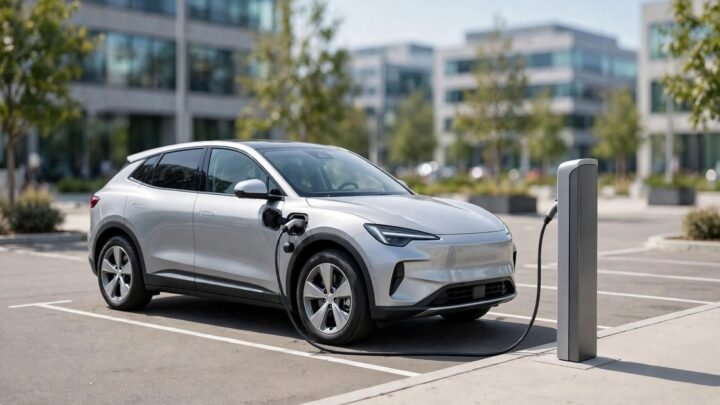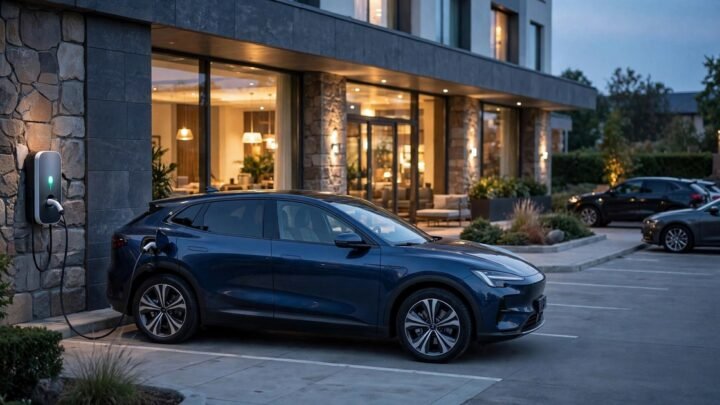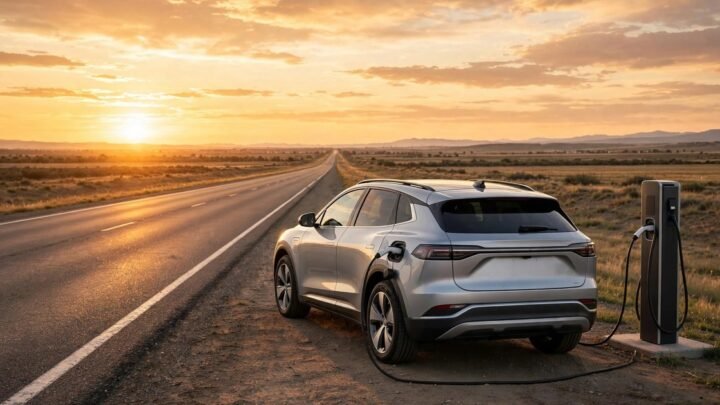
Somewhere between “it’s just a giant battery” and “electricity plus water equals death” sits a piece of engineering most EV owners never think about: the plug in your hand, sitting out in the rain, connected to a live 240-volt circuit, is one of the most deliberately over-engineered pieces of the entire car.
Charging an EV in the rain isn’t a risk you’re tolerating. It’s a scenario the equipment was specifically designed and tested for, using the same layered logic that keeps a hairdryer switch out of the shower and a swimming pool light behind thick glass. Here’s exactly how that engineering works, what the actual code requires as of 2026, and the handful of situations where the answer genuinely changes to “no.”
The key numbers
- IP54–IP67 — the weatherproofing rating range on EV charging equipment, all designed for wet outdoor use
- NEC 625.54 — the electrical code section that mandates ground-fault protection specifically for EV charging circuits
- Two independent systems — the connector’s physical sealing and the circuit’s electrical shutoff, either one alone would likely be enough
- 0V — the voltage present at the connector’s pins until the car and charger complete a handshake confirming a secure connection
- 2026 — the NEC edition where regulators are still actively debating how far GFCI requirements should extend, showing this is a live, evolving standard, not a settled afterthought
- Damaged equipment, not rain — the actual common thread in the rare cases where EV charging genuinely does go wrong
Short answer: Yes, charging an EV in the rain or snow is safe with any properly functioning, undamaged charger. EV charging equipment is built to at least an IP54 weatherproof rating, the connector stays electrically dead until the car and charger confirm a secure locked connection, and US code (NEC 625.54) requires ground-fault protection on the circuit as a second, independent layer of safety. The real risk isn’t water — it’s a cracked connector housing, a frayed cable, a non-weatherproof extension cord, or a charger sitting in floodwater.
Why the connector doesn’t care that it’s wet
Start with the part you actually touch. EV charging connectors and the equipment they plug into are rated under the IEC 60529 IP scale, and outdoor EVSE is commonly built to at least IP54 (dust-protected, resistant to splashing water from any direction) with many premium units, from manufacturers like ABB and Siemens, rated as high as IP66 or IP67 — dust-tight and capable of surviving temporary submersion. This isn’t a marketing badge. It’s a tested physical barrier between the water outside and the conductors inside, engineered specifically because these units live outdoors permanently, not because a manufacturer hoped for the best.
But the sealing is only the first layer, and it isn’t even the layer doing the most work.
The part almost nobody explains: the pins aren’t live until they need to be
This is the actual engineering answer to “isn’t this dangerous,” and it’s worth understanding because it’s the reasoning that makes the rest of the system make sense. A charging connector doesn’t work like a lamp cord, where power is present at the plug the instant it’s plugged into a socket. An EV charging connector and the car run a communication handshake — a check confirming the connector is fully seated, locked, and that the vehicle is actually ready to accept a charge — before any meaningful voltage is applied to the pins you’re holding. Insert it halfway, or into a puddle without a proper seal, and the system simply doesn’t energize the connection in the first place. The rain isn’t being defended against after the fact. It’s irrelevant to a circuit that was never live to begin with, until both sides agree it should be.
The second, independent layer: ground-fault protection by law
Even with a sealed connector and a dead-until-confirmed pin design, US electrical code adds a completely separate safety system on top. NEC Section 625.54 requires ground-fault circuit-interrupter (GFCI) protection specifically for EV charging circuits — a device that continuously monitors the current going out versus the current coming back, and cuts power in a fraction of a second if it detects current leaking somewhere it shouldn’t, such as through water into the ground. This exists independently of the connector’s physical sealing. If the IP rating somehow failed, the GFCI is there as a second, unrelated line of defense that doesn’t depend on the first one working.
Worth knowing, in the spirit of showing the reasoning rather than just the rule: this specific piece of code is still actively being refined. The 2026 NEC cycle has an open technical debate (documented in proposed amendment TIA 1892) over exactly how far GFCI requirements should extend to hardwired chargers specifically, partly because overly sensitive GFCI devices can cause “nuisance tripping” in wet conditions during completely normal charging, which would strand a car rather than protect anyone. That debate is a sign of a standard that’s actively maturing around real-world data, not a settled rule nobody questions — and it’s part of why hardwired chargers and plug-in chargers on a NEMA 14-50 receptacle are treated slightly differently under current code, a distinction our portable charger guide covers from the receptacle side.
Putting the two layers side by side
| Safety layer | What it actually does | Fails independently of the other? |
|---|---|---|
| IP-rated sealing (IP54–IP67) | Physical barrier keeping water away from live conductors | Yes — a cracked housing bypasses this without affecting GFCI |
| Handshake / dead-until-confirmed pins | No meaningful voltage present until a secure, locked connection is verified | Yes — independent of both sealing and GFCI |
| GFCI protection (NEC 625.54) | Cuts power within milliseconds if current leaks anywhere unexpected, including through water | Yes — works even if the connector seal has already failed |
That’s the actual answer to why manufacturers are unbothered by rain: it isn’t one seal holding everything back, it’s three independent systems that each have to fail for water to become a genuine hazard. This is also why Tesla, ChargePoint, and every other major manufacturer state plainly in their owner documentation that charging in rain and snow is normal, expected use — not a tolerated exception.
When the answer actually changes to “don’t”
None of the above is a blanket permission slip. The layered design assumes the equipment is intact, and every genuine risk scenario is really a version of one of those three layers being compromised before the water shows up.
- A cracked or damaged connector housing. The IP rating protects an intact enclosure. A visible crack, a chunk missing from a drop, or a housing that’s been run over removes that protection entirely, and the handshake and GFCI systems are no longer the backup they’re meant to be — they’re now doing all the work alone.
- A frayed, cut, or exposed cable. Same principle. Any point where the outer jacket has failed is a point the IP rating no longer covers.
- Household extension cords. Standard extension leads aren’t rated for the continuous multi-hour load of EV charging or built to the same weatherproof standard as EVSE cabling — and most manufacturers explicitly void warranty coverage over their use. This connects directly to the receptacle-heat issue covered in our portable charger guide: continuous load and inadequate hardware is a recurring failure pattern independent of weather.
- A submerged vehicle or charger after flooding. This is categorically different from rain. Flooding can force water past seals never designed for full submersion under pressure, and it’s a documented, separate cause of delayed battery faults — covered in our EV fire risk breakdown, which found water damage after major flood events to be its own recognized fire-risk category. Never charge, or attempt to drive, a vehicle that’s been through flooding without a manufacturer inspection first. The NHTSA issues specific guidance on flood-affected EVs for exactly this reason.
- Uninspected DIY installations. The 2026 code debate above exists partly because installation quality varies. A GFCI device installed incorrectly, or a hardwired unit put in without a permit or inspection, doesn’t get the benefit of the system being verified to work as designed.
Notice the pattern: in every case, the danger is damaged or improperly installed equipment, not the presence of rain. Weather is the thing the system was built for. Damage is the thing it wasn’t.
What actually changes in wet or freezing conditions
Two real, non-safety effects are worth knowing, since they get conflated with the safety question even though they’re separate issues entirely.
Charging speed can drop in cold weather, but this is a battery chemistry effect, not a wet-weather electrical hazard — our guide to why EV range drops in winter covers why a cold pack accepts charge more slowly and what preconditioning does about it.
Ice on the connector or port is a mechanical nuisance, not an electrical one. A frozen charge port door or ice bridging the connector can prevent a secure physical connection (which the handshake system will simply refuse to energize, consistent with everything above), but it doesn’t create a shock hazard. Most manufacturers recommend a plastic scraper rather than force, and some offer a port heater as an accessory in cold climates specifically for this mechanical reason.
Frequently asked questions
Is it safe to charge an electric car in the rain?
Yes. EV charging connectors and equipment are built to at least an IP54 weatherproof rating, the connector carries no meaningful voltage until the car and charger confirm a secure locked connection, and US code requires independent ground-fault protection on the circuit. All three systems have to fail for rain to become a genuine hazard.
Can you charge a Tesla or other EV in a thunderstorm?
Routine rain and snow are explicitly covered by manufacturer guidance as normal use. Direct lightning risk to any outdoor electrical equipment during an active storm overhead is a separate, general precaution that applies to outdoor outlets generally, not something specific to EV charging.
What actually makes EV charging unsafe?
Damaged equipment, not weather: a cracked connector housing, a frayed or cut cable, a standard household extension cord used outdoors, a charger or vehicle that’s been submerged in floodwater, or an uninspected DIY installation. Intact, properly installed equipment is designed for wet conditions as standard use.
Does NEC code actually require rain protection for EV chargers?
Indirectly and robustly. NEC Section 625.54 requires ground-fault circuit-interrupter protection on EV charging circuits specifically, which protects against current leakage from any cause, including water. Combined with the IP-rated physical sealing on the equipment itself, this is two independent, code-mandated safety systems rather than one.
Should I dry off the charging connector before plugging in?
It isn’t necessary for safety, since the equipment is designed for wet-condition use, but it’s reasonable general care — the same instinct that makes you wipe down any outdoor equipment before use. Never plug in a connector with visible cracking or exposed wiring regardless of whether it’s wet or dry.
Does charging in the cold or wet affect charging speed?
Cold does, meaningfully — a cold battery accepts charge more slowly, which is a chemistry effect rather than an electrical safety issue. Wet weather alone has no effect on charging speed; it’s purely a safety and physical-connection question.
Is it safe to charge an EV that’s been through a flood?
No, not without a manufacturer inspection first. Flooding is categorically different from rain — it can force water past seals that were never designed for full submersion under pressure, and it’s a recognized, separate cause of delayed battery faults.
The short version
Charging an EV in the rain is safe because it’s engineered to be, not because you’re getting lucky: a weatherproof IP-rated enclosure, a connector that carries no real voltage until a secure connection is confirmed, and a legally mandated ground-fault circuit-interrupter on the circuit itself all have to fail independently before water becomes a genuine hazard. Manufacturers say plainly that rain and snow are normal use because the engineering backs that up, and the 2026 code debate over exactly how GFCI requirements should apply shows this is a standard still being actively refined around real-world data, not a box someone ticked once. The actual risk factors are damage and shortcuts: a cracked connector, a frayed cable, a household extension cord standing in for proper EVSE, a flooded vehicle, or an uninspected install. Keep the equipment intact and properly installed, and the weather was never the problem.