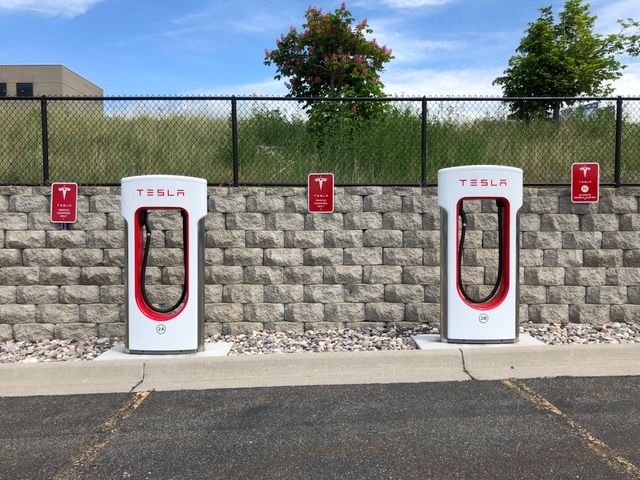
Tesla Superchargers have a reputation as the cheapest fast charging in America. Since the network opened to other brands, that reputation has quietly stopped being true for a large share of the people using it — because a Supercharger does not have one price. It has two, and which one you get depends on what you drive and whether you pay a subscription.
As of August 2026, the standard rate averages 60.1 cents per kWh across the network. The member rate averages 43.3 cents. Same stall, same electricity, same minute — a 28% difference. Tesla drivers get the lower number automatically. Everybody else pays the higher one unless they subscribe.
Here is what both actually cost, state by state, and the maths on whether the subscription is worth it.
The key numbers
- 60.1¢/kWh — standard rate average, August 2026
- 43.3¢/kWh — member rate average, a 16.8¢ gap
- 36.6¢ to 75.3¢ — cheapest state (Nebraska) to dearest (Hawaii)
- $12.99/month — Tesla’s Supercharging membership for non-Tesla EVs
- 77 kWh a month — where that membership starts paying for itself
- 48 of 50 states — where petrol beats the standard rate per mile
- 49 of 50 states — where the member rate beats petrol
Two price books at the same charger
This is the part most guides skip. Tesla operates a dual pricing structure at Superchargers open to other brands:
- The member rate is applied automatically to Tesla vehicles. Non-Tesla drivers can unlock it by paying for Tesla’s Supercharging membership at $12.99 a month.
- The standard rate is the default for every non-Tesla EV without that subscription.
The gap held steady at about 16.8 cents per kWh through August, according to DCFC Tracker’s network report, which syncs Tesla’s public site pricing daily across 3,219 stations. In practical terms, a Ford or Hyundai driver pulling into the same stall as a Model Y pays roughly $8.40 more for a 50 kWh session.
A caveat on the figures below: these are peak rates. Sites with time-of-use pricing are cheaper off-peak, and Tesla locks your price at the moment you plug in. Averages are unweighted across sites rather than by energy sold, and free sites are excluded. Non-Tesla drivers can erase that premium with a Supercharging Membership; we ran the numbers on when a charging membership pays off.
Tesla Supercharger cost by state
Both price books, plus what a 50 kWh session costs at the standard rate and what it works out to per mile at 3.5 miles per kWh.
| State | Standard | Member | 50 kWh session | Cost per mile |
|---|---|---|---|---|
| Alabama | 53¢ | 38¢ | $26.45 | 15.1¢ |
| Alaska | 61¢ | 44¢ | $30.30 | 17.3¢ |
| Arizona | 64¢ | 46¢ | $32.10 | 18.3¢ |
| Arkansas | 49¢ | 35¢ | $24.30 | 13.9¢ |
| California | 69¢ | 50¢ | $34.45 | 19.7¢ |
| Colorado | 55¢ | 40¢ | $27.55 | 15.7¢ |
| Connecticut | 63¢ | 45¢ | $31.55 | 18.0¢ |
| Delaware | 61¢ | 44¢ | $30.60 | 17.5¢ |
| Florida | 57¢ | 41¢ | $28.45 | 16.3¢ |
| Georgia | 59¢ | 42¢ | $29.40 | 16.8¢ |
| Hawaii | 75¢ | 54¢ | $37.65 | 21.5¢ |
| Idaho | 51¢ | 37¢ | $25.55 | 14.6¢ |
| Illinois | 57¢ | 41¢ | $28.35 | 16.2¢ |
| Indiana | 54¢ | 39¢ | $26.90 | 15.4¢ |
| Iowa | 49¢ | 35¢ | $24.60 | 14.1¢ |
| Kansas | 46¢ | 33¢ | $23.15 | 13.2¢ |
| Kentucky | 50¢ | 36¢ | $25.15 | 14.4¢ |
| Louisiana | 52¢ | 38¢ | $26.25 | 15.0¢ |
| Maine | 54¢ | 39¢ | $27.05 | 15.5¢ |
| Maryland | 61¢ | 44¢ | $30.65 | 17.5¢ |
| Massachusetts | 55¢ | 40¢ | $27.70 | 15.8¢ |
| Michigan | 56¢ | 41¢ | $28.15 | 16.1¢ |
| Minnesota | 56¢ | 40¢ | $27.80 | 15.9¢ |
| Mississippi | 51¢ | 37¢ | $25.40 | 14.5¢ |
| Missouri | 54¢ | 39¢ | $26.95 | 15.4¢ |
| Montana | 53¢ | 38¢ | $26.55 | 15.2¢ |
| Nebraska | 37¢ | 26¢ | $18.30 | 10.5¢ |
| Nevada | 72¢ | 52¢ | $36.25 | 20.7¢ |
| New Hampshire | 62¢ | 45¢ | $31.10 | 17.8¢ |
| New Jersey | 60¢ | 43¢ | $30.15 | 17.2¢ |
| New Mexico | 55¢ | 40¢ | $27.60 | 15.8¢ |
| New York | 58¢ | 42¢ | $28.90 | 16.5¢ |
| North Carolina | 62¢ | 45¢ | $30.90 | 17.7¢ |
| North Dakota | 51¢ | 37¢ | $25.35 | 14.5¢ |
| Ohio | 62¢ | 45¢ | $30.90 | 17.7¢ |
| Oklahoma | 52¢ | 38¢ | $26.10 | 14.9¢ |
| Oregon | 53¢ | 38¢ | $26.70 | 15.3¢ |
| Pennsylvania | 63¢ | 46¢ | $31.60 | 18.1¢ |
| Rhode Island | 54¢ | 39¢ | $27.00 | 15.4¢ |
| South Carolina | 58¢ | 42¢ | $29.25 | 16.7¢ |
| South Dakota | 56¢ | 40¢ | $28.00 | 16.0¢ |
| Tennessee | 50¢ | 36¢ | $24.85 | 14.2¢ |
| Texas | 56¢ | 40¢ | $28.00 | 16.0¢ |
| Utah | 57¢ | 41¢ | $28.40 | 16.2¢ |
| Vermont | 50¢ | 36¢ | $25.20 | 14.4¢ |
| Virginia | 61¢ | 44¢ | $30.35 | 17.3¢ |
| Washington | 61¢ | 44¢ | $30.70 | 17.5¢ |
| West Virginia | 57¢ | 41¢ | $28.40 | 16.2¢ |
| Wisconsin | 57¢ | 41¢ | $28.40 | 16.2¢ |
| Wyoming | 53¢ | 38¢ | $26.65 | 15.2¢ |
| Network average | 60.1¢ | 43.3¢ | $30.05 | 17.2¢ |
Nebraska is the outlier of the whole network at 36.6 cents — it also saw the steepest cuts in August, down 14.9%. At the other end, Washington DC’s two sites average 90 cents, and Hawaii, Nevada and California all sit above 68. August was a month of small cuts overall: 511 Superchargers lowered prices against 424 that raised them, and the network average slipped 0.5%.
Is Tesla actually cheaper than Electrify America?
Only if you subscribe. Put the two networks side by side at their August 2026 averages and the answer is uncomfortable for Tesla’s reputation:
| Option | Rate | Cost per mile |
|---|---|---|
| Tesla, member rate | 43.3¢ | 12.4¢ |
| Electrify America, Pass+ | 46.3¢ | 13.2¢ |
| Tesla, standard rate | 60.1¢ | 17.2¢ |
| Electrify America, guest | 61.7¢ | 17.6¢ |
Read that table again, because it contains the single most useful fact in this article: choosing the “cheaper network” saves you about 1.6 cents per kWh. Choosing to subscribe saves you 16.8. The membership decision matters roughly ten times more than the network decision, and almost nobody frames it that way.
At their default rates the two big networks are effectively the same price. Our breakdown of Electrify America’s pricing goes through its side in detail, including why its published 48-cent rate stopped being real years ago.
Which subscription, if you take one?
This is where it gets genuinely counterintuitive. Tesla’s membership costs $12.99 a month and saves 16.8 cents per kWh. Electrify America’s Pass+ costs around $7 and saves about 15.4 cents. Different fees, similar discounts — so the answer depends entirely on how much you actually fast charge.
| Fast charging per month | EA guest | EA Pass+ | Tesla standard | Tesla member |
|---|---|---|---|---|
| 50 kWh | $30.85 | $30.15 | $30.05 | $34.64 |
| 100 kWh | $61.70 | $53.30 | $60.10 | $56.29 |
| 200 kWh | $123.40 | $99.60 | $120.20 | $99.59 |
| 300 kWh | $185.10 | $145.90 | $180.30 | $142.89 |
The crossover sits at almost exactly 200 kWh of fast charging a month. Below that, Electrify America’s cheaper subscription wins on total cost because Tesla’s higher monthly fee eats the bigger discount. Above it, Tesla’s membership pulls ahead and keeps pulling.
Two hundred kWh a month is roughly 700 miles of fast-charged driving. So the rule of thumb:
- Under 50 kWh a month (occasional top-ups) — skip subscriptions entirely, the fees cancel out the savings.
- 50 to 200 kWh — Electrify America Pass+ is the cheaper subscription, assuming EA coverage on your routes.
- Over 200 kWh — Tesla’s membership, and it is not close at higher volumes.
Coverage should override this for most people. Tesla has around 3,200 Supercharger stations against roughly 1,200 tracked Electrify America sites, so on many routes there is no real choice to make. But if both networks serve you, the numbers above are the ones that matter.
EVgo runs paid tiers too, including PlusMax at around $12.99 a month, but it does not publish a member rate anywhere public — so this comparison cannot be run for EVgo from the outside. Open the app, note your local rate with and without the plan, and apply the same division: monthly fee divided by the per-kWh discount gives your break-even. Our EVgo pricing breakdown covers where its public rates sit, which is above both networks in the table.
Against petrol: the standard rate loses almost everywhere
At 60.1 cents per kWh and 3.5 miles per kWh, the standard rate works out to 17.2 cents a mile. A 30 mpg petrol car matches that at $5.15 a gallon. Comparing each state’s own Supercharger rate against its own pump price, petrol is cheaper in 48 of 50 states — the only exceptions are Nebraska, where Superchargers are unusually cheap, and Oregon, where petrol is unusually dear.
The member rate flips it almost completely. At 43.3 cents, or 12.4 cents a mile, the break-even petrol price falls to $3.71 — and the member rate beats petrol in 49 of 50 states. The one exception is North Carolina, where Superchargers run above the network average and petrol runs below it, leaving the two within half a cent of each other.
So the honest summary for a non-Tesla driver: fast charging without a subscription is not saving you money against a petrol car. With one, it is — but modestly, not dramatically. The dramatic savings live at home, where the national average of 18.44 cents works out to 5.3 cents a mile. That is under a third of the member rate and under a quarter of the standard rate; our state-by-state charging cost guide has the full comparison, and the home charging breakdown covers the maths behind it.
Idle and congestion fees
Tesla’s idle fee is 50 cents a minute when a Supercharger site is at least half full, doubling to $1.00 a minute when every stall is occupied. If the site is quiet, there is no idle fee at all — and Tesla waives the charge entirely if you move the car within five minutes of the notification.
That is a materially gentler system than Electrify America’s, which bills 40 cents a minute after a 10-minute grace period regardless of whether anyone is waiting. Tesla’s version only punishes you when you are actually blocking someone. It is worth knowing which network you are on before you wander off to a restaurant.
Some busy urban sites also apply a congestion fee, charged per minute above a certain state of charge to push drivers off the stall once they are mostly full. Both appear on the in-car screen and in the app before you plug in.
Four ways to pay less
- Do the subscription maths once. Look at last month’s fast-charging kWh and apply the 200 kWh rule above. It takes two minutes and is worth more than every other tip combined.
- Charge off-peak where the site offers it. Tesla locks your rate at plug-in, so arriving twenty minutes after the peak window ends holds the cheaper price for the whole session.
- Check the price before you commit to a stop. Rates are per-site and the spread within a single state is wide — Brooklyn sites went to 74—81 cents in August while upstate New York sat far below.
- Stop at 80%. Above that the car slows down sharply, so you buy little energy while exposing yourself to congestion fees.
If public charging is your main source rather than a road-trip backup, the whole calculation changes — we work through it in owning an EV without home charging, and our public charging cost guide covers the wider network picture. ChargePoint works differently again, since its rates are set by whoever owns the site rather than by the network.
Frequently asked questions
How much does a Tesla Supercharger cost per kWh?
In August 2026 the standard rate averaged 60.1 cents per kWh and the member rate 43.3 cents, ranging from about 36.6 cents in Nebraska to 75.3 cents in Hawaii. There is no single national rate — Tesla prices each site individually.
Do non-Tesla drivers pay more at Superchargers?
Yes, about 28% more by default. Tesla vehicles get the member rate automatically; other EVs pay the standard rate unless the driver subscribes to Tesla’s Supercharging membership.
Is the $12.99 Tesla membership worth it?
It pays for itself past roughly 77 kWh of Supercharging a month. But if you are choosing between subscriptions rather than just deciding whether to have one, Electrify America’s cheaper Pass+ is better value below about 200 kWh a month.
What does a full Supercharger session cost?
A 50 kWh top-up — roughly 10% to 80% on a mid-size EV — costs about $30 at the standard rate and $21.65 at the member rate. Multiply 50 by your state’s figure in the table for a local number.
Is Supercharging cheaper than petrol?
At the member rate, yes in 49 of 50 states. At the standard rate, no — a 30 mpg petrol car is cheaper per mile in 48 of 50 states at current pump prices.
What is Tesla’s idle fee?
50 cents a minute when the site is at least half occupied, and $1.00 a minute when it is completely full. There is no fee at a quiet station, and it is waived if you move within five minutes of being notified.
Can any EV use a Supercharger?
Most can, at the growing number of sites Tesla has opened to other brands. Vehicles with a NACS port plug in directly; CCS cars need an adapter. Pricing is set by the site and your membership status, not by the badge on the car.
Can any EV use a Supercharger?
CCS cars need a DC adapter rated 500 A / 1,000 V, and it must be on your automaker’s approved list — we cover which adapter fits which car separately.
The short version
A Supercharger has two prices: about 60 cents per kWh standard and 43 cents for members, and non-Tesla drivers get the higher one unless they pay $12.99 a month. That subscription decision is worth roughly ten times more than picking between Tesla and Electrify America, whose default rates are almost identical. Take Tesla’s membership if you fast charge more than about 200 kWh a month, Electrify America’s cheaper Pass+ if you are below that, and neither if you rarely fast charge at all. And keep the perspective straight: at the standard rate you are paying more per mile than a petrol car in 48 states, while charging at home costs about a third of even the member rate.