Every EV still has an old-fashioned 12V battery hiding somewhere under the hood or frunk, and when it dies, the car won’t power on — no matter how much charge sits in the main pack. Buying a jump starter for an EV isn’t quite the same shopping exercise as buying one for a gas car, though, and getting the spec wrong isn’t just ineffective — on at least one popular EV, it’s the wrong voltage entirely.
Key Numbers
- An EV’s high-voltage traction battery runs at 200 to 800 volts and is never a valid jump-start target — only the small 12V auxiliary battery is.
- Some newer Tesla configurations use a 16V lithium-ion auxiliary battery instead of a standard 12V lead-acid unit — a mismatched jump starter here is a real compatibility risk, not just a minor inefficiency.
- Jump-starting an EV doesn’t “crank an engine” the way a gas car does — it delivers a low-amp pulse to wake up the onboard computer and DC-DC converter, which then takes over charging the 12V battery from the main pack.
- Manufacturers widely warn against using an EV’s own battery to jump-start another vehicle — it can trigger the battery management system’s protective shutdown and potentially strand the “helper” car too.
- A jump start doesn’t fix a failing 12V battery — it’s a temporary wake-up, and a battery that needs repeat jumps needs replacement, the exact failure mode covered in our 12V battery research.
Short Answer
A portable lithium jump starter matched to your EV’s specific auxiliary battery voltage — 12V for the vast majority of EVs, but confirm this against your owner’s manual since some newer Tesla models use a 16V lithium auxiliary battery — is the safest and most practical option. Unlike a gas car, you don’t need a huge peak-amp rating built for cranking a cold engine, since an EV only needs enough current to wake its computer systems; what matters more is voltage match, clean stable output, and confirming your model’s actual jump-point location before you need it in an emergency.
What’s Actually Being Jump-Started
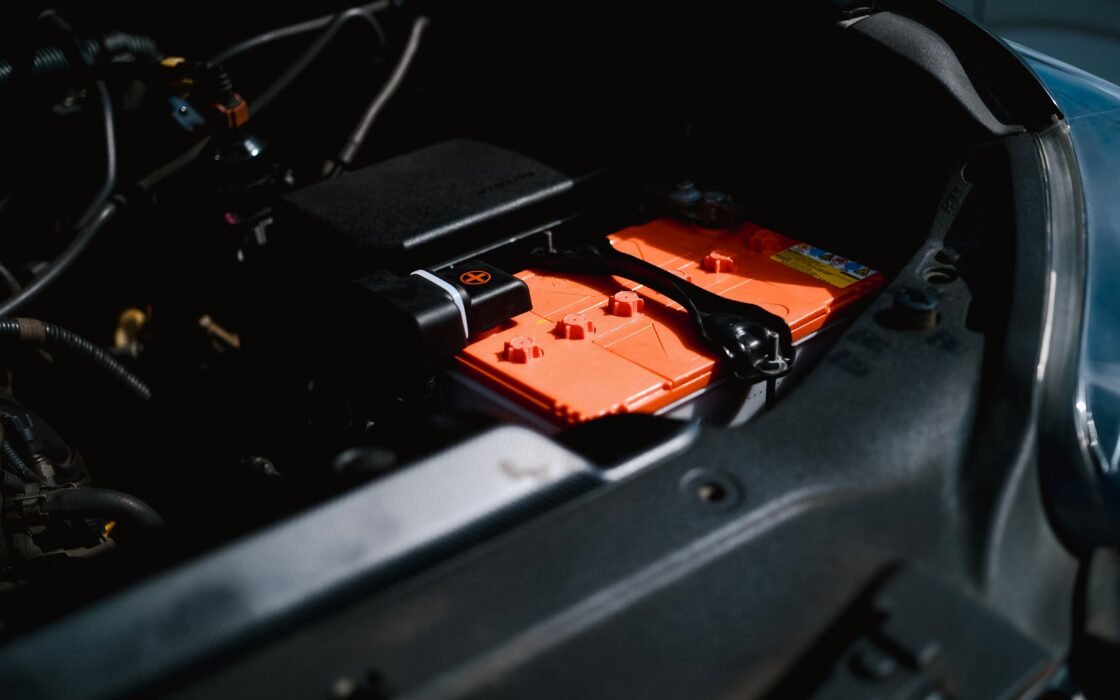
Every EV runs two entirely separate electrical systems. The high-voltage traction pack — running at 200 to 800 volts — powers the motor and is never a jump-start target; it requires specialized service equipment, not a portable pack, and should never be treated as one. The small 12V auxiliary battery runs the low-voltage electronics: infotainment, central locking, the onboard computer, and critically, the relay that switches the high-voltage system on in the first place. When that small battery dies, the car won’t power up at all, regardless of how full the main pack is — the exact mechanism we detailed in our EV 12V battery research.
Why EV Jump-Starting Isn’t the Same Exercise as a Gas Car
A gas engine needs a genuinely large current pulse to physically crank against compression. An EV doesn’t crank anything — the jump starter just needs to supply enough current to wake the onboard computer and DC-DC converter, which then takes over recharging the 12V battery from the main pack. This means EV owners generally don’t need the massive peak-amp ratings marketed for diesel trucks — but they do need the voltage to match exactly. Most EVs use a conventional 12V lead-acid or AGM auxiliary battery, but some newer Tesla configurations use a 16V lithium-ion auxiliary battery instead — a standard 12V-only jump starter is the wrong tool for that specific setup. Confirm your exact model’s auxiliary battery spec in the owner’s manual before assuming any generic jump starter will work.
Why a Portable Unit Beats a Donor Car for an EV
Using another vehicle’s cables and a running engine as the donor introduces a real risk that a portable jump starter avoids entirely: a running engine’s alternator can produce voltage spikes that may harm an EV’s more sensitive electronics, which is why guidance for this method specifically calls for the donor engine to be switched off. A quality lithium portable jump starter instead delivers a stable, clean, regulated pulse with no alternator surge risk — genuinely the safer default for an EV rather than a fallback option.
There’s a second, less obvious reason to carry your own unit: most manufacturers strongly advise against using an EV to jump-start someone else’s car. Doing so can trigger the EV’s own battery management system protections and potentially leave you stranded too, on top of the warranty implications. Carrying a portable jump starter means you can still help a stranded stranger without ever touching your own car’s electrical system.
What to Actually Check Before Buying
- Voltage match first, above everything else — 12V for the overwhelming majority of EVs, but verify against your specific model’s manual rather than assuming.
- Lithium (LiFePO4 or Li-ion) chemistry — smaller, lighter, and delivers a cleaner, more stable pulse than older lead-acid jump packs, which matters more for an EV’s sensitive electronics.
- Reverse-polarity protection and overcurrent protection — standard buying-guide criteria worth confirming on the spec sheet regardless of vehicle type.
- Clamp size appropriate for your battery’s terminals — an EV’s smaller auxiliary battery can have smaller terminals than a full-size gas engine battery, so oversized clamps can make a poor connection.
- You don’t need the largest peak-amp number on the shelf — that spec is marketed around cranking a cold gas engine, a demand your EV simply doesn’t have.
- Confirm your model’s actual jump-point location in advance — some EVs have dedicated 12V jump terminals under the hood or frunk, and finding this for the first time during an actual breakdown wastes time you don’t want to lose.
Which Spec Fits Your EV?
What to Do After the Jump
- Leave the vehicle powered on for roughly 15–20 minutes after a successful jump so the DC-DC converter has time to recharge the 12V battery from the main pack, rather than switching off immediately.
- A jump start is a temporary fix, not a repair — if the 12V battery needed jumping because it’s simply old or failing, it will likely need jumping again soon, and eventually needs replacement.
- If this keeps happening, see our 12V battery research for what actually causes repeat failures, and check whether a parasitic drain feature like Sentry Mode is quietly draining the battery faster than expected between drives.
FAQ
Can jump-starting damage my EV’s main battery?
No — a correctly done 12V jump only involves the small auxiliary battery and never touches the high-voltage traction pack, which operates as a completely separate system.
Will a jump start give me driving range if my main battery is fully depleted?
No — jump-starting only wakes the 12V system and onboard computer; if the traction pack itself is empty, you still need to charge the vehicle to actually drive anywhere.
Can I use a regular gas-car jump starter on my EV?
Generally yes, as long as the voltage matches (12V) and it has reverse-polarity protection — the main exception is EVs with a non-standard auxiliary voltage like some Tesla configurations, which need a matched unit.
Is it safe to use my EV to jump-start a friend’s gas car?
Most manufacturers advise against it — it can trigger your own EV’s protective battery management shutdown and potentially strand you as well. A dedicated portable jump starter is the safer way to help someone else.
How do I know if my EV’s 12V battery just needs a jump versus full replacement?
If jumps keep being needed within days or weeks of each other, the battery is likely failing rather than simply drained by a one-off event — our 12V battery research covers the signs worth watching for.
The Short Version
An EV’s 12V auxiliary battery fails the same mundane way a gas car’s does, but jump-starting it correctly means understanding a few real differences: it’s waking a computer, not cranking an engine, so you don’t need a massive peak-amp unit — but you do need the exact right voltage, since at least one popular EV brand uses a 16V lithium auxiliary system that a standard 12V jump starter can’t safely serve. A quality lithium portable jump starter, matched to your specific model’s spec and kept in the car, beats relying on a donor vehicle’s running engine, and it also means you can safely help a stranded stranger without risking your own EV’s electronics in the process.
About the author: Written by Shurah, who researches and writes independently on the real cost of EV ownership — charging, maintenance, and total cost of ownership — backed by primary data and original calculations rather than recycled lists.