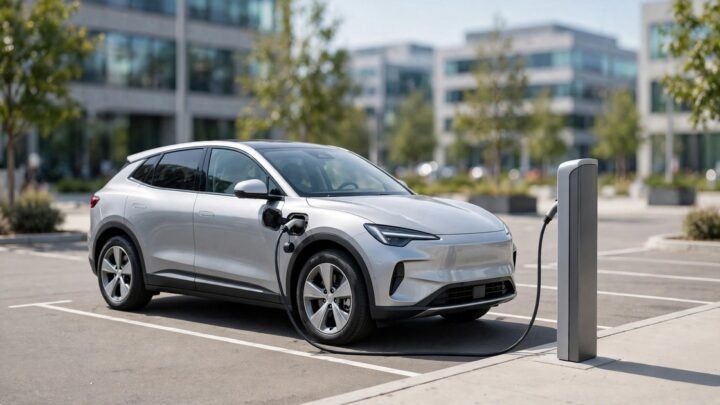
There’s no test question about it, nothing printed on your license, and no official rulebook — yet every regular EV driver has arrived at roughly the same set of unwritten rules through years of shared frustration. What most etiquette guides skip is why these rules exist in the first place, which is worth knowing, because the reasons are mechanical and economic, not just social.
Key Numbers
- A Sainsbury’s Smart Charge survey found 88% of EV drivers experience frustration over charging etiquette, and 24% specifically cited drivers “pretending to charge” just to hold a convenient parking spot.
- A cited 2024 Plug In America driver survey found 89% of EV drivers report frustration with vehicles overstaying their charging session past completion.
- Charging from 80% to 100% takes roughly 40% longer than charging from 20% to 80% on most DC fast chargers — the actual physics behind the “unplug at 80%” etiquette rule.
- Most public rapid chargers now apply an idle fee once your car stops drawing meaningful current — a financial mechanism layered on top of the social pressure to move along.
- Some Tesla Supercharger stalls are power-paired — two adjacent stalls sharing a single power cabinet — meaning your neighbor’s session can measurably slow yours even when both stalls appear independently available.
Short Answer
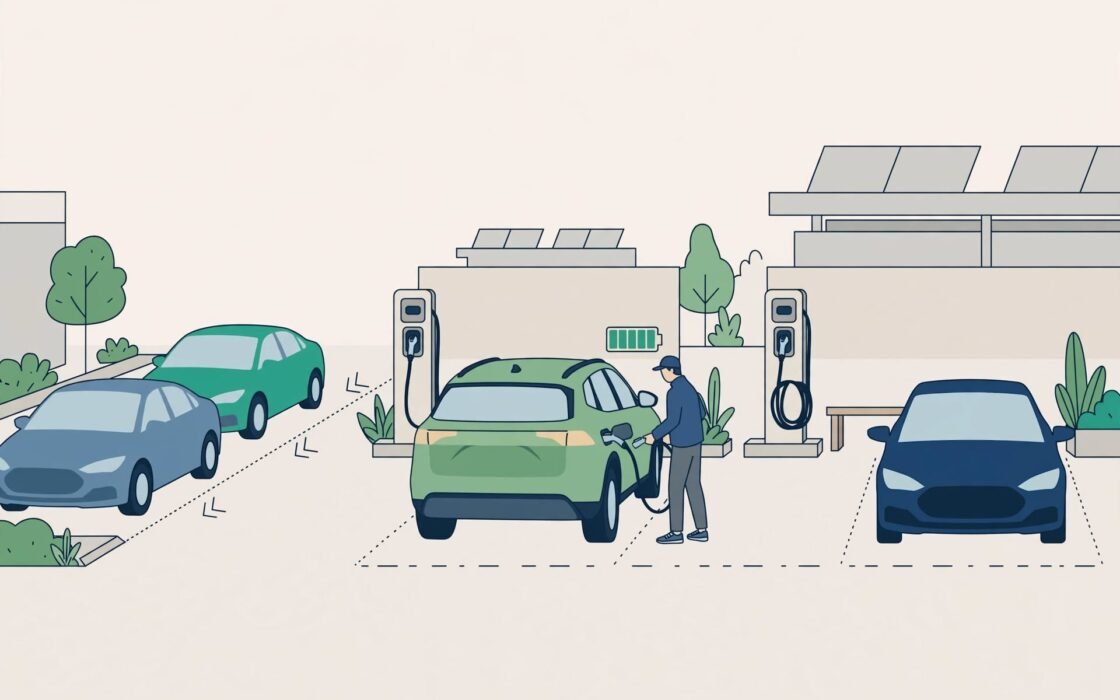
The core rules are simple: don’t occupy a charging spot unless you’re actively charging (whether that’s a gas car “ICEing” a bay or an EV “ghost charging” after it’s done), move your car once you hit a reasonable state of charge rather than treating the stall as a parking space, don’t unplug someone else’s car without a very good reason, and understand that DC fast chargers are for quick stops while Level 2 chargers are for longer stays. These aren’t arbitrary — most trace back to genuine charging-curve physics or the practical reality that far more EVs exist than available public stalls.
The Core Rules
- Don’t “ICE” a charging bay. Parking a gas vehicle in a spot reserved for charging blocks the one thing the bay exists for — this remains, by a wide margin, the most consistently cited frustration in driver surveys.
- Don’t “ghost charge” or “hog.” The EV-driver equivalent of ICEing: occupying a charging stall in a fully or sufficiently charged car simply because it’s a convenient parking space.
- Move once you’re reasonably charged — not necessarily 100%, especially at a busy DC fast station where the last 20% takes disproportionately longer for a diminishing benefit to you and a real cost to whoever’s waiting.
- Don’t unplug someone else’s car without a strong reason, even if it looks finished — you don’t know their exact plan, and it’s broadly treated as one of the clearest etiquette violations across every guide on this topic.
- Leave a note if you’ll be gone a while (“charging until 3pm, okay to unplug after”) — optional, but genuinely appreciated at busy stations and defuses most conflicts before they start.
Why These Rules Actually Exist
The 80% guideline isn’t an arbitrary courtesy number — it’s a direct consequence of how DC fast charging curves work. As covered in our charging-time research, most EVs slow their charging rate substantially above roughly 80% state of charge to protect the battery, meaning the last 20% of a charge commonly takes about 40% longer than the 20-80% stretch that came before it. Unplugging at 80% isn’t just politeness — it’s recognizing that you’re getting a shrinking return on the time you’re occupying a shared resource.
Idle fees exist for a related but distinct reason: they’re a network’s financial mechanism for discouraging exactly the “hogging” behavior etiquette guides ask you to avoid voluntarily — see our own research on public charging costs for how these fees actually work station to station. The social pressure and the financial pressure are pointed at the same behavior from two different directions.
Tesla’s Supercharger stall-pairing is a less commonly understood mechanical reason certain etiquette matters more at some stations than others: some V3 Supercharger stalls share a power cabinet in pairs, meaning if you park at a paired stall while its neighbor is already drawing high current, your own charging speed can be measurably reduced — leaving an open, unpaired stall free when one exists isn’t just courtesy, it can be the faster choice for everyone involved.
Check Your Own Etiquette
Check any that describe your usual charging habits:
DC Fast vs. Level 2: Different Etiquette Expectations
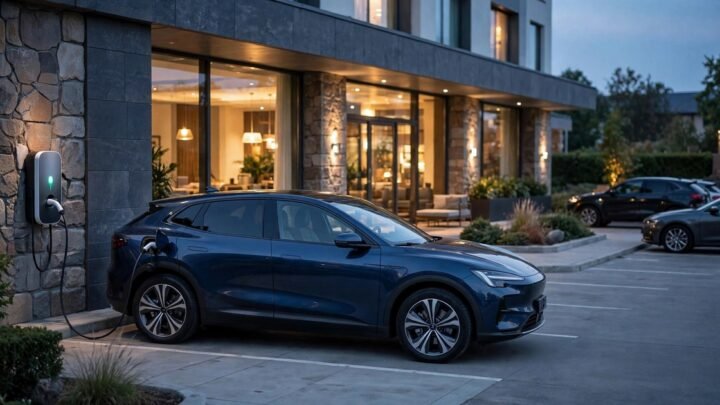
The rules genuinely differ by charger type. A DC fast charger exists to get travelers back on the road quickly — treating one like an all-day parking spot defeats its purpose and directly costs the next traveler time they may not have to spare. A Level 2 charger, especially at a workplace, hotel, or apartment, is generally understood as appropriate for a longer stay, since that’s the speed it’s designed around in the first place. Applying fast-charger urgency to a Level 2 situation, or fast-charger patience to someone monopolizing a DC stall, is where most real conflicts start.
Shared and Apartment Charging Has Its Own Etiquette
If you’re relying on shared charging at an apartment, condo, or workplace — a situation our own research on apartment charging covers in more depth — the social math gets more complicated because every plug becomes a small negotiation. A few practices genuinely help: rotating fairly if there are more EVs than plugs, agreeing on a schedule or a simple group chat with neighbors, and being upfront with a friend borrowing your outlet about how long you can spare it and who’s covering the electricity cost. Hotels and vacation rentals have their own version of this negotiation — our hotel EV charging cost guide covers the guest-only rules, who pays at Airbnbs, and why asking before you plug in matters.
FAQ
Is it ever okay to unplug someone else’s car?
Generally treated as a last resort — most guides suggest waiting or, if the station allows it, checking whether the car’s own charging status indicates it’s genuinely finished rather than assuming from appearance alone.
Do idle fees actually work as a deterrent?
They’re specifically designed to, by making it directly costly to overstay — though enforcement and fee structure vary meaningfully by network, which is part of why the social etiquette layer still matters on top of the financial one.
Should I always unplug at 80%?
Not always — if the station is empty and you need the extra range for your trip, there’s no etiquette violation in charging further. The guideline matters most specifically when other drivers are waiting.
What’s the difference between “ICEing” and “ghost charging”?
ICEing refers to a gas vehicle occupying an EV charging bay; ghost charging (or “hogging”) refers to an EV doing the same thing — parked in the spot but not actually drawing a meaningful charge, often because it finished a while ago.
Are there apps to report bad charging etiquette?
Yes — several charging-focused apps let drivers report ICEing, ghost charging, or broken equipment, which can help other drivers plan around known problem locations in real time.
The Short Version
EV charging etiquette isn’t arbitrary politeness — most of it traces back to real charging-curve physics (why the last 20% costs everyone else more time than it’s worth to you), real financial mechanisms (idle fees penalizing exactly the behavior etiquette discourages), and real infrastructure quirks (power-shared stall pairs). Understanding the why behind rules like “unplug at 80%” or “don’t treat a DC charger like all-day parking” makes them easier to actually follow, rather than feeling like arbitrary social pressure — and with survey data consistently showing the majority of EV drivers experience real frustration over exactly these behaviors, a little awareness goes further than it might seem.
About the author: Written by Shurah, who researches and writes independently on the real cost of EV ownership — charging, maintenance, and total cost of ownership — backed by primary data and original calculations rather than recycled lists.